Leksikon fun der Nayer Yidisher Literatur
לעקסיקאָן פֿון דער נײַער ייִדישער ליטעראַטור

Browse All People
By Subjects
By Volume:

search tips
✕
≡

How to Build Your Search:

A. In the below “Advanced Search,” use the drop down parameters under "Scope" - ALL words, ANY words, or EXACT word/phrase. Build the parameters row by row.


OR


B. To define your search using the basic one-line search, in the above textbox:

  • Use a plus to REQUIRE the word:
    +music +theory << must contain the words music and the word theory
  • Use quotes for a phrase:
    song "music theory" << anything with song or phrase "music theory"
    or "levin" < exact match, not levine
  • Use + and quotes to require the phrase:
    +"music theory" << must include phrase
  • Use a minus to EXCLUDE:
    +music -theory << must include music, but not theory
NOTE: When searching in Yiddish letters, this Lexicon should find the word(s) with or without diacritics (e.g., אברהם vs. אַבֿרהם) -- but when searching in other systems, if you can't find it one way, try searching the other way.
⋮⋮
⋮⋮
Search:
Text
Dates
Subjects
Living People ONLY
Women ONLY
Records w/ Images ONLY
Search in:
Scope:
ALL words
ANY words
EXACT word/phrase
א אַ אָ ב בּ בֿ ג ד ה ו װ ױ ז ח ט י יִ ײ ײַ כ כּ ך ל מ ם נ ן ס ע פּ פֿ פ ף צ ץ ק ר ש שׂ תּ ת ־

click for image pop-out

Click, drag, enlarge the below information boxes. (Then click the arrow in upper right to return them to their place & size.)
Pen Names, Aliases, & Alternate Search Spellings

Kolbak, Moyshe

Places
Birth Place
Smorgon (Smarhon'), Byelorussia
Death Place
Byelorussia
Images (click an image for slideshow)

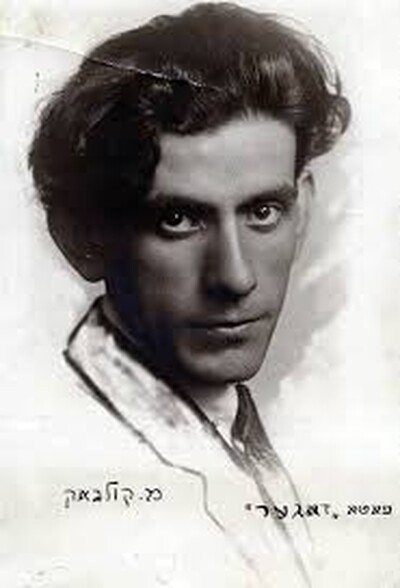
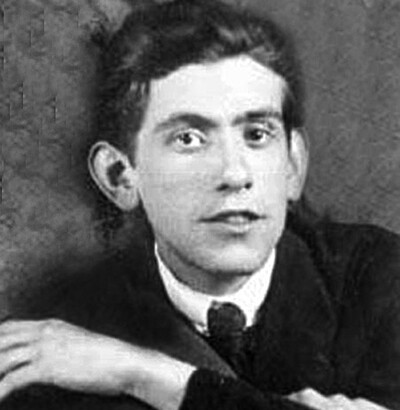
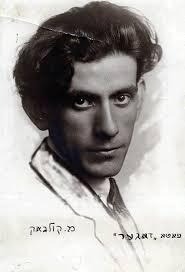
Image from Beider lexicon; see citation.


Further Info
Credits
  • Chaim Beider Author
  • Berl Kagan Author
  • Elye Shulman Author
  • Joshua Fogel Translation to English & Research
  • Maria Zavorohina Research
  • Lyubov Lavrova Updates
  • Tetiana Shyshkina Updates
  • Mark H. David OCR - Optical Character Recognition
  • Also Mentioned In
    30
    Bastomski, Arn (Aaron) (1907–1944)
    באַסטאָמסקי, אהרן (1907–1944)
    Bronshteyn, Yashe (1897–1937)
    בראָנשטײן, יאַשע (1897–1937)
    Damesek, Avrom-Ayzik (1893–1937)
    דאַמעסעק , אַבֿרהם־אײַזיק (1893–1937)
    Domesek, Avrom-Ayzik (1893–1937)
    Dunets, Khatskl (1896–1937)
    דונעץ, כאַצקל (1896–1937)
    Erik, Maks (1898–1937)
    עריק, מאַקס (1898–1937)
    Feygenberg, Rokhl (1885–1972)
    פֿײגענבערג, רחל (1885–1972)
    Goldberg, Y. (1936–)
    גאָלדבערג, י. (1936–)
    Gorin-Germanishski, Avrom-Leyb (1910–1936)
    גאָרין־גערמאַנישסקי, אַברהם־לײב (1910–1936)
    Heymovitsh, Feliks (1948–)
    חיימאָוויטש, פֿעליקס (1948–)
    Holmshtok, Khayim (1882–1942)
    האָלמשטאָק, חײם (1882–1942)
    Kharik, Izi (1898–1937)
    כאַריק, איזי (1898–1937)
    Khashin, Aleksander (1886–1938)
    כאַשין, אַלכּסנדר (1886–1938)
    Kompanayets, Zinovi (1902–1987)
    קאָמפּאַנײַעץ, זינאָװי (1902–1987)
    Lastik, Shloyme (1907–1977)
    לאַסטיק, שלמה (1907–1977)
    Lerman, Dovid (1890–1952)
    לערמאַן, דוד (1890–1952)
    Likht, Dovid (1904–1975)
    ליכט, דוד (1904–1975)
    Likhtenshteyn, Yisroel (1883–1933)
    ליכטענשטײן, ישׂראל (1883–1933)
    Lurya, Sholem (1920–2011)
    לוריא, שלום (1920–2011)
    Mark, Arn (1904–1938)
    מאַרק, אַהרן (1904–1938)
    Mortkhe, Bar-Tana (1909–)
    מרדכי, בר־תּנא (1909–)
    Rafalski, Moyshe-Arn (1889–1937)
    ראַפֿאַלסקי, משה־אַהרן (1889–1937)
    Rozovski, Nosn (1879–1969)
    ראָזאָװסקי, נתן (1879–1969)
    Serebriani, Yisroel (1900–1978)
    סערעבריאַני, ישׂראל (1900–1978)
    Shekhtman, Eli (1908–1996)
    שעכטמאַן, אלי (1908–1996)
    Sutskever, Avrom (1913–2010)
    סוצקעװער, אַבֿרהם (1913–2010)
    Tsukerman, Rohl
    צוקערמאַן, רחל
    Tushevitski, Marek (1981–)
    טושעוויצקי, מאַרעק (1981–)
    Vogler, Elkhonen (1907–1969)
    װאָגלער, אלחנן (1907–1969)
    Weinreich, Max (1894–1969)
    װײַנרײַך, מאַקס (1894–1969)
    Also See
    •

    Kulbak, Moyshe

    March 20, 1896–October 29, 1937

    41 years

    An author of poetry, stories, novels, and plays, he was born in Smorgon (Smarhon'), Byelorussia. His father Shloyme was a timber broker and his mother Sime the descendant of a family of farmers in the Jewish colony Karka (Soil) near Smarhon'. He studied in a cheder metukan (improved religious elementary school) and at the same time in a Russian Jewish public school, later in the yeshivas of Sventsyan (Švenčionys), Volozhin, and Mir. During WWI he moved to Kovno and worked as a teacher of Hebrew in the local Jewish school for orphans.

    In Kovno he began writing poetry in Hebrew and—liberating himself from the influence of Ahad Ha-Am—in Yiddish. It was there that he composed his poems: “Vinter” (Winter), “Zilber Shney un Tekheyles” (Silver Snow and Blue), “Hordos” (Herod), “Di Tseshterung fun Bovl” (The Destruction of Babylon) and “Shtarb” (Die)—published in Di Goldene Keyt (The Golden Chain) (Tel Aviv) 27 (1957). In the autumn of 1916, he debuted in print in Literarishe Zamlheftn (Literary Anthologies) (Vilna) 1, with the poem “Shterndl” (Asterisk), which soon became a popular song, sung by people on a host of different occasions.

    In 1917 he published in the Vilna newspaper Letste Nayes (Latest News) a fragment of a poem entitled “Di Tseshterung fun Bovl” (The Destruction of Babylonia), and in 1918 he settled in Minsk with his parents, and there he worked as a teacher in Jewish schools. He was publishing at this time articles and poetry in the Bundist newspaper Der Veker (The Awakener) (Vilna) and Kultur un Bildung (Culture and Education) (Moscow).

    Among these poems was one that especially revealed the soul, the feelings of the young poet: “Do not forget me, my little hometown, / For I am alone, all alone… / The East calls, the West calls, / But I don’t know where to go….” These vacillations persecuted Kulbak for a long time, until he would later suddenly exclaim enthusiastically: “Let’s go! Let’s go! Let’s now leave behind the feeble….” In the end, though, he very often turned out himself to be among the “feeble ones,” because after the initial inspiration of the Revolution, which lifted him, as it did so many other creative dispositions with its false glow and bedazzling of the eyes, he abandoned this landmark and from that point in time began his wanderings.

    In early 1919 he moved to Vilna and continued his pedagogical training. In the monthly Di Naye Velt (The New World) (Vilna) 1 and 2 (1919), he published fragments of the poem “Di Shtot” (The City)—published in full in Vayter-Bukh (Volume for A. Vayter) (Vilna: Br. Rozental, 1920). Kulbak’s first collection of poetry, entitled Shirim (Poems), appeared in 1920 (Vilna, 86 pp.).

    That fall he moved to Berlin, where at the time a center of Yiddish literature was springing into existence, and found himself in auspicious literary surroundings, becoming acquainted with Bal-Makhshoves, Dovid Bergelson, and Hersh Dovid Nomberg. He had intended to study in university there, but he was unable to do so because of insufficient knowledge of German. He lived in great want, supporting himself as a prompter for the Vilna troupe, which was then performing in the German capital.

    In Kulbak’s poems and a novel from this time, one can feel the expressionism that was dominating literature in Berlin. In the collection Der Onheyb (The Beginning) (Berlin: Vostok, 1922), he published a series of poems: “Di Heyl” (The Cave), “A Levone-Nakht” (The Moonlit Night), and “Asere Dibres” (Ten is the Commandments). At that time, he published in New York’s Forverts (Forward) 4 (1923) the poem “Raysn” (Byelorussia).

    He also wrote the drama Yankev Frank (Jacob Frank) at this time, which was published in Tsukunft (Future) in New York (April 1923). In a notice from editor Avrom Lyesin, among other things, he wrote: “Jacob Frank, Frankism, one of the wildest monsters in Jewish history, was perhaps a bit justly idealized by the poet, while the tragedy of the rabbis, those saintly men who devotedly fought against Frank, emerge vaguely. Is this a tribute to the time when this painful malice for Judaism in certain circles was all in fashion? So, such a genuine poet as Kulbak had to assign it to the poet oriented toward the Jewish Section in Moscow…. [But] the drama is an artistic work, in many places intuitively breaking the fast.”

    Kulbak also wrote his first novel, Meshiekh ben Froim (The Messiah Son of Ephraim) (1924) in Berlin, though it was published only after he had left the city. It was written in the spirit of modernism, in which realistic events are depicted in an expressionist fantasy and grotesque manner. The novel is permeated with Kabbala and Jewish mystical elements, and the heroes are both real people and heroes of Jewish folklore.

    In Berlin he also published Lider (Poetry) in 1922, mostly drawn from the Vilna collection Shirim. That same year there appeared in Warsaw his Naye Lider (New Poems), including the great poems: “Raysn,” “Lamed-Vov” (Thirty-Six), and “A Lid tsu Rusland” (A Poem to Russia) in which he painted images of surrealistic horror. In Berlin he also turned to self-education, but his economic situation was in bad shape. He lamented this in letters to Shmuel Niger (dated December 17, 1920 and October 13, 1922).

    In 1923 he returned to Vilna, where he worked again as a teacher of Yiddish literature at a Jewish high school and in the Jewish teachers’ seminary. He often spoke and read from his own work before Vilna youth who showed enthusiasm for him. With his pupils he directed and staged Perets’s Di Goldene Keyt, Homer’s Iliad, Aaron Wolfssohn’s Laykhtzin Un Fremelay (Frivolity and Piety [original: Leichtsinn und Froemmelei]), the third act of Shakespeare’s Julius Caesar, and the Purim plays Dovid un Golyes (David and Goliath) and Mekhires-Yoysef (The Selling of Joseph).

    In 1927 he was appointed chairman of the Yiddish PEN Club in Vilna. During his five years in Vilna (1923-1928), he composed: the work Vilne (Vilna) (Tsukunft, 1926); the poem Bunye un Bere Afn Shlyakh (Bunye and Bere on the Road) (Tsukunft, 1927) which, as Shmuel Niger noted, resounds echoing Aleksandr Blok’s Dvenadtsat (The Twelve); and the novel Montog (Monday). In September 1928 he published the story “Munye der Foygl-Hendler” (Munye, the Bird Dealer) in Yidishe Velt (Jewish World) (Warsaw). He also published articles in Vilner Tog (Vilna Day). Kletskin Publishers in Vilna brought his writings in three volumes (1926-1927).

    But the false glow coming from the East further bedazzled his eyes, and ten years after his first settling in Minsk, he returned there in October 1928 permanently. At a musical evening in the Warsaw Jewish literary association, he declared that he was going to Russia, because he no longer enjoyed the literary atmosphere in Poland. Avrom Golomb wrote that the reason was Kulbak’s desire to join his family in Russia.

    Paradoxically, the last decade of his life (1928 to 1937) may actually have been the happiest in this writer’s creative life. One after the next, he published new books: novels, stories, and mainly poetry. A collection of his earlier poems appeared in 1929 (see below). In 1933 he published the autobiographical poem about his life in Germany: Disner Tsayld Harold (Childe Harold from Disna). Over the years 1931-1935, he published his long novel in two volumes Zelmenyaner (The Zelmenyans), an epical work about the fate of a Jewish family in Minsk and the conditions in the new Soviet lifestyle.

    Another volume of his poetry appeared in 1934 in Minsk. Then, in 1935 he brought out the play Boytre (Boytre), which was staged in all the Yiddish state theaters throughout the Soviet Union over the years 1936-1937, published in Shtern (Star) (Minsk) 7, 9, and 11 (1936), later reissued from a manuscript in Di Goldene Keyt (Tel Aviv) in 1957, and later still in Sovetish Heymland (Soviet Homeland) 3 (1966).

    Two poems by Kulbak were included in the poetry collection Ruf: Lider-Zamlung (Call: Poetry Anthology) edited by Lifshits. (Minsk: Melukhe-Farlag fun Vaysrusland, Natssekter), 1935. 31 [1] pp.
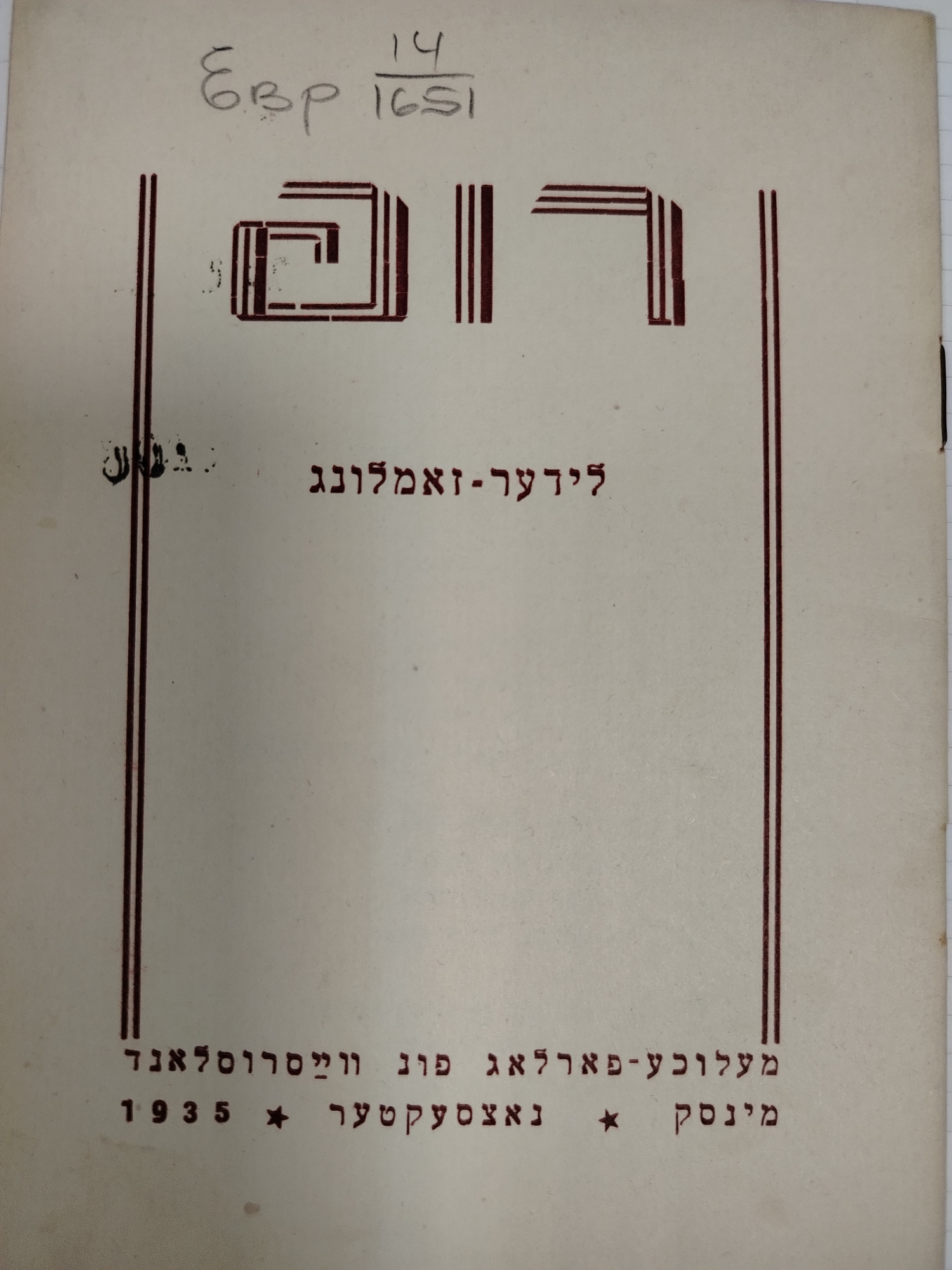
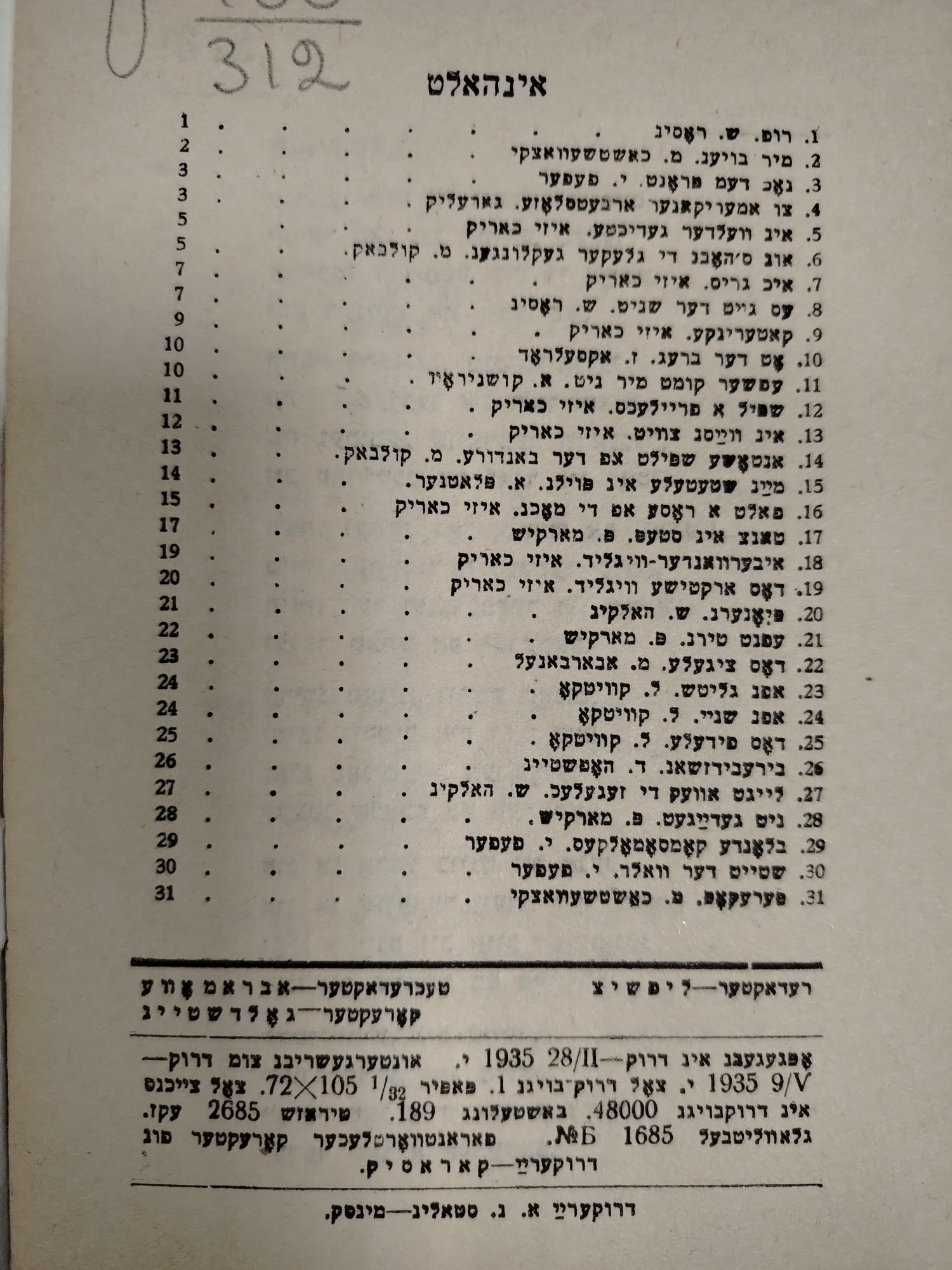
    Pages from Ruf, Lider-Zamlung. Images courtesy of the Russian State Library (Moscow), Oriental Centre.


    He also wrote in 1936/7 Benyomen Magidov (Benyomen Magidov), which was rehearsed in a series of theaters in 1937, but it was not staged. The manuscript has not as yet been uncovered. The director and actor Moyshe Goldblat, who was preparing to direct the play, recounts that in the drama there is a young Jew at the head of a partisan group who were fighting the Polish Legions in Byelorussia. Goldblat deems it “the acme of Moyshe Kulbak’s dramatic works.” Amid the zeal of rehearsals, however, Kulbak was arrested and the text of the play confiscated.

    Kulbak translated poetry by Byelorussian poets and wrote an essay about the Byelorussian poet Yakub Kolas. For the Yiddish theater in Minsk, he translated Nikolai Gogol’s Revizor (The Inspector [The Inspector General] [original: Revizor]), “literarily adapted” the Yiddish translation of Nikolai Ostrovsky’s Vi Shtol Hot Zikh Farhartevet (How the Steel Is Tempered [original: Kak Zakalyalas' Stal']) (Minsk: Byelorussian State Publishers, 1937), 423 pp., and together with Z. Vitenzon he translated and compiled Revolutsyonere Noveln (Revolutionary Novels) (Minsk, 1931), 170 pp.

    We have long known nothing of Kulbak’s fate following his arrest, and all manner of rumor and legend spread concerning his death, with false information continually being given to his family by the juridical authorities. Finally in 1990, the military tribunal of the supreme court of the Soviet Union allowed an open explanation to be made that the military tribunal of the supreme court of Byelorussia had sentenced Kulbak to be shot on October 28, 1937 because he was allegedly a participant in an anti-Soviet organization and an agent of Polish intelligence. The sentence was carried out on October 29, 1937. As for where his remains were buried, to this day no information has been made known.

    His works include:

    Shirim (Vilna: Br. Rozental, 1920), 86 pp.;

    Der Vint Vos iz Gevorn in Kaas (The Wind That Became Angry) (Vilna: Central School Organization, 1921), 15 pp.;

    Lider (Berlin: Klal biblyotek, 1922), 56 pp.;

    Naye Lider (Warsaw: Kultur-Lige, 1922), 63 pp.;

    Meshiekh ben Froim (Berlin: Vostok, 1924), 132 pp.;

    Gezamlte Verk (Collected Works), 3 vols. (Vilna: Kletskin, 1926-1927);

    Montog, a Kleyner Roman (Monday, a Short Novel) (Warsaw: Kultur-Lige, 1926, 1929), 116 pp.;

    Ale Verk fun Moyshe Kulbak (Collected Works of Moyshe Kulbak) — 4 volumes:

    1. Meshiekh ben Froim and Montog, 251 pp.;

    2. Poemen un Lider (Poetry), 231 pp.;

    3. Yankev Frank, 89 pp.;

    4. Zelmenyaner, 169 pp.

    — (Vilna: B. Kletskin, 1929);

    Lider un Poemen, 1917-1928 (Poetry, 1917-1928) (Minsk: Byelorussian State Publishers, 1929), 99 pp.;

    Zelmenyaner (Minsk: Central People’s Publishers, USSR, 1931-1935), 2 vols.,[1] later edition, vol. 1 (Minsk, 1937), 200 pp., vol. 2 (Moscow: Sivetski Pisatel, 1971), 278 pp., with an essay by Moyshe Belenki;

    Disner Tsayld Harald (Minsk: Byelorussian State Publishers, 1933), 98 pp.;

    Geklibene Lider (Selected Poetry) (Minsk: Byelorussian State Publishers, 1934), 103 pp.;

    Meshiekh ben Froim, Montog (Buenos Aires, 1950), 248 pp.;

    Geklibene Verk (Selected Work) (New York: TSIKO (CYCO), 1953), 311 pp.;

    Oysgeklibene Shriftn (Selected Works) (Buenos Aires: Yoysef Lifshits Fund, 1976), 316 pp., including republished articles about him;

    Gut iz der Mentsh (Man Is Good), selected poems (Moscow: Sovetski Pisatel, 1979), 221 pp.

    In Russian:

    Зелменяне (Zelmenyaner), (Moscow:  1960),

    Стихотворения. Поэмы (Stikhotvoreniya. Poemy), (Moscow: 1969).

    His work was included in A Shpigl af a Shteyn: Poezye un Proze fun Tsvelf Farshnitene Yidishe Shraybers in Ratn-Farband (A Mirror on a Stone : Poetry and Prose from Twelve Murdered Jewish Writers in the Soviet Union) (Tel Aviv: Di Goldene Keyt, 1964; Jerusalem: Hebrew University, 1987), with biography and bibliography pp. 756-758.

    As Shmuel Niger wrote: “Moyshe Kulbak was one of the most authentic and original, perhaps the most authentic and original, Yiddish poet of the postwar years…. Future music often played on ancient instruments; revolutionary myth kneaded into mythological tradition—this was one of Moyshe Kulbak’s main properties, and its first consequence was the uniting of the romantic with the realistic…and its second result was the explosion of the innovative use of humor in romantic realism.”

    Moyshe Kulbak was frequently criticized in Soviet Russia. Khatskl Dunets wrote that Kulbak came “here” loaded with “a heritage that was not ours,” that he created his intellectual culture “from Kabbalistic Jewish philosophy, Jewish mysticism, and scholasticism. Even in those of his works in which there is no messianism (Raysn), he was not free of bourgeois romanticism, and in Bunye un Bere he articulates an anarchist-pessimistic attitude toward the revolution…. His Zelmenyaner sets out a crisis and a competition to free himself from the bourgeois mystical heritage—but he succeeds not at all.”

    Yashe Bronshteyn writes that, although from Montog until Zelmenyaner “is quite a distance, Kulbak nonetheless offers a “splendid beginning of a new style.” Kulbak was laden with the old Jewish cultural heritage. Mysticism and folklore were important elements in his writings. He was influenced by Russian symbolism and Western European expressionism. Permeated by all these elements, Kulbak created authentic works with his own original talent. In his Soviet period (1928-1937), he had to conform to local conditions, but he also created works of artistry.


    [1] Translator’s note: This novel has been translated into Hebrew, English, Russian, French, German, and Spanish. (JAF)


    Sources: Zalmen Reyzen, Leksikon, vol. 3; “A Bintl Briv fun Bal-Makhshoves” (A Batch of Letters from Bal-Makhshoves), Tsukunft (New York) 8 (1928); Kh. Dunets, in Farmest (Kiev-Kharkov) 1 (1933), pp. 148-61; Yashe Bronshteyn, Farfestikte Pozitsyes (Published Positions) (Moscow, 1934), pp. 158-85; Y. Y. Trunk and A. Tsaytlin, Antologye fun der Yidisher Proze in Poyln Tsvishn Beyde Velt Milkhomes (1914-1939) (Anthology of Yiddish Prose in Poland Between the Two World Wars, 1914-1939) (New York, 1946), pp. 589-609; A. Golomb, in Zamlbikher (New York) 8 (1952); Y. Rapoport, Oysgerisene Bleter (Torn up Newspaper) (Melbourne, 1957), pp. 138-56; Avrom Sutzkever and F. Meltser, in Di Goldene Keyt (Tel Aviv) 27 (1957); A. Leyeles, Velt un Vort, Literarishe un Andere Eseyen (World and Word, Literary and Other Essays) (New York, 1958), pp. 86-100; Shmuel Niger, Yidishe Shrayber in Sovet-Rusland (Yiddish Writers in Soviet Russia) (New York, 1958), pp. 69-125; A. Pomerants, Di Sovetishe Haruge Malkhes (The [Jewish Writers] Murdered by the Soviet Government) (Buenos Aires, 1961), pp. 209-14, 491; A. Vogler and Y. Gilgitsh, in Di Goldene Keyt 43 (1962); Y. Sheyn, Arum Moskver Yidishn Teater (Around the Moscow Yiddish Theater) (Paris, 1964), pp. 141-55; A Shpigl af a Shteyn, Antologye, Poezye un Proze fun Tsvelf Farshnitene Yidishe Shraybers in Ratn-Farband (A Mirror on a Stone, Anthology, Poetry and Prose from Twelve Murdered Jewish Writers in the Soviet Union) (Tel Aviv: Di Goldene Keyt, 1964; Jerusalem: Hebrew University, 1987)), pp. 756-758; A. Planter, in Sovetish Heymland (Moscow) 3 (1966); H. Remenik, in Sovetish Heymland 6 (1968); A. Vergelis, in Sovetish Heymland 3 (1971); Elye (Elias) Shulman, Di Sovetish-Yidishe Literatur (Soviet Yiddish Literature) (New York, 1971), see index; Meylekh Ravitsh, Dos Mayse-Bukh fun Mayn Lebn (The Storybook of My Life) (Tel Aviv, 1975), pp. 189-201; Kh. Bez, Af di Vegn fun der Yidisher Literatur (On the Pathways of Yiddish Literature) (Tel Aviv, 1980), pp. 367-416.

    •

    קולבאַק, משה

    20סטן מאַרץ 1896 – 29סטן אָקט׳ 1937

    41 יאָר

     דיכטער, דערצײלער, ראָמאַניסט, דראַמאַטורג. זײַן פֿאָטער איז געװען אַ װאַלד־פֿאַרמיטלער און די מאַמע האָט געשטאַמט פֿון אַ משפּחה ערד־אַרבעטערס אין דער ייִדישער קאָלאָניע „קרקע“ לעבן סמאָרגאָן. געלערנט אין חדר מתוקן און גלײַכצײַטיק אין דער ייִדיש־ רוסישער פֿאָלקשול, שפּעטער אין די ישיבֿות פֿון סװענציאַן, װאָלאָזשין, מיר. בעתן ערשטן װעלטקריג אַריבער קײן קאָװנע און געװען אַ לערער אין דאָרטיקן ייִדישן יתומים־הױז.

    אין קאָװנע אָנגעהױבן שרײַבן לידער אױף העברעיִש און — באַפֿרײַענדיק זיך פֿון אַחד־העמס השפּעה — אױף ייִדיש. דאָרט אָנגעשריבן זײַנע לידער „װינטער,“„ זילבער שנײ און תּכלת,“ „הורדוס,“ „די צעשטערונג פֿון בבֿל,“ „שטאַרב“ (פֿאַרעפֿנטלעכט אין גאָלדענע קײט (1957: 27). האַרבסט 1916 דעביוטירט אין װילנער ליטעראַרישע העפֿטן, 1, מיטן ליד „שטערנדל,“ װאָס איז גיך געװאָרן אַ פֿאָלקסליד.

    אין 1917 פֿאַרעפֿנטלעכט אין דער װילנער צײַטונג לעצטע נײַעס אַ פֿראַגמענט פֿון אַ פּאָעמע „די צעשטערונג פֿון בבֿל“. אין 1918 האָט ער געװױנט מיט די עלטערן אין מינסק, װוּ געװען אַ לערער אין ייִדישע שולן און געדרוקט לידער און אַרטיקלען אין דער בונדישער צײַטונג דער װעקער.  1918 זיך באַזעצט אין מינסק, װוּ געװען אַ לעקטאָר אױף די ייִדישע לערערקורסן. דעמאָלט געדרוקט אַרטיקלען און לידער אין דער װעקער און װ״בל קולטור און בילדונג (מאָסקװע).

    צװישן אָט די לידער איז געװען אײנס, װאָס האָט באַזונדערס בולט אַנטפּלעקט די נשמה, די געפֿילן פֿונעם יונגן דיכטער: „פֿאַרגעס מיך ניט, מײַן שטעטעלע, / אַלײן ביך איך, אַלײן... / דער מיזרח רופֿט, דער מערבֿ רופֿט, / נאָר כ׳װײס ניט װוּ צו גײן...“. אָט די װאַקלענישן האָבן קולבאַקן דערנאָך לאַנג פֿאַרפֿאָלגט, ערשט שפּעטער װעט ער אין מינוטן פֿון עקסטאַז אױסשרײַען: „לאָמיר גײן! לאָמיר גײן, לאָמיר דאָ איבערלאָזן די שװאַכע...“. אױסגעלאָזט האָט זיך, אָבער, אַז גאַנץ אָפֿט האָט ער אַלײן זיך אַרױסגעװיזן צװישן די „שװאַכע“, װײַל נאָך דער ערשטער באַגײַסטערונג פֿון דער רעװאָלוציע, װעלכע האָבן אים, װי אַ סך אַנדערע שעפֿערישע נאַטורן, אױפֿגעהױבן מיט איר פֿאַלשער שײַן און פֿאַרבלענדט די אױגן, האָט ער פֿאַרלױרן דעם אָריענטיר, און פֿון דעמאָלט אָן הײבן זיך אָן זײַנע װאַנדערונגען.

    אָנהײב 1919 זיך באַזעצט אין װילנע און געװאָרן אַ לערער אין די ייִדישע שולן. אין חודשניק די נײַע װעלט (װילנע, 1919: 1, 2) פֿאַרעפֿנטלעכט פֿראַגמענטן פֿון פּאָעמע די שטאָט (געדרוקט אין גאַנצן אין װײַטער־בוך. װילנע, 1920). 1920 איז אַרױס ק׳ס ערשטע לידער־זאַמלונג א״ט שירים (װילנע, 86 זז׳).

    האַרבסט 1920 אַריבער קײן בערלין, װוּ ס׳איז דעמאָלט אױפֿגעקומען אַ ייִדיש־ליטעראַרישער צענטער.

    געװען באַשעפֿטיקט װי אַ סופֿליאָר בײַ דער „װילנער טרופּע“, װאָס האָט דעמאָלט דאָרטן געשפּילט. דערװײַל פֿאַלט ער דאָרט אַרײַן אין אַ גינסטיקער ליטעראַרישער סבֿיבֿה, באַקענט זיך מיט בעל־מחשבֿות, דוד בערגעלסאָן,ה.ד. נאָמבערג.

    אין ק׳ס לידער און אַ ראָמאַן פֿון יענער צײַט פֿילט זיך דער עקספּרעסיאָניזם, װאָס האָט דעמאָלט דאָמינירט די ליטעראַטור אין בערלין. אין זמ״ב דער אָנהײב (בערלין, 1922) פֿאַרעפֿנטלעכט אַ סעריע לידער — די הײל, אַ לבנה־נאַכט, עשרה דבריא.

    דעמאָלט אָנגעשריבן די דראַמע יעקב פֿראַנק, װאָס איז אָפּגעדרוקט אין צוקונפֿט (אַפּריל 1923). אין דער באַמערקונג פֿון רעד׳ אַברהם ליעסין װערט צ״אַ געזאָגט: „יעקב פֿראַנק, דער פֿראַנקיזם, אײנע פֿון די װילדסטע פֿאַרזעענישן אין דער ייִדישער געשיכטע, איז פֿון דיכטער אַ רעכט ביסל אידעאַליזירט געװאָרן, בעת דער טראַגיזם פֿון די רבנים, די הײליקע מענטשן, װאָס האָבן מיט מסירת־נפֿש קעגן פֿראַנקן געקעמפֿט, איז אַרױסגעקומען אַזױ מטושטש. איז דאָס אַ צינדז צו דער צײַט, װען די פּײַנלעכע שׂינאה צום ייִדנטום איז אין געװיסע קרײַזן אַזױ אין דער מאָדע? דאָס האָט אַזאַ אמתער דיכטער װי קולבאַק געדאַרפֿט לאָזן צו דיכטער מיט אָריענטאַציעס אױפֿן יעװסעק אין מאָסקװע ... [אָבער] די דראַמע איז דאָך אַ קינסטלעריש װערק, אין פֿיל ערטער אינטויִטיװ אױפֿגעפֿאַסט.“ 

    אין בערלין האָט ק׳ אױך געשאַפֿן זײַן ערשטן ראָמאַן משיח בן אפֿרים (בערלין, 1924), געשריבן אין גײַסט פֿון מאָדערניזם, װוּ רעאַליסטישע געשעענישן װערן געשילדערט אױף אַן עקספּרעסיאָניסטיש־פֿאַנטאַסטישן און גראָטעסקן אופֿן. דער ראָמאַן איז דורכגעדרונגען מיט קבלה און ייִדיש־מיסטישע עלעמענטן — און די העלדן זײַנען אי אמתע מענטשן, אי העלדן פֿון ייִדישן פֿאָלקלאָר.

    אין בערלין אַרױסגעגעבן לידער (1922) — די מערסטע פֿון װילנער זאַמלונג שירים. אין זעלביקן יאָר אַרױס אין װאַרשע ק׳ס נײַע לידער, מיט די גרױסע פּאָעמעס רײַסן, ל״ו, אַ ליד צו רוסלאַנד, װוּ ער מאָלט סוררעאַליסטישע גרױלבילדער. — אין בערלין האָט ק׳ זיך אָפּגעגעבן מיט אַלײן־בילדונג, אָבער זײַן עקאָנאָמישער מצבֿ איז געװען אַ שװערער. ער האָט זיך באַקלאָגט אױף דעם אין בריװ צו ש. ניגער (17טן דעצ׳ 1920; 13טן אָקט׳ 1922).

    1923 איז ער צוריקגעקומען קײן װילנע, װוּ ער איז געװאָרן אַ לערער אין די העכערע קלאַסן פֿון די ייִדישע גימנאַזיעס און אין ייִדישן לערער־סעמינאַר. האָט אָפֿט גערעדט און געלײענט פֿון זײַנע װערק פֿאַר דער װילנער יוגנט, װאָס האָט אַרויסגעװיזן באַגײַסטערונג פֿאַר אים. מיט זײַנע תּלמידים האָט ער רעזשיסירט און אױפֿגעפֿירט פּרצעס די גאָלדענע קײט, האָמערס איליאַדע, װאָלפֿזאָנס לײַכטזין און פֿרעמעלײ, דריטן אַקט פֿון שעקספּירס יוליוס צעזאַר, די פּורים־שפּילן דוד און גלית און מכירת יוסף.

    1927 איז ק׳ אױסגעקליבן געװאָרן װי דער פֿאָרזיצער פֿון געגרינדעטן ייִדישן פּען־קלוב אין װילנע. אין זײַנע 5 יאָר װילנע (1923–1928) האָט ער געשאַפֿן די װערק װילנע (צוקונפֿט, 1926), די פּאָעמע בוניע און בערע אױפֿן שליאַך (דאָרטן, 1927), װוּ עס הערט זיך, װי ש. ניגער האָט געשריבן, אַ װידערקול פֿון אַלעקסאַנדער בלאָקס צװעלף, און דעם ראָמאַן מאָנטאָג (1926). 1928 פֿאַרעפֿנטלעכט די דערצײלונג מוניע רער פֿױגל־הענדלער (ייִדישע װעלט, װאַרשע, סעפּט׳). האָט געדרוקט אַרטיקלען אין װילנער טאָג. 

    אָקט׳ 1928 פֿאַרלאָזן װילנע און זיך באַזעצט אין מינסק. אױף דעם געזעגן־אָװנט אין װאַרשעװער ייִדישן ליטעראַטן־פֿאַראײן האָט ער דערקלערט, אַז ער פֿאָרט קײן רוסלאַנד, װײַל די ליטעראַרישע אַטמאָספֿער אין פּױלן איז אים ניט געפֿעלן. אַ. גאָלאָמב שרײַבט, אַז די סיבה איז געװען ק׳ס װילן זיך צו פֿאַראײניקן מיט זײַן משפּחה אין רוסלאַנד.

    אַ פּאַראַדאָקס — דװקא דער לעצטער יאָרצענדליק (פֿון 1928 ביז 1937) איז אפֿשר טאַקע געװען דער סאַמע גליקלעכסטער אין דער שאַפֿונג פֿונעם שרײַבער: אײנס נאָכן אַנדערן דערשײַנען זײַנע נײַע ביכער — ראָמאַנען, דערצײלונגען, און דער עיקר — פּאָעזיע. אַן אָפּקלײַב פֿון זײַנע פֿריִערדיקע לידער און פּאָעמעס גײט אַרױס אין 1929, אין 1933 פֿאַרעפֿנטלעכט ער די אױטאָביאָגראַפֿישע פּאָעמע װעגן זײַן לעבן אין דײַטשלאַנד, „דיסנער טשײַלד־האַראָלד“. אין 1931–1935 שאַפֿט ער זײַן גרעסערע דערצײלונג אין צװײ בענד „זעלמעניאַנער“ — אַן עפּאָפּעע װעגן דעם גורל פֿון אַ מינסקער ייִדישער משפּחה אין די באַדינגונגען פֿונעם נײַעם, סאָװעטישן לעבנס־שטײגער.

    אין 1934 דערשײַנט אין מינסק נאָך אײן באַנד פֿון זײַנע פּאָעטישע װערק — „געקליבענע לידער“. אין 1935 פֿאַרענדיקט ער די דראַמע „בױטרע“, װאָס װערט גלײַך אױפֿגעפֿירט אין אַלע ייִדישע מלוכה־טעאַטערס פֿון ראַטן־פֿאַרבאַנד.

    צװײ לידער פֿון ק׳  זענען געװען אין דער זאַמלונג רוף, לידער זאַמלינג, רעדאַקטירט פֿון ליפֿשיץ. (מינסק: מעלוכע־פֿאַרלאַג פֿונ װײַסרוסלאַנ, נאַצסעקטטער), 1935. 31 [1] זז׳.

    Pages from Ruf, Lider-Zamlung. Images courtesy of the Russian State Library (Moscow), Oriental Centre.

    אין 1936–37 רעפּעטירן שױן אַ רײ טעאַטערס זײַן פּיעסע „בנימין מאַגידאָװ“. דאָס האָט געזאָלט זײַן, לױט דער מײנונג פֿון משה גאָלדבלאַט, דעם רעזשיסאָר און אַקטיאָר, „דער העכסטער פּונקט אין משה קולבאַקס דראַמאַטישן שאַפֿן“. נאָר אין סאַמע ברען פֿון די רעפּעטיציעס אַרעסטירט מען קולבאַקן, דעם טעקסט פֿון דער פּיעסע קאָנפֿיסקירט מען און ביז הײַנטיקן טאָג קאָן מען אים ניט געפֿינען.

    ק׳ האָט איבערגעז׳ לידער פֿון װײַסרוסישע פּאָעטן, געשריבן אַן אָפּהאַנדלונג װעגן װײַסרוסישן פּאָעט יאַקוב קאָלאָס. פֿאַרן ייִדישן טעאַטער אין מינסק איבערגעז׳ נ. גאָגאָלס רעװיזאָר, „ליטעראַריש באַאַרבעט“ די ייִדישע איבערן׳ פֿון ניקאָלײַ אָסטראָװסקיס װי שטאָל האָט זיך פֿאַרהאַרטעװעט (מינסק, 1937) און צוזאַמען מיט ז. װיטענזאָן איבערגעז׳ און צונױפֿגעשטעלט רעװאָלוציאָנערע נאָװעלן (דאָרט, 1931).

    װעגן דעם װײַטערדיקן גורל פֿונעם שרײַבער האָט מען לאַנג גאָרנישט ניט געװוּסט, װעגן זײַן טױט זײַנען פֿאַרשפּרײט געװען כּלערלײ לעגענדעס. די משפּחה האָט אױף די װענדונגען צו די יורידישע אָרגאַנען אַלע מאָל באַקומען פֿאַלשע ידיעות, און בלױז אין 1990 האָט דער סעקרעטאַריאַט פֿון דער מיליטערישער קאָלעגיע פֿונעם אױבערגעריכט פֿון ראַטן־פֿאַרבאַנד זיך דערלױבט מאַכן אַן עפֿנטלעכע דערקלערונג, אין װעלכער ס׳איז געזאָגט געװאָרן, אַז די מיליטערישע קאָלעגיע פֿונעם אױבערגעריכט פֿון ווײַסרוסלאַנד האָט פֿאַרמישפּט קולבאַקן דעם 28סטן אָקטאָבער 1937 צום דער שיסן, ווײַל ער איז כּלומרשט געװען אַן אָנטײלנעמער אין אַן אַנטיסאָװעטישער אָרגאַניזאַציע און אַן אַגענט פֿון דער פּױלישער אױסשפּירונג. דער אורטײל איז אױסגעפֿירט געװאָרן דעם 29סטן אָקטאָבער 1937 יאָר. װעגן דעם אָרט, װוּ ער איז געבראַכט געװאָרן צו קבֿורה, זײַנען קײן ידיעות ניט פֿאַראַן.

    װערק:

    שירים װילנע, תּר״פּ. 86 זז׳;

    דער װינט װאָס איז געװאָרן אין כּעס. דאָרטן, 1921. 15 זז׳;

    לידער. בערלין, 1922. 56 זז׳;

    נײַע לידער. װאַרשע, 1922. 63 זז׳;

    משיח בן אפֿרים בערלין 1924. 132 זז׳;

    געזאַמלטע װערק אין 3 בענד, װילנע, 1926–1927;

    מאָנטאָג (אַ קלײער ראָמאַן). װאַרשע, 1929. 116 זז׳;

    אַלע װערק — 4 בב׳:

    1. משיח בן אפֿרים: מאָנטאָג.

    2. פּאָעמען און לידער.

    3. יעקב פֿראַנק.

    4. זעלמעניאַוער.

    — װילנע, ב. קלעצקין, 1929 (ב׳ 4 אָ״י);

    לידער און פּאָעמען, 1917–1928. מינסק, 1929. 99 זז׳:

    זעלמעניאַנער מינסק, 1931־ 1935. 2 בב׳; װילנע, 1937. 200 זז׳ (ב׳ 2, מאָסקװע, 1971. 278 זז׳, מיט אָפּהאַנדלונג פֿון מ. בעלענקי);

    דיסנער טשײַלד האַראָלד. פּאָעמע. דאָרטן, 1933. 98 זז׳;

    געקליבענע לידער דאָרטן, 1934. 103 זז׳;

    משיח בן אפֿרים: מאָנטיק. ב״אַ, 1950. 248 זז׳;

    געקליבענע װערק. נ״י, 1953. 311 זז׳;

    אױסגעקליבענע שריפֿטן. ב״אַ, 1976. 316 זז׳ [מיט איבערגעדרוקטע אַרטיקלען װעגן אים].

    גוט איז דער מענטש. געקליבענע לידער און פּאָעמעס. מאָסקװע, סאָװעטסקי פּיסאַטעל, 1979. 221 זז׳.

    אױף רוסיש: Зелменяне, (זעלמעניאַנער), מאָסקװע, Стихотворения. Поэмы ;1960, (לידער) מאָסקװע, 1969.

    אין: אַ שפּיגל אױף אַ שטײן, תּ״א, 1964, מיט ביאָגראַפֿיע און ביבליאָגראַפֿיע זז׳ 756–758.

    „משה קולבאַק איז אײנער פֿון די עכטסטע און אָריגינעלסטע, אפֿשר דער עכטסטער און אָריגינעלסטער ייִדישער דיכטער פֿון דער נאָך מלחמה צײַט ... צוקונפֿט־מוזיק געשפּילט אָפֿט אױף פֿאַרצײַטיקע כּלים; רעװאָלוציאָנערער מיטאָס, געקנאָטן אױף מיטאָלאָגישער מסורה — דאָס איז געװען אײנע פֿון משה קולבאַקס הױפּט־אײגנשאַפֿטן, און איר ערשטער פּועל־יוצא איז געװען אַ פֿאַראײניקונג פֿון ראָמאַנטיק מיט רעאַליזם ... און איר צװײטער רעזולטאַט איז געװען די עקספּלאָזיע פֿון דעם אײגנאַרטיקן ראָמאַנטיש־רעאַליסטישן געמיט־הומאָר.“ (ש. ניגער).

    אין סאָװעט־רוסלאַנד איז ק׳ אָפֿט קריטיקירט געװאָרן.כ. דונעץ שרײַבט, אַז קולבאַק איז געקומען אַהין אָנגעלאָדן מיט „אַ ירושה ניט קײן אומחעריקע“, אַז זײַן אינטעלעקטועלע קולטור האָט ער געשעפּט „פֿון דער ייִדישער קבלה־פֿילאָסאָפֿיע, ייִדישער מיסטיק און סכאָלאַסטיק — און פֿון דעם רוסישן און ייִדישן סימבאָליזם. אַפֿילו אין יענע פֿון זײַנע שאַפֿונגען, װוּ ס׳איז ניטאָ דער משיחיזם (רײַסן), איז ער ניט פֿרײַ פֿון בורזשואַזער ראָמאַנטיק, און אין בוניע און בערע דריקט ער אױס אַן אַנאַרכיסטיש־פּעסימיסטישע באַציִונג צו דער רעװאָלוציע ... זעלמעניאַנער שטעלט פֿאָר אַן איבערברוך און אַ פֿאַרמעסט צו באַפֿרײַען זיך פֿון דער בורזשואַזער מיסטישער ירושה — אָבער עס האָט זיך אים ניט אין גאַנצן אײַנגעגעבן.“

    י. בראָנשטײן האָט געשריבן, אַז הגם פֿון מאָנטאָג ביז די זעלמעניאַנער איז „פֿאָלג מיר אַ גאַנג“, האָט אָבער ק׳ געגעבן נאָר „גלענצנדיקע אָנהײבן פֿון אַ נײַעם נוסח.“ ק׳ איז געװען אָנגעלאָדן מיט דער אַלטער ייִדישער קולטור־ירושה. מיסטיציזם און פֿאָלקלאָר זײַנען געװען װיכטיקע עלעמענטן אין זײַן שאַפֿן. ער איז געװען באַװירקט פֿון רוסישן סימבאָליזם און פֿון מערב־אײראָפּעאישן עקספּרעסיאָניזם. דורכגעדרונגען מיט די אַלע עלעמענטן, האָט ק׳ מיט זײַן אָריגינעלן טאַלאַנט געשאַפֿן עכטע װערק. אין זײַן סאָװעטישער תּקופֿה (1928–1937) האָט ער געמוזט זיך צופּאַסן צו די דאָרטיקע באַדינגונגען, אָבער אױך דעמאָלט האָט ער געשאַפֿן קינסטלערישע װערק.


    מקורים: ז. רײזען, 3; „אַ בינטל בריװ פֿון בעל־מחשבות,“ צוקונפֿט, נ״י, 1928: 8; כ. דונעץ, פֿאַרמעסט, קיִעװ־כאַרקאָװ, 1933: 1, זז׳ 148־ 161; י. בראָנשטײן, פֿאַרפֿעסטיקטע פּאָזיציעס, מאָסקװע, 1934. זז׳ 158–185;י.י. טרונק, אַ. צײטלין, אַנטאָלאָגיע פֿון דער ייִדישער פּראָזע אין פּױלן, נ״י, 1946. זז׳ 589–609; אַ. גאָלאָמב, זאַמלביכער, 8. נ״י, 1952; י. ראַפּאָפּאָרט, אױסגעריסענע בלעטער, מעלבורן, 1957. זז׳ 138–156;אַ. סוצקעװער, פֿ. מעלצער, גאָלדענע קײט, תּ״א, 1957: 27; אַ. לעיעלעס, װעלט און װאָרט, נ״י, 1958. זז׳ 86–100;ש. ניגער, ייִדישע שרײַבער אין סאָװעט־ רוסלאַנד, נ״י, 1958. זז׳ 69–125;אַ. פּאָמעראַנץ, סאָװעטישע הרוגי מלכות, זז׳ 209–214, 491; א. װאָגלער, י. גילגיטש, גאָלדענע קײט, 1962: 43; י. שײן, אַרום מאָסקװער ייִדישן טעאַטער, פּאַריז, 1964. זז׳ 141–155; אַ שפּיגל אױף אַ שטײן, תּ״א, 1965. זז׳ 335–341; א. פּלאַטנער, סאָװעטיש הײמלאַנד, 1966: 3; ה. רעמעניק, דאָרטן, 1968: 6; אַ. װערגעליס, דאָרטן, 1971: 3; אלי שולמאַן, די סאָװעטיש־ייִדישע ליטעראַטור, נ״י, 1971. אינדעקס; מ. ראַװיטש, דאָס מעשׂה־בוך פֿון מײַן לעבן, תּ״א, 1975. זז׳ 189–201; ח. בעז, אױף די װעגן פֿו דער ייִדישער ליטעראַטור, תּ״א, 1980. זז׳ 367–416.

    © 2026 Congress for Jewish Culture 
    Rights are reserved. If you wish to quote small portions of text or data from this Lexicon, you may do so with full attribution to the Congress for Jewish Culture and a link to the specific site, which credits the sources. The Lexicon is perpetually in process; so some elements cited might change as we correct and update information.

    If you notice any errors or omissions in this Lexicon (or if you have any concerns or need help) please email us -- Or feel free to post a Public Comment, form at the end of each person's biography.

    NOTE
    A lot of our English and Yiddish texts and metadata are being worked on: researched, checked, corrected, fixed, formatted, updated, and translated.
    There are many ways you can help.

    Leave a comment

    Kulbak, Moyshe contributed a story "Der rebzehoyf demonstrirt" to the collection Royte armey (Red Army) (Minsk: State Publ., 1932), 120 pp. compiled by N. Vaynhoyz.

    מ. קולבאק

    דער רעבזעהױפ דעמאנסטרירט


    1/24/2025
    maria zavorohina

    MOYSHE KULBAK is mentioned as the "redakter fun der iberzetsung/litredakter/redakter" in 5 Minsk editions (1935-1937) of Shakespeare's translations into Yiddish by Y. Goldberg :
    1. אטעלא: טראגעדיע אינ פינפ אקטנ
    וויליאמ שעקספיר; פונ ענגליש - י. גאלדבערג; רעדאקטער פונ דער איבערזעצונג - מ. קולבאק
    1. Otelo: tragedie in 5 aktn
    Vilyam Shekspir; fun english - Y. Goldberg; redakter fun der iberzetsung - M. Kulbak
    Minsk : Melukhe-farlag fun Vaysrusland. Natssekter, 1935
    2. ראמעא אונ זשוליעטע :טראגעדיע אינ פינפ אקטנ
    וויליאמ שעקספיר; פונ ענגליש - י. גאלדבערג; רעדאקטער - מ. קולבאק
    2. Romeo un Zshuliete : tragedie in 5 aktn
    Vilyam Shekspir; fun english - Y. Goldberg; redakter - M. Kulbak
    Minsk : Melukhe-farlag fun Vaysrusland. Natssekter, 1935
    3. הענרי IV :היסטארישע דראמע אינ 2 טײלנ
    וויליאמ שעקספיר; פונ ענגליש - י. גאלדבערג; ליטרעדאקטער - מ. קולבאק
    3. Henry IV : historishe drame in tsvey teyln
    Vilyam Shekspir; fun english - Y. Goldberg; litredakter - M. Kulbak
    Minsk : Melukhe-farlag fun Vaysrusland. Natssekter, 1936
    4. ריטשארד III :היסטארישע דראמע אינ 5 אקטנ
    וויליאמ שעקספיר; פונ ענגליש - י. גאלדבערג; ליטרעדאקטער - מ. קולבאק
    4. Ritshard III : historishe drame in 5 aktn
    Vilyam Shekspir; fun english - Y. Goldberg; litredakter - M. Kulbak
    Minsk : Melukhe-farlag fun Vaysrusland. Natssekter, 1936
    5. דער שטורעמ : פאנטאסטישע קאמעדיע אינ 5 אקטנ
    וויליאמ שעקספיר; פונ ענגליש - י. גאלדבערג; ליטרעדאקטער - מ. קולבאק
    5. Der shturem : fantastishe komedie in 5 aktn
    Vilyam Shekspir; fun english - Y. Goldberg; litredakter - M. Kulbak
    Minsk : Melukhe-farlag fun Vaysrusland. Natssekter, 1937


    4/15/2023
    maria zavorohina
    Your Comment *
    Reminder - Please state your Source of info in your comment
    You will get an email for verification before your comment is put on the site. We will not make your email address public.