
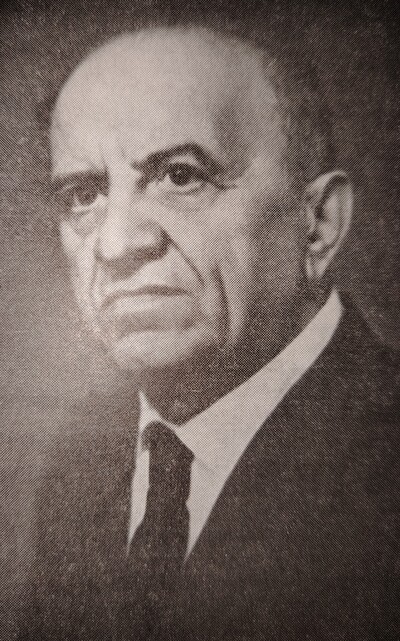
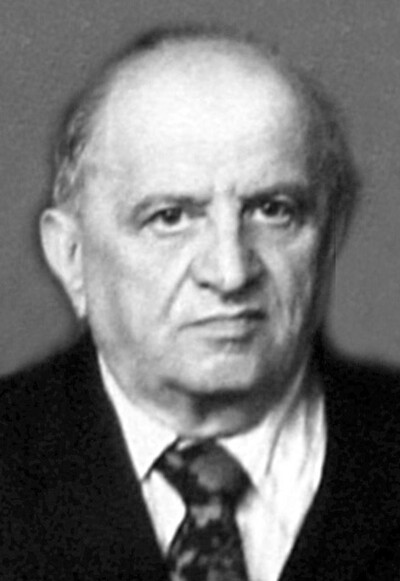
Druker, Irme
December 15, 1906–1982
A prose author and literary critic, he was born in the town of Chernobyl, not far from Kiev, Ukraine. His father was an itinerant teacher and cantor, and a great bibliophile. The future author grew up in a world of music. His home was filled with Jewish and Ukrainian melodies. Irme inherited from his father a fine baritone voice.
In 1923 he came to Kiev with one dream—to study music and become a professional singer. He was accepted into music school. His training proceeded with success, he appeared on stage in concerts performing arias from operas, with Yiddish and Ukrainian folk songs—but he did not become a singer. Kiev was at that time one of the largest centers of Yiddish literature in the country, and he became a member of the literary group led by Dovid Hofshteyn.
In April 1926, there appeared in the newspaper
Der Shtern (The Star) his Story “Dos Ershte Geyeg” (The First Hunt).
Thus began his pathway into literature. In 1929 he published in the anthology
VUSP (an abbreviation for All-Ukrainian Writers Union) a long story of his entitled “In Step” (In the Steppe), in which he described the migration of small town poverty in agriculture.
At the same time, he was writing critical articles and reviews of the work of Yiddish writers.
He moved to Odessa, where a major group of Yiddish authors was active—Khone Vaynerman, Ayzik Huberman, I. Shneur-Okun, Note Lurye, and others. This amplified the range of his literary interests to research on the Yiddish classical heritage: Mendele Moykher-Sforim, Sholem-Aleichem, and Y. L. Perets.
With separate articles he went on later to broader research work. For Sholem-Aleichem’s eightieth birthday, he penned two books:
Sholem-Aleykhem, Kritishe Etyudn (Sholem-Aleykhem, Critical Studies) and,
with Shloyme Bilov, Sholem-Aleykhem, Byografishe Fartseykhenungen (Sholem-Aleykhem, Biographical Notes).
Both volumes appeared in Yiddish, Russian, and Ukrainian.
He also produced an essay entitled
“Kinder-Geshtaltn bay Sholem-Aleykhem” (Images of Children in Sholem-Aleichem) which appeared in the collection Sholem-Aleykhem, Kritishe Artiklen (Sholem-Aleichem, Critical Articles).
Together with the Odessa writers Arn Vorobeytshik and I. Shneur-Okun, he compiled a collection of stories that Sholem-Aleichem had written in Russian.
When a literary studio for young writers opened in an Odessa publishing house, there were three divisions: Russian, Ukrainian, and Yiddish—and Druker managed the Yiddish division for a number of years.
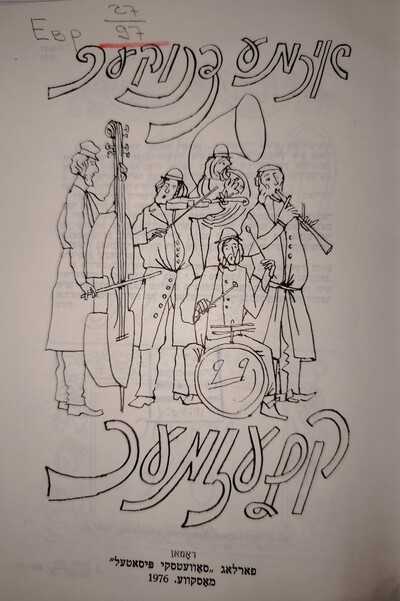
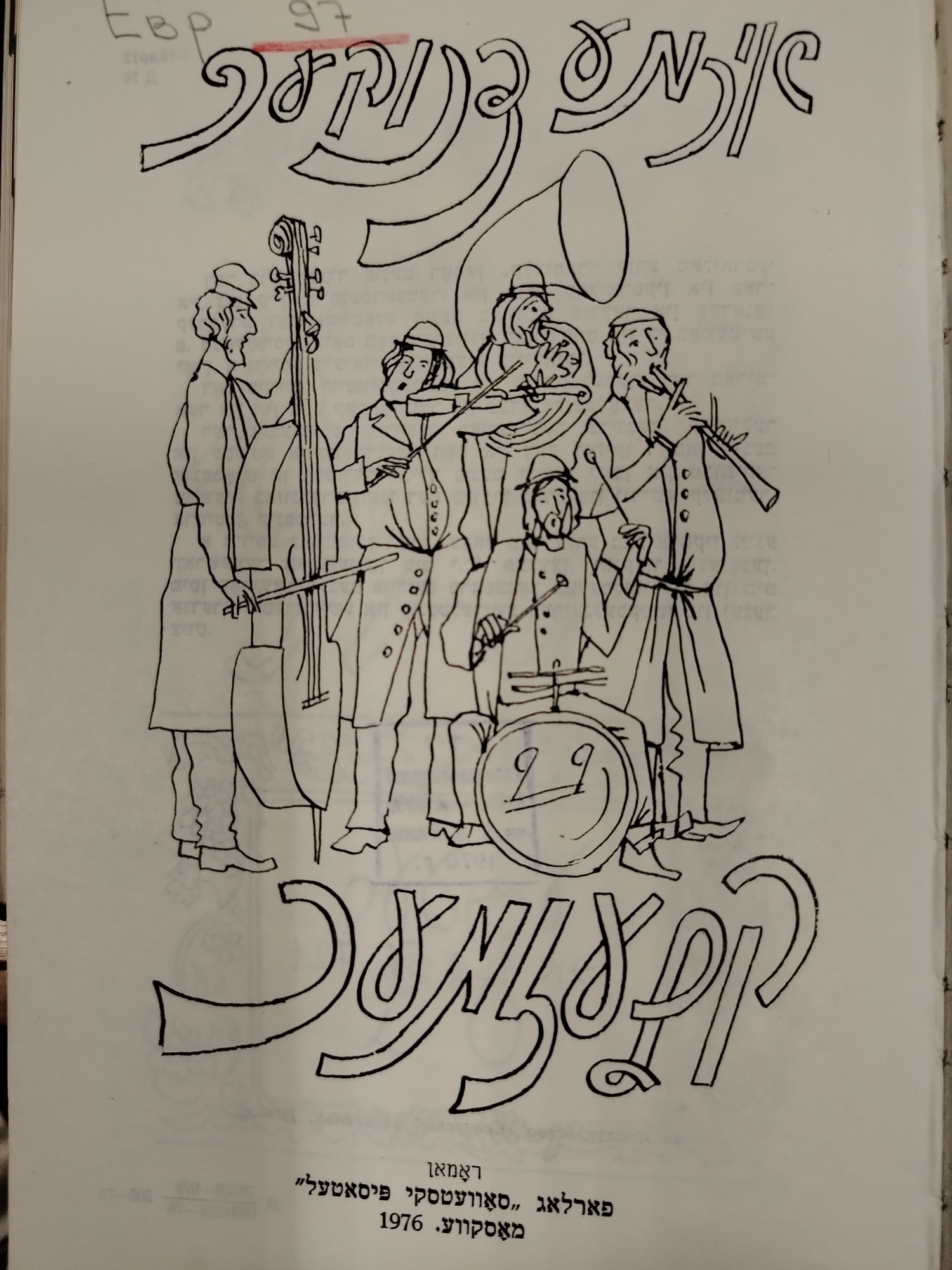
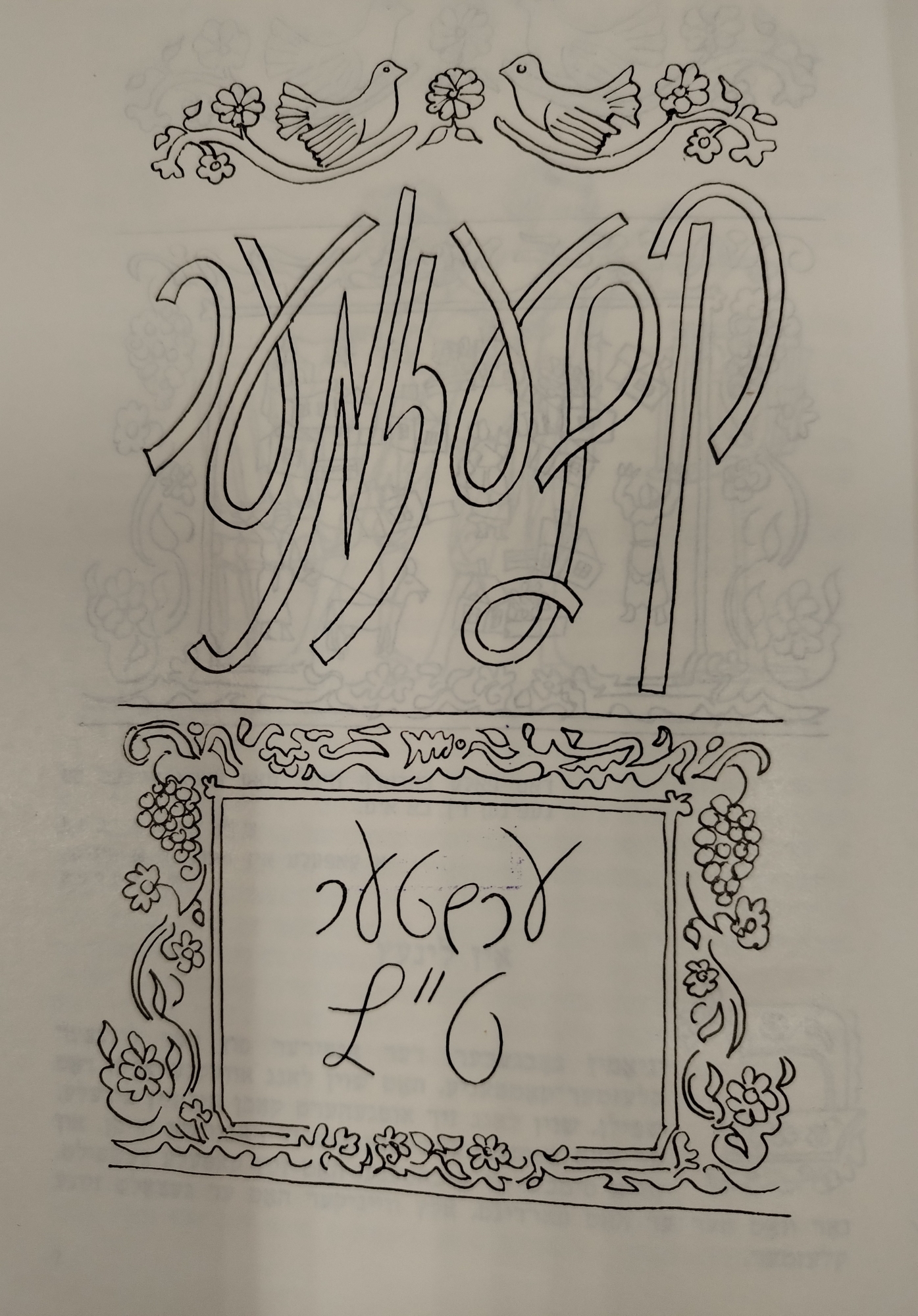
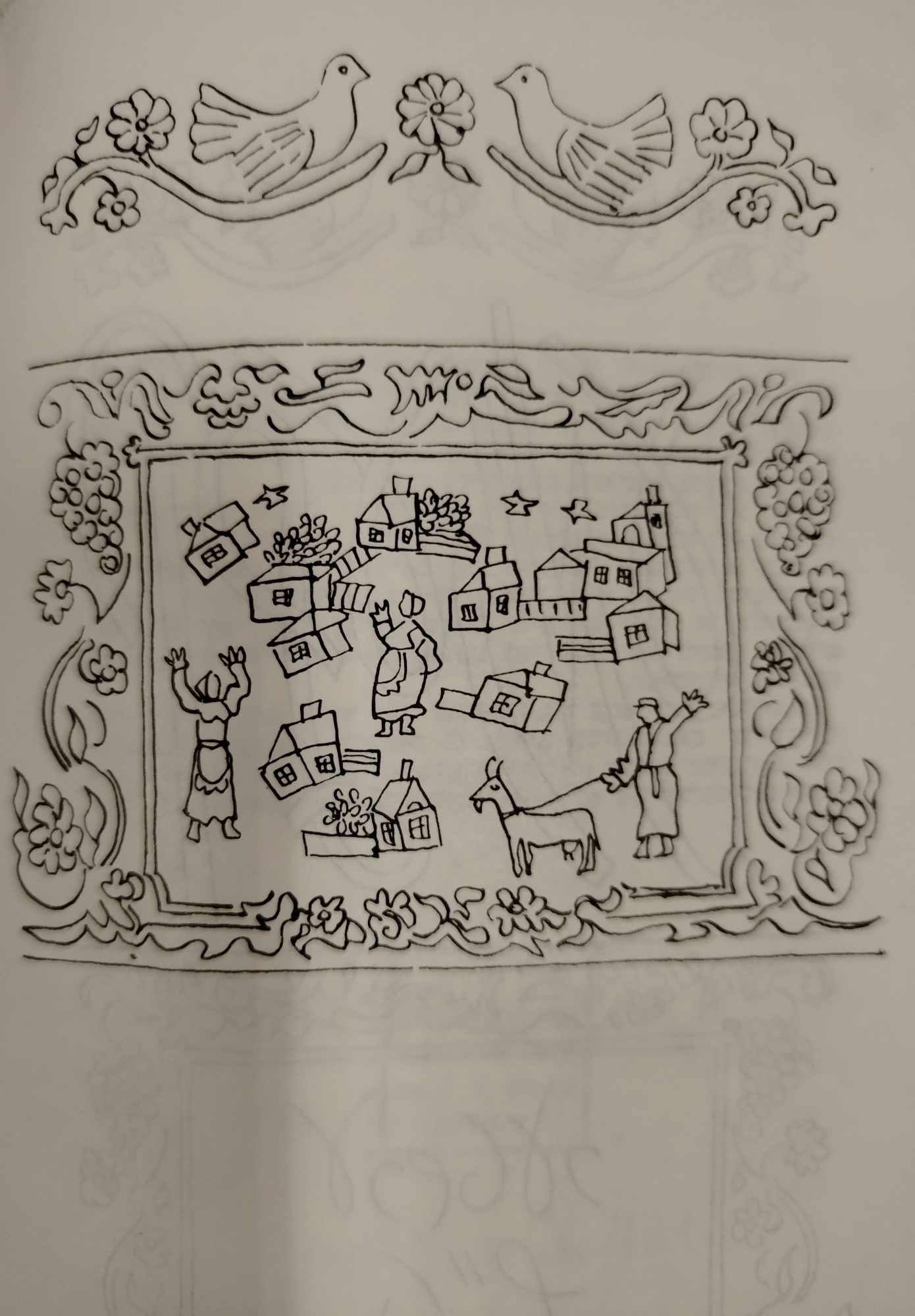
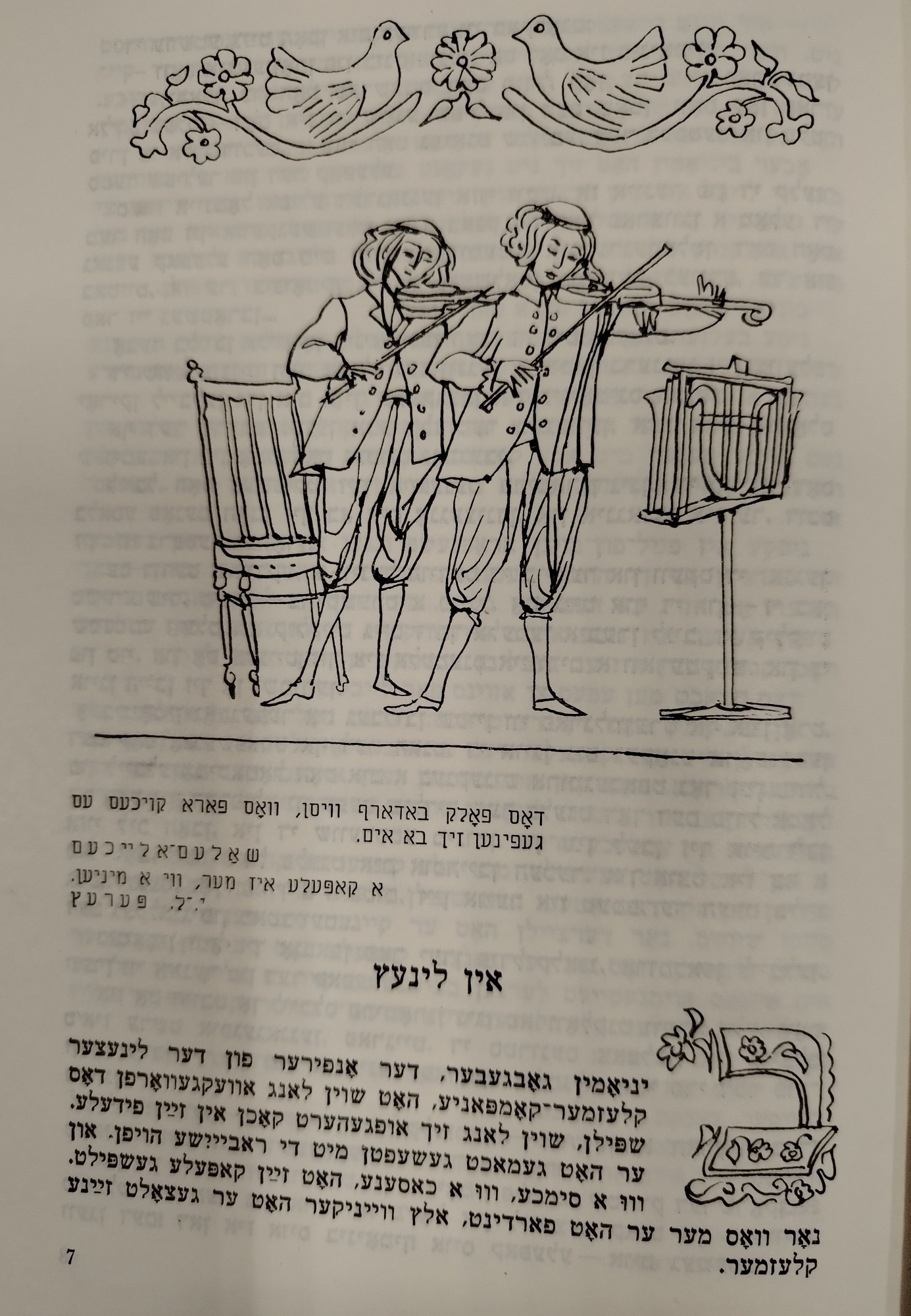
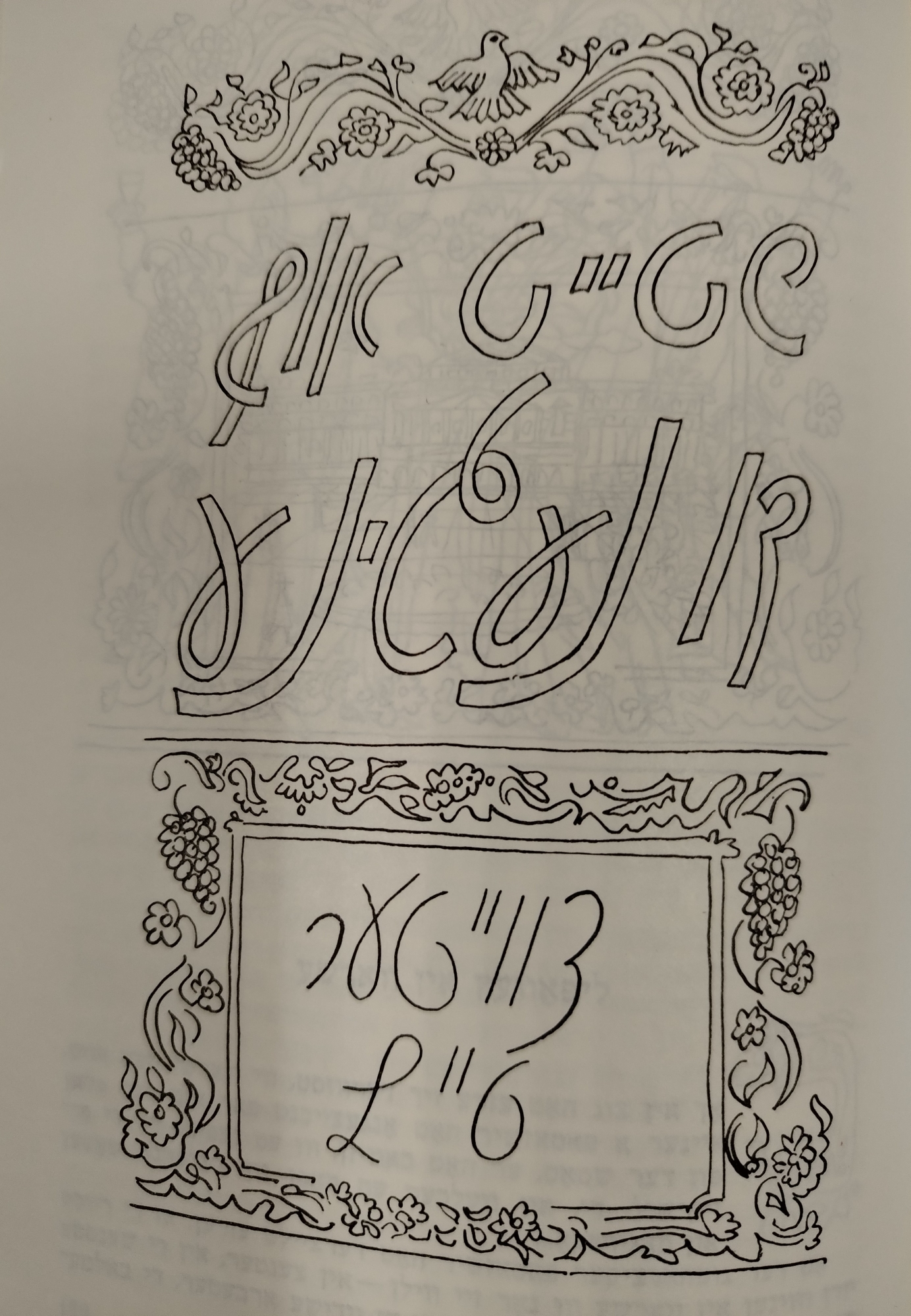
At the same time, one feels a strong sense in his concerns for his youthful love of music, and this love brought him to new fictional writings. Odessa was a musical city, and there the celebrated violinist and teacher Peysi Stolyarski founded the first ten-year music school in the Soviet Union, which produced an entire cluster of prominent musicians. Druker got to know the musicians, befriended Stolyarski, and started writing a novel which he titled
Klezmer (Musician) in which the famed violinist served as a prototype for the protagonist. The first part of the novel appeared in 1940. (See images below and in sidebar.) Moscow: Farlag Sovetski Pisatel, 1976.
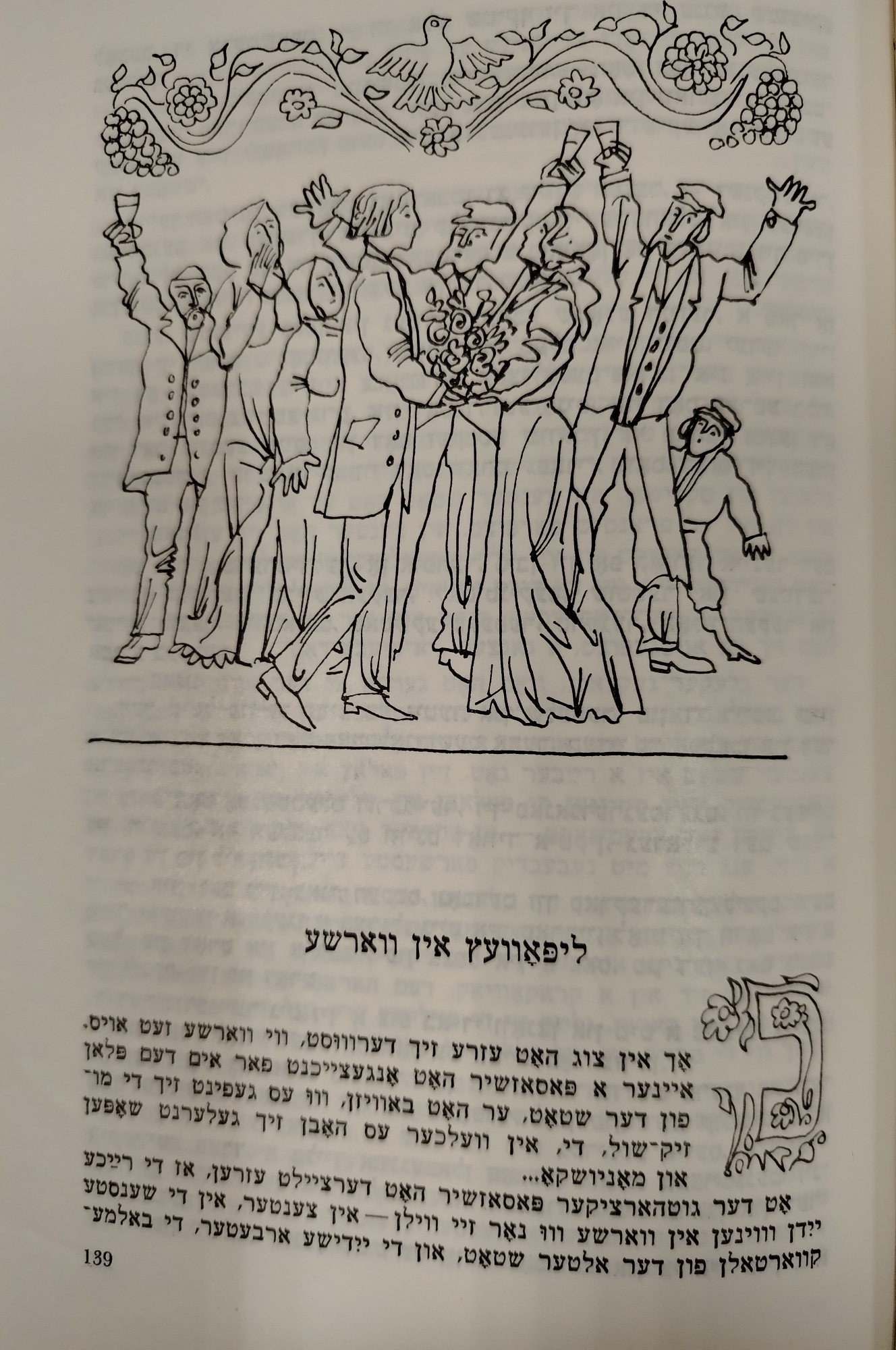
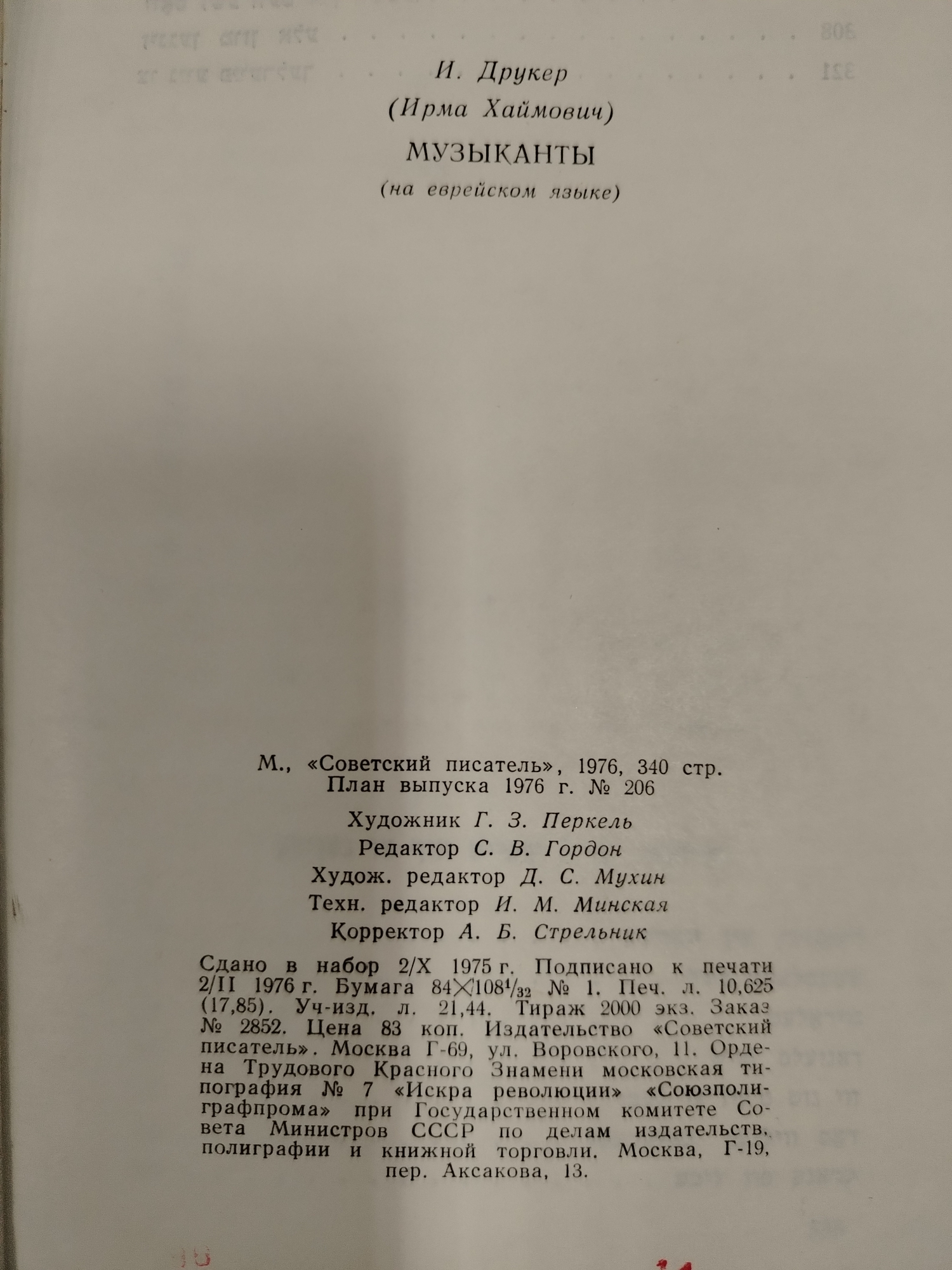
In 1941 Druker was drafted into the military and worked for a Russian divisional newspaper, in which over the next few years he published sketches and stories from life at the front.
After WWII, he settled in Odessa; even after Stalin’s pogroms against Yiddish culture in 1948, Druker did not cease preparing longer works in Yiddish and made strenuous efforts to support Jewish cultural life in the city.
In 1950 he was purged and “rehabilitated” (i.e., exonerated) in 1956. He was very ill at this point; physically and mentally broken, he returned to his home and continued his work on Klezmer. He went over the first part of the novel thoroughly and wrote the second part as well. Both were published, initially, in a Russian translation in 1964 and only in Yiddish in 1976. The critics strongly praised his book Klezmer for “a great deal of folkloristic material” and its clearly drawn characters.
Aside from his fictional writings, he continued his literary research and critical activities. While working on Klezmer in 1964, he published in Russian translation his volume
Der Zeyde Mendele (Grandfather Mendele), a cycle of stories about the fateful moments in the life and creative work of this classic Yiddish author.
In the same style, he created story-cycles about Sholem-Aleichem and Y. L. Perets.
The last work he labored over was the historical novel
Mikhl-Yoysef Guzikov about the legendary musician of the same name.
In his last years, he also contributed frequently to
Sovetish Heymland (Soviet Homeland) in Moscow.
Among his books:
Sholem-Aleykhem, Kritishe Etyudn (Kiev: Ukrainian State Publishers for National Minorities, 1939), 99 pp.;
Sholem-Aleykhem, Byografishe Fartseykhenungen (Kiev: Ukrainian State Publishers for National Minorities, 1939), 82 pp.;
Klezmer, Roman (Musician, a Novel) (Kiev: Ukrainian State Publishers for National Minorities, 1940), 172 pp., new edition (Moscow, 1976), 338 pp.;
Der Zeyde Mendele (Warsaw: Yidish Bukh, 1964), 139 pp.;
Literarishe Eseyen (Literary Essays) (Moscow: Sovetish Heymland, 1981), 62 pp., a supplement to the journal Sovetish Heymland 1 (1981);
Mikhl-Yoysef Guzikov (Moscow: Sovetski Pisatel, 1990), 346 pp.
His work was also included in:
Almanakh fun Yidishe Sovetishe Shrayber (Almanac from Soviet Jewish Writers) (Kharkov: Ukrainian State Publishers for National Minorities, 1934).
The anthology In Undzere Teg (In Our Time) (Moscow: Sovetski Pisatel, 1983) 558 pp. edited by Arn Vergelis.
Sources: Shmuel Niger, in Tsukunft (New York) (February 1930); Sh. Bilov, in Sovetishe Literatur (Kiev) (March 1941); N. Y. Gotlib, in Keneder Adler (Montreal) (March 13, 1942); A. Kushnirov, in Naye Prese (Paris) (July 27, 1945); Eynikeyt (Moscow) (February 16, 1946; June 1, 1947); H. Vaynraykh, Blut af der Zun (Blood on the Sun) (New York, 1950), p. 51.