
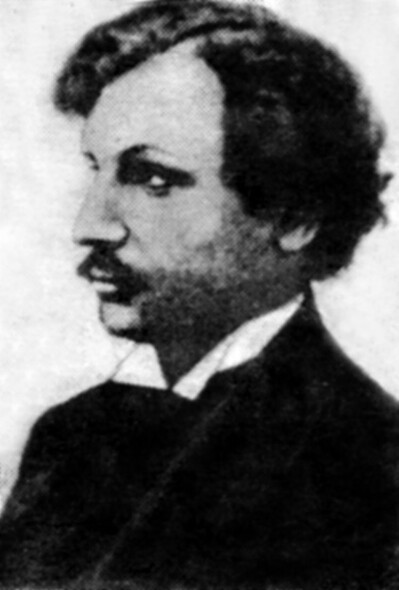
Shafir, Berl
1876–September 24, 1922
The author of stories, dramas, and poetry, he was also a journalist, born in Alt-Konstantin (Starokostyantyniv), Volhynia (Ukraine). He received a weak Jewish education. He was blind in one eye. He came to Odessa in his youth, worked as a cigarette maker, and lived alone in poverty. He died in the era of the Russian civil war during a great famine in Odessa.
He debuted in print in 1906 with a story, entitled “Der Ershter Aroysfor” (The Very Beginning), in St. Petersburg’s journal Dos Leben (The Life). His subsequent poetry and stories appeared, mainly drawn from the life of workers, in: Der Fraynd (The Friend), Der Shtrahl (The Beam [of light]), and Unzer Leben (Our Life). And, he wrote a great deal for the Yiddish press elsewhere: Gut Morgen (Good Morning), Sholem-Aleykhem (How Do You Do?), A Id (A Jew), and Tsaytigs (Mature).
He also contributed work to: Zumer (Summer) (Warsaw: Kultur, 1911); Fayerlekh (Solemn) (Warsaw: Universal, 1913); Yidishe Velt (Jewish World) (Vilna: B. A. Kletskin, 1914); and Untervegs (Pathways) (Odessa: Moriya, 1917).
His work also appeared in such collections as: Morris Basin, 500 Yor Yidishe Poezye (500 Years of Yiddish Poetry) (New York: dos Bukh, 1922); Yoyel Entin, Yidishe Poetn, Hantbukh fun Yidisher Dikhtung (Yiddish Poets, a Handbook of Yiddish Poetry) (New York: Jewish National Labor Alliance and Labor Zionist Party, 1927); and Blumen (Flowers) (Vilna: B. A. Kletskin, 1921).
In 1914 he traveled to Vilna and Warsaw and sold a volume of stories to Kletskin Publishers, but war broke out that year, and the book was not published. In 1915 when the Yiddish press was entirely shut down in the Russian empire, he took up commercial work. After the Revolution, he occasionally published his poems and stories in various collections.
He died on September 24, 1922, leaving behind a widow, three children, and numerous manuscripts, among them the drama Rentgen-Shtralen (X-Rays). He became well known for a long story concerning a happy pauper, Avreml der Shuster, Ertsehlung (Little Avrom the Shoemaker, a Story) (Odessa: Binshtok, 1911), 38 pp., second edition (Odessa: Literatur, 1917/1918), which appeared earlier in a Hebrew translation as Avrahaml hasandal (Odessa, 1909/1910), later edition (Tel Aviv, 1924/1925). It was dramatized by the author and performed by the Hirshbeyn troupe, with Shafir serving as prompter, in 1909 (before even appearing in print). As noted, it was brought out by the publisher Binshtok, founded by Shafir himself.
For the performance, Shafir composed a song, “Afn Boydem Shloft der Dakh” (The Roof Sleeps on the Attic), and Hirshbeyn composed music to it. This song gained such popularity that it became independent and was frequently sung as a folksong. In 1948 the composer Dmitri Shostakovich included “Afn Boydem Shloft der Dakh” in a vocal series he compiled (From Jewish Folk Poetry), consisting of eleven songs, and the text of the seventh song was that of Berl Shafir.
His lengthy story, “Leyzer un Zayn Hunt” (Leyzer and his Dog) appeared in 1914 in Yidishe Velt, and it was translated into Hebrew by Ḥaim Naḩman Bialik.
Several books by him were published after his death:
Rentgen-Shtralen, a drama (Odessa: Jewish section of the Odessa division of the Ukrainian State Publishers, 1922);
Leyzer un Zayn Hunt (Kiev: Gezkult, 1928), 38 pp.;
Geklibene Verk, Lider, Dertseylungen, Dramatishe Pruvn (Selected Works, Poetry, Stories, Dramatic Efforts) (Moscow: Emes, 1934), 430 pp.
He also wrote children’s poems and children’s tales, such as
A Kleyn Mentshele (A Little Person) (Odessa: Blimelekh, 1916) and
Keler-Shtiber (Basement Homes), was also published (Odessa: Binshtok, 1919), 16 pp., among others.
A selection of his stories appeared in Hebrew translation (in part, by Ḥ. N. Bialik) under the title Sipurim vetsiyurim (Stories and Drawings) (Berlin: Yorshe Hameḩaber, 1925), 317 pp.
Many of Shafir’s stories were published in Hebrew translations in: Hashiloaḥ (The Shiloah), Haolam (The World), and elsewhere.
In addition to “Afn Boydem Shloft der Dakh,” a number of his poems in a folkish register became quite popular, such as: “Mayn Khaver Hershl” (My Friend Hershl) and “Ikh bin Gekumen Keyn Rakhmastrivke” (I Came to Rotmistrivka). He also penned the plays: Di Operatsye (The Operation) and Der Shuster Geyt Hakofes (The shoemaker takes part in the Torah procession in Simchat Torah)—both are included in his Geklibene Verk.
Sources: Zalmen Reyzen, Leksikon, vol. 4; Zalmen Zilbertsvayg, Leksikon fun Yidishn Teater (Lexicon of the Yiddish Theater), vol. 6 (Mexico City, 1969); B. Epelboym, obituary in Bikher-Velt (Warsaw) (1922), pp. 459, 559; Literarishe Bleter (Warsaw) 70 (1925); Farmest (Kiev) 1 (1933).