
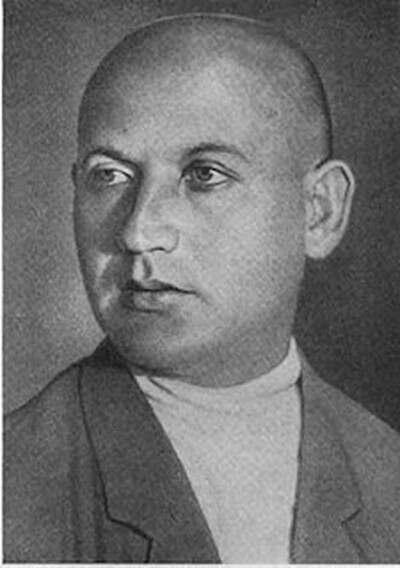
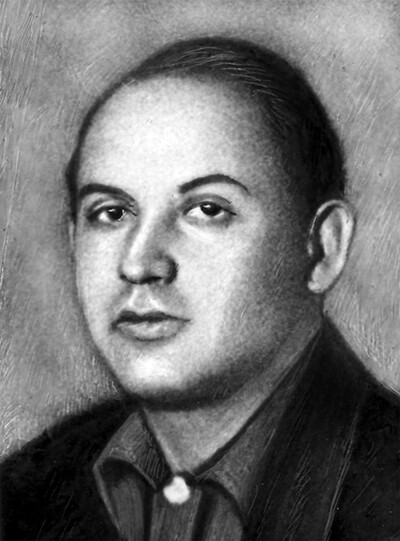
Rosin, Shmuel
August 30, 1890–October 1941
The author of poetry and stories, he was born in the town of Shumyatsh (Shumyachi), Smolensk district, Byelorussia [now in Russia], into a poor family of a wagon driver. He studied in religious elementary school and yeshivas. At age fourteen he joined the Bund, for a short time the Zionist socialist party, and then back to the Bund. He lived in Ekaterinoslav (Dnepropetrovsk) where he worked as a painter and tinsmith, later moving to Odessa, Kharkov, Penza, and a variety of colonies in Tavriya; in 1921, he moved to Moscow.
At age twenty he began writing poetry and stories about working life. He debuted in print in 1917 in the Minsk newspaper Veker (Awakener). From that point he contributed work to most Soviet Yiddish publications: Shtrom (Current), Royte velt (Red world), Shtern (Star), Yungvald (Young Forest), Sovetish (Soviet), Prolit (Proletarian Literature), Sovetishe Literatur (Soviet Literature), and Forpost (Outpost), as well as in Sambatyen (Sambatyon) in Riga and Vispe (Islet) in Kovno, among other serials.
He published his first book, Bobe-Mayses, Kinder-Poemen (Fairy Tales, Children’s Stories), in 1918, and the following year Moyerkeplakh (Seashells). In the years when he was living in Kharkov, he made his first efforts at playwriting. His drama Di Oyfvakhung (The Awakening) was staged by Kharkov’s Gzhatkin’s Theater. He was especially active in the realm of literature once he moved to Moscow. A distinctive place in his poetry was reserved for the revolutionary events in Russia. Together with many other writers, he went to the front with the Moscow militia.
He died in battle in 1941 near the Russian city of Vyazma.
His works appeared in an array of literary anthologies and collections: Mut (Courage) (Moscow: Jewish Communist Section, 1920); Yugnt (Youth) (Kharkov: Central Committee of Communist Youth, 1922); Nayerd (New earth) (Moscow: Central People’s Publishers, USSR, 1925); Froyen, Literarishe Zamlung (Women, Literary Collection) (Moscow: Central People’s Publishers, USSR, 1928); Far der Bine: Dertseylungen, Pyeses, Lider (For the Stage: Stories, Plays, Poems) (Moscow: Central People’s Publishers, USSR, 1929); Fertsn Oktyabers, Literarishe Zamlung (Fourteen Octobers, Literary Collection) (Moscow: Emes, 1931); Der Arbeter in der Yidisher Literatur (The Worker in Yiddish Literature) (Moscow-Minsk: Central People’s Publishers, Ussr, 1931); In Iberboy, Literarishe Kritishe Artiklen (Under Reconstruction, Literary Critical Articles) (Moscow: Emes, 1932); Der Veg fun Farat, Kamf Kegn Bundizm un Menshevizm in der Yidisher Proletarisher Literatur (The Road of Treachery, the sTruggle Against Bundism and Menshevism in Yiddish Proletarian Literature) (Moscow-Minsk: Central People’s Publishers, USSR, 1932); Shlakhtn (Battles) (Kharkov, 1932); Deklamater fun der Sovetisher Yidisher Literatur (Reciter of Soviet Yiddish Literature) (Moscow: Emes, 1934); Lenin un di Kinder (Lenin and Children) (Kharkov-Kiev: Ukrainian State Publishers for National Minorities, 1934); Ruf, Lider Zamlung (Call, Poetry Collection) (Minsk: Byelorussian State Publishers, 1935); Sovetishe Vaysrusland (Soviet Byelorussia) (Minsk: Byelorussian State Publishers, 1935); Lider vegn Stalinen (Poems about Stalin) (Kiev: State Publishers, 1937); Lider vegn der Royter Armey (Lenin on the Red Army) (Kiev, 1938); Komyug, Literarish-Kinstlerisher Zamlbukh ([Jewish] Communist Youth, Literary-Artistic Anthology) (Moscow: Emes, 1938); Lomir Zingen (Let’s Sing) (Moscow: Emes, 1940); Osher Shvartsman, Zamlung Gevidmet dem Tsvantsik Yortog fun zayn Heldishn Toyt (Osher Shvartsman, Collection Dedicated to the Twentieth Anniversary of his Heroic Death) (Moscow: Emes, 1940); Farn Heymland in Shlakht! (For the Homeland in Battle!) (Moscow: Emes, 1941); Af Naye vegn (On New Roads) (New York: Yidisher kultur farband, 1948).
His own writings would include: Bobe-mayses, kinder-poemen (Ekaterinoslav: Visnshaft, 1919), 54 pp.; Moyerkeplakh (Kharkov: Hofnung, 1919), 32 pp.; Shayn, poeme (Light, a poem) (Moscow: Lirik, 1922), 16 pp.; Tsu ale, tsu unz, lider un poemen (To all, to us, poetry) (Moscow: Central Publishers, 1929), 128 pp.; Zin un tekhter, poemes (Sons and daughters, poems) (Moscow: Emes, 1934), 165 pp.; Es geyt der shnit (So goes the harvest), poetry (Minsk: Byelorussian State Publishers, 1935), 137 pp.; In eyner a nakht (One night) (Moscow: Emes, 1937), 33 pp.; Mit di ershte (With the first ones), poetry (Moscow: Emes, 1937), 15 pp.; Farlibterheyt (Being in love), poetry (Moscow: Emes, 1938), 208 pp.; Lider vegn tatn (Poetry about Father) (Moscow: Emes, 1939), 29 pp.; Tsu der tsayt (On time), poetry (Moscow: Emes, 1939), 124 pp.; Shloymke dashek (Shloymke Dashek), a story (Moscow: Emes, 1939), 15 pp.; Dovid fun sasun (David of Sassoon), with Shmuel Halkin (Moscow: Emes, 1940), 24 pp.; Undzer ru (Our quiet), a poem (Moscow: Emes, 1940), 40 pp.; Trayheyt, poeme in dray teyln (Loyalty, a poem in three parts) (Vilna-Moscow: Emes, 1941), 201 pp. His translations include: Konstantin Paustovsky, Sharl lonsevils shikzal (The destiny of Charles Lonceville [original: Le Destin de Charles Lonceville]) (Moscow: Emes, 1933), 115 pp.; V. Ilyenkov, Di firndike aks (The driving axle [original: Vedushchaia os']) (Moscow: Emes, 1934), 518 pp.; Arkady Gaidar, R. m. r. (R. M. R. [original: R. V. S. (= Revolutionary Military Council)]) (Moscow: Emes, 1938), 57 pp.; Unter der zun fun azye, sven hedins rayse (Under the Asian sun, Sven Hedin’s travels) (Moscow: Emes, 1935), 126 pp.
“It so happens,” noted Yekhezkl Dobrushin, “that Rosin, a poet of a lyrical, intimate cut, who started with his own spiritual light-and-shadow play and created his own grid of word and rhythm; he has adapted his initial way, it would seem, for us [in the Soviet Union] with examples of our concrete way of life.” “With each new book,” wrote Arn Kushnirov, “Rosin wrote as a master craftsman. With extraordinary thoroughness, he achieved a heartfelt popular language, and one can say that numerous attainments are linked to his name for our [Soviet] lyrical poetry. He expanded its thematic range…. Rosin’s poetry embraced the tender feeling of love, the exact depiction of nature, divergent political and social themes.”
Sources: Zalmen Reyzen, Leksikon, vol. 4; Chone Shmeruk, comp., Pirsumim yehudiim babrit-hamoatsot, 1917-1961 (Jewish Publications in the Soviet Union, 1917-1961) (Jerusalem, 1961), index; Khatskl Dunets, In Shlakhtn (In Battle) (Moscow-Minsk, 1931), pp. 171-77; Yekhezkl Dobrushin, in In Iberboy, Literarishe Kritishe Artiklen (Under Reconstruction, Literary Critical Articles) (Moscow, 1932), pp. 102-18; Arn Kushnirov, in Heymland (Moscow) 2 (1947); Nakhmen Mayzil, Dos Yidishe Shafn un der Yidisher Shrayber in Sovetn-Farband (Jewish Creation and the Jewish Writer in the Soviet Union) (New York, 1959), see index; Yeshurin archive, YIVO (New York).
Sh. Rosin translated into Yiddish Ernest Thompson Seton's Dos lebn fun di geyogte (Lives of the Hunted) Moskve: Melukhe farlag der Emes,1939.- 151, [1] pp.
דאס לעבנ פונ די געיאגטע
דערצײלונגענ
ע. סעטאנ-טאמפסאנ; צײכענונגענ פונעמ אװטאר; יידיש - ש. ראסין
Sh. Rosin translated from Russian into Yiddish Lina Neyman's "Fraytik" :a dertseylung vegn a bolshevik.- Moskve :Farlag Emes, 1936.- 214, [1] pp.
"פרײטיק"
א דערצײלונגװעגנ א באלשעװיק
לינא נײמאנ; צײכענונגענ אונ הילע פונ קינסטלער װ. קאנאװאלאװ; ײדיש - ש. ראסינ
Sh. Rosin translated from Russian into Yiddish Ivan Naumov's Di ershte komyugistn :khronik-roman in 4 teyln .- Moskve :Farlag Emes, 1932.- 238,[2] pp.
די ערשטע קאמיוגיסטן
כראניק-ראמאן איו 4 טײלן
אי. נאומאװ; יידיש - ש. ראסין
Sh. Rosin translated from Russian into Yiddish Nikolay Tikhonov's Milkhome (Moskve :Farlag Emes, 1932.- 177, [2] pp.
מילכאמע
ניק. טיכאנאװ; יידיש - ש. ראסין
Sh. Rosin translated from Russian into Yiddish Konstantin Paustovsky's Dos shternbild fun di yog-hint (Созвездие Гончих Псов)(Moskve: Melukhe farlag der Emes,1938) 46,[2] pp.
דאס שטערנבילד פונ די יאג-הינט
ק. פאוסטאװסקי; יידיש - ש. ראסין
Sh. Rosin translated from Russian into Yiddish Arkady Gaidar's Der ferter blindazsh (Четвёртый блиндаж) (Moskve: Farlag Emes, 1936) 39, [1] pp. tsaykhenungen P. Alyakrinsky
דער פערטער בלינדאזש
א. גײדאר; ײדיש - ש. ראסינ; צײכענונגענ - פ. אליאקרינסקי
Sh. Rosin translated from Russian into Yiddish M. Ilyin's (a penname of Il'ya Yakovlevich Marshak) books for children :
1. Vifl iz der zeyger : dertselungen vegn tsayt/ M. Ilyin; [tsaykhenungen fun N. Lapshin]; yidish - Sh. Rosin. - Moskve :Farlag Emes, 1932. - 86, [2] pp.
װיפל איז דער זײגער
דערצײלונגען װעגנ צײט
מ. אילינ; צײכענונגענ פונ נ. לאפשינ; ײדיש - ש. ראסינ
2. Di zun afn tish : dertselungen vegn balaykhtung/ M. Ilyin; tsaykhenungen fun N. Lapshin; yidish - Sh. Rosin. - Moskve: Farlag Emes, 1938.- 63, [1] pp.
די זונ אפנ טיש
דערצײלונגענ װעגנ באלײכטונג
מ. אילינ; צײכענונגענ פונ נ. לאפשינ; ײדיש - ש. ראסינ