
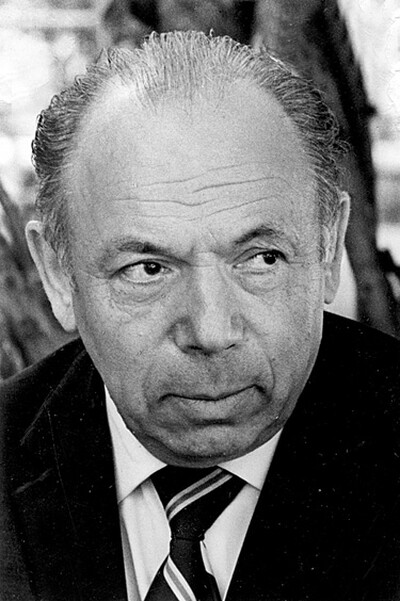
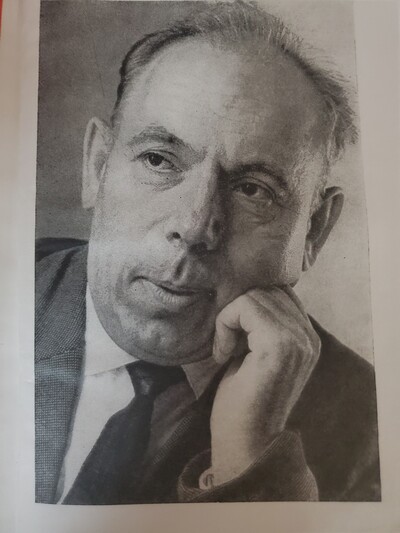
Gordon, Shmuel
November 25, 1909–1998
A prose author, playwright, and editor, he was born in Kovno, Lithuania, to poor parents. He was a relative of Yehuda-Leyb Gordon. He spent his childhood and youth in Ukraine—raised in a children’s home in Poltava and in a home for youth in Kremenchug. He was a member of the Communist Youth Association. He graduated in 1931 in literature from the Second Moscow State University. For several years, he worked as a teacher and a correspondent for the newspaper Komsomol’skaya Pravda (Communist Youth Truth). He began publishing stories and essays in the late 1920s. His first major work—the story “Elke Gilgl” (Elke Transformed)—he published under the pseudonym Sh. Dognar in the Kharkov journal Di Royte Velt (The Red World) in 1930. He used the same pen name for a number of his subsequent works. His stories, novels, and essays appeared regularly in the press. He worked as a correspondent for a certain period for Yiddish and Russian newspapers in Birobidzhan (Birebidzhan, Birebidzshan), and he wrote several books as a result of his experiences in the Jewish Autonomous Region. He served at the front during the war, publishing front reportage in the newspaper Eynikeyt (Unity). After the war, he published a series of jottings about the former Jewish collective farms in the Crimean region, published as: “Iber Yidishe Yishuvim in Krim” (Through the Jewish Settlements in Crimea) in Eynikeyt in Moscow (1946-1947).
In 1949 he was purged, only returning to Moscow in 1956. He wrote up his years in prison and exile in his last novel Yisker (Commemorative prayer for the dead) which was published in the journal Sovetish Heymland (Soviet Homeland), and in 2003 appeared as a separate publication in Israel (Jerusalem: Veltrat far Yidisher Kultur).
From the early 1960s, Gordon took an active role in both Sovetish Heymland and Yiddish publishing work with the Moscow publishing house of “Sovetski Pisatel.” Under his editorship, the majority of works of Yiddish prose writers appeared, and in his personal creative work as well, he was indefatigable. He continued trips throughout the former Ukrainian Jewish shtetls, publishing notes and reportage pieces from there in Sovetish Heymland—e.g., “Shtetlekh” (Towns) (1966-1969)—and later collected these in book form which were published as well in Russian. Together with his earlier work, they introduced a far-reaching picture of Jewish life in the Soviet Union.
He died in Moscow.
Among his books: Tsvishn Azover un Shvartsn (Between the Azov and the Black [Seas]), stories (Moscow: Emes, 1934), 128 pp.; Patryotn (Patriots), stories concerning Birobidzhan (Kiev: State Publ., 1936), 118 pp.; Birebidzhaner Kinder (Birobidzhan Children) (Moscow, 1937), 27 pp.; Milkhome-Tsayt (Wartime) (Moscow: Emes, 1946), 176 pp.; Birebidzhaner Toyshvim (Birobidzhan Settlers), travel images (Moscow, 1947), 158 pp.; In Veg (On the Road), stories (Moscow, 1957); Friling: Roman, Dertseylungen, Rayze-Bilder (Spring: Novel, Stories, Travel Images) (Moscow: Sovetski Pisatel, 1970), 526 pp.;
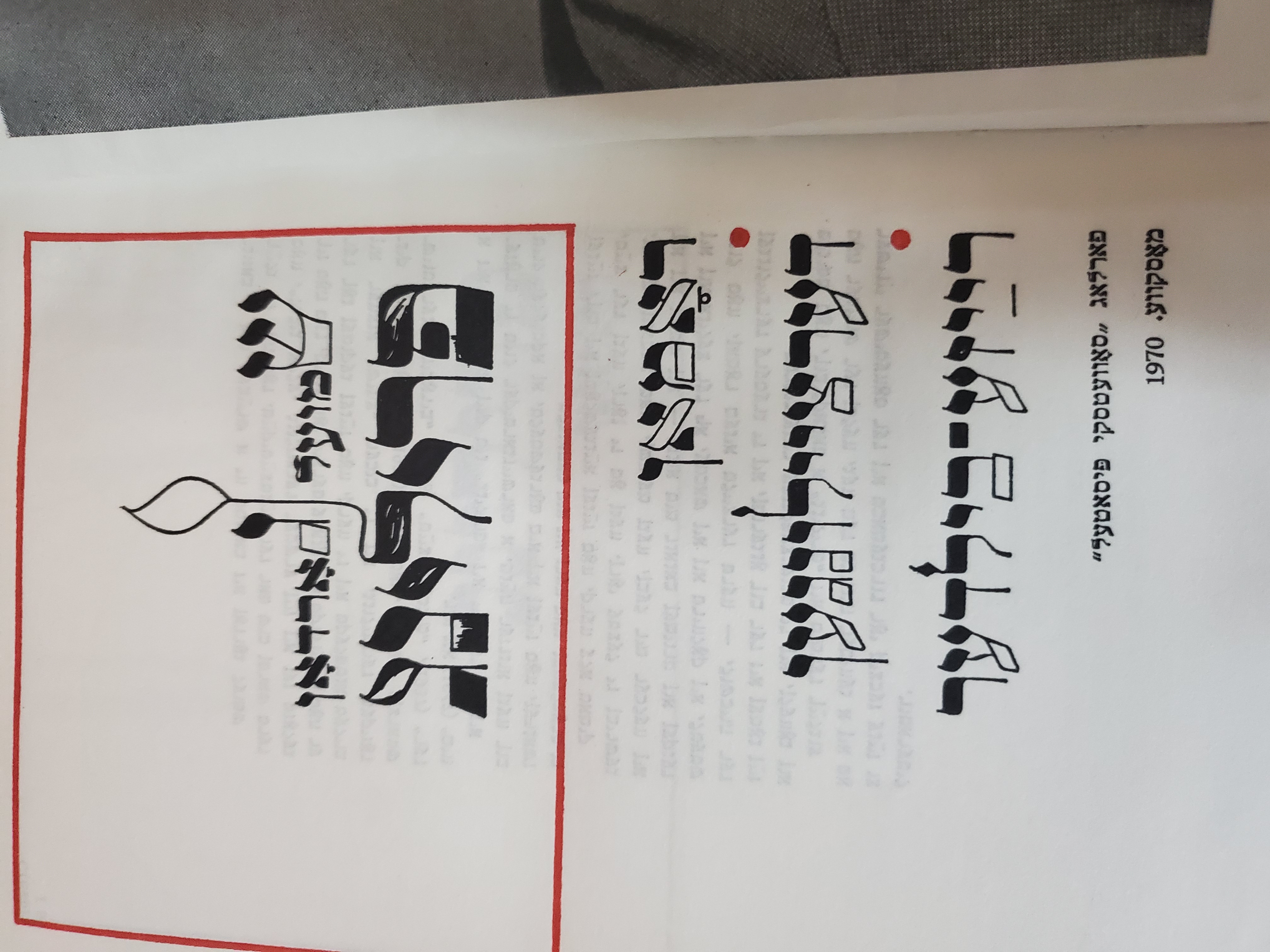
Aheym (Homeword) (Moscow: Sovetski Pisatel, 1973); Bam Vayngortn (At the Vineyard) (Moscow: Sovetski Pisatel, 1976); Di Eybike Mos, Roman Dertseylungen (The Eternal Measurement, Novel, Stories) (Moscow: Sovetski Pisatel, 1979), 548 pp.; A Khasene in Krizhopol (A Wedding in Krizhopol’) (Moscow: Sovetski Pisatel, 1980), 62 pp. Di Fayl un der Boygn: Roman, Dertseylungen, Rayze-Bilder (The Arrow and the Bow: Novel, Stories, Travel Images) (Moscow: Sovetski Pisatel, 1985), 500 pp.; Leyd un Freyd (Misery and Joy) (Moscow: Sovetski Pisatel, 1989), 493 pp.
His work was also included in: Tsum Zig (Toward Victory) (Moscow, 1944); and Birebidzhan (Birobidzhan) (Moscow, 1936). He served as editor of the section “Literature of the Peoples of the Soviet Union” for volume 11 of the Great Soviet Encyclopedia (Moscow, 1939). His work was included in the anthology In Undzere Teg (In Our Time) (Moscow: Sovetski Pisatel, 1983) 558 pp. edited by Arn Vergelis.
More biographical detail can be found in Gennady Estraikh, “Shmuel Gordon,” in The Yiddish Presence in European Literature, ed. Joseph Sherman and Ritchie Robertson (Routledge, 2005).
Sources: Literarishe Bleter (Warsaw), no. 52 (1928) and nos. 11, 14, and 16 (1929); N. Mayzil, Literarishe Bleter (October 23, 1931); Y. Dobrushin, in Emes (Moscow) 72 (1935); A. Kushnirov, in Naye Prese (Paris) (July 27, 1945); N. Notovitsh, in Eynikeyt (Moscow) (March 22, 1947); Y. Yonasovitsh, in Naye Tsayt (Buenos Aires) (October 22, 1953); Lo emut ki eḥye (I Shall Not Die but Go on Living) (Tel Aviv, 1956).