Leksikon fun der Nayer Yidisher Literatur
לעקסיקאָן פֿון דער נײַער ייִדישער ליטעראַטור

Browse All People
By Subjects
By Volume:

search tips
✕
≡

How to Build Your Search:

A. In the below “Advanced Search,” use the drop down parameters under "Scope" - ALL words, ANY words, or EXACT word/phrase. Build the parameters row by row.


OR


B. To define your search using the basic one-line search, in the above textbox:

  • Use a plus to REQUIRE the word:
    +music +theory << must contain the words music and the word theory
  • Use quotes for a phrase:
    song "music theory" << anything with song or phrase "music theory"
    or "levin" < exact match, not levine
  • Use + and quotes to require the phrase:
    +"music theory" << must include phrase
  • Use a minus to EXCLUDE:
    +music -theory << must include music, but not theory
NOTE: When searching in Yiddish letters, this Lexicon should find the word(s) with or without diacritics (e.g., אברהם vs. אַבֿרהם) -- but when searching in other systems, if you can't find it one way, try searching the other way.
⋮⋮
⋮⋮
Search:
Text
Dates
Subjects
Living People ONLY
Women ONLY
Records w/ Images ONLY
Search in:
Scope:
ALL words
ANY words
EXACT word/phrase
א אַ אָ ב בּ בֿ ג ד ה ו װ ױ ז ח ט י יִ ײ ײַ כ כּ ך ל מ ם נ ן ס ע פּ פֿ פ ף צ ץ ק ר ש שׂ תּ ת ־

click for image pop-out

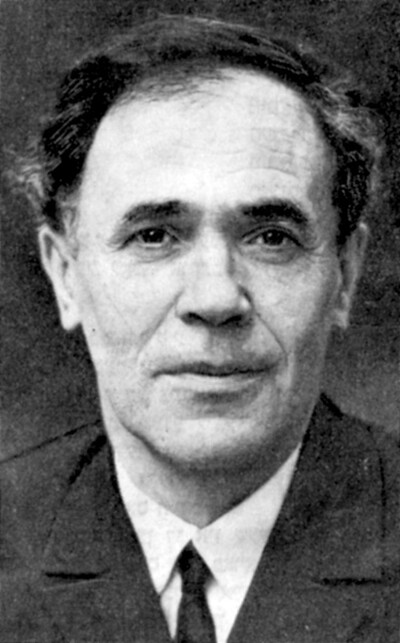
Image courtesy of the Russian State Library (Moscow), Oriental Centre.
Click, drag, enlarge the below information boxes. (Then click the arrow in upper right to return them to their place & size.)
Places
Birth Place
Šeduva (Shadov), Lithuania
Death Place
Bat Yam, Israel
Images (click an image for slideshow)

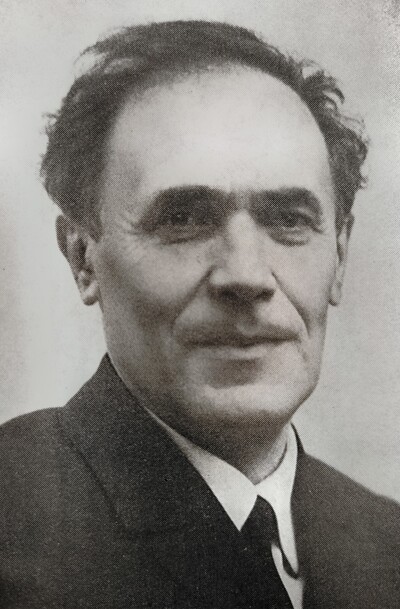
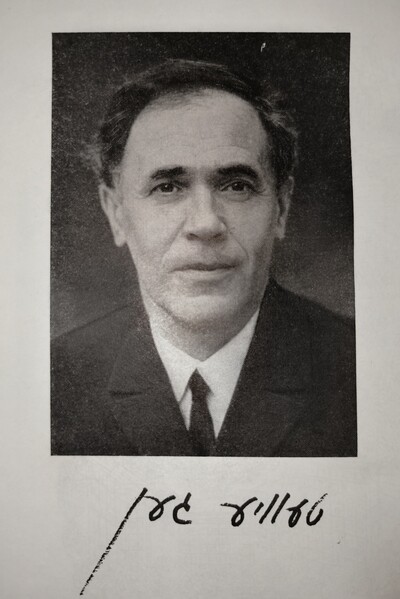
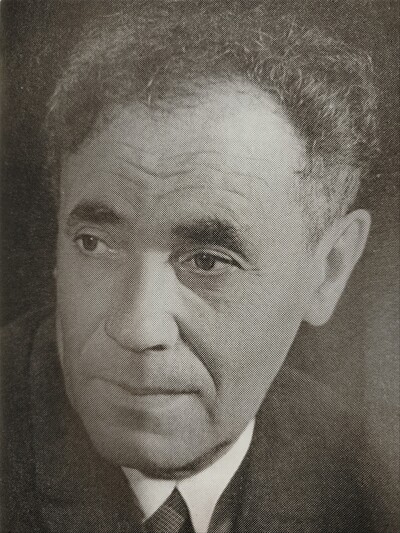
Note from Maria Z: Here are 3 portraits of T. Gen. Select the best one or two. All are from Moscow editions.
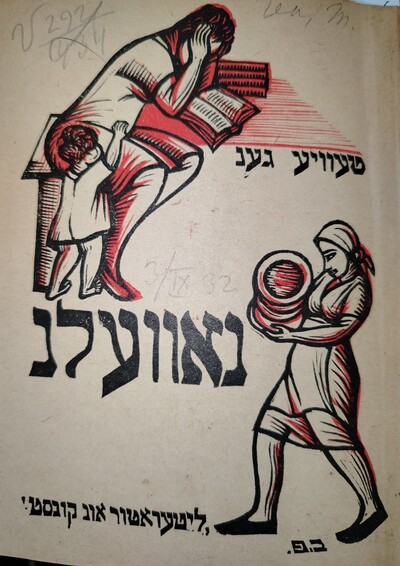
The cover of his "Noveln" (Kharkov: Literatur un Kunst, 1932) is important because of 2 artists that worked in collaboration B. Blank and M. Fradkin. In my entries all details are listed.

Image courtesy of the Russian State Library (Moscow), Oriental Centre.


Image courtesy of the Russian State Library (Moscow), Oriental Centre.


Image courtesy of the Russian State Library (Moscow), Oriental Centre.


The cover of his Noveln (Kharkov: Literatur un Kunst, 1932)
Illustrators: B. Blank and M. Fradkin
Image courtesy of the Russian State Library (Moscow), Oriental Centre.


Image from Beider lexicon; see citation.

Credits
  • Chaim Beider Author
  • Berl Kagan Author
  • Lexicon Committee Author
  • Joshua Fogel Translation to English & Research
  • Maria Zavorohina Research
  • Tetiana Shyshkina Updates
  • Mark H. David OCR - Optical Character Recognition
  • Also See
    •

    Gen, Tevye

    May 5, 1912–2003

    approx. 90 - 91 years

    He was a Soviet Yiddish prose writer, born in the town of Šeduva (Shadov), Lithuania.

    During WWI his family moved to Mariupol', Ukraine, and after graduating from the Jewish school, he went on to study at the Kharkov Jewish Machine-Building Technicum. He then graduated from the Jewish division of the Moscow Pedagogical Institute and set off for Birobidzhan, where he worked in the editorial office of the newspaper

    Birobidzhaner Shtern (Birobidzhan Star).

    Returning from the Far East, he settled in Moscow, and when WWII broke out, he went to serve at the front. After being severely wounded, he was demobilized and returned to Moscow where he took up literary work. His first stories appeared in 1930, and they were later collected in a prose anthology that was published in 1932. The principal subject matter of them was the life then, the conditions, and the psychology of students, young laborers, and the learned.

    Until the war’s end, he published one more short book,

    Dos Farblibene Heftl (The Surviving Notebook), dedicated to the theme of war, which appeared in 1944.

    There was then for him, as there was for all other Soviet Yiddish writers, a huge interruption. He continued writing, but he had nowhere to publish his work until the journal

    Sovetish Heymland (Soviet Homeland)

    started appearing in print. From its very first issues, Gen’s new stories and novellas began to appear and later his novel

    Undzere Tsaytn (Our Time).

    For him this was a new genre.

    While the majority of Yiddish writers were drawn to the shtetl, Gen celebrated the large city in which his protagonists lived and worked. The critics remarked that every line in this novel made one sense the breath of modernity. For the first time in Yiddish literature, we find discussion of electronics, technical inventions, scientific dissertations and experiments, and production processes which were developed on the basis of modern science and technology. In this he was innovative, just as in the late 1920s the Yiddish prose author Meyer Alberton had been in his book Shakhtes (Mines). His storytelling manner and light humor were characteristically modest in Gen’s realistic style.

    Late in life, he made aliya to Israel and died in Bat Yam.

    Among his books:

    Noveln (Short stories) (Kharkov, 1932), 88 pp. (Illustrators: B. Blank and M. Fradkin);

    In Gutn Mut, Noveln (With Good Courage, Short Stories) (Moscow: Emes, 1941), 142 pp.;

    Dos Farblibene Heftl, War Experiences (Moscow: Emes, 1944), 48 pp.;

    Undzere Tsaytn (Moscow: Sovetski Pisatel, 1972), 445 pp.;

    A Veg in der Vayt (A Road in the Distance) (Moscow: Sovetski Pisatel, 1977), 449 pp.;

    In der Heymshtot (In One’s Hometown) (Moscow: Sovetski Pisatel, 1981), 62 pp.;

    In Krayz fun Lebn (In the Circle of Life) (Moscow: Sovetski Pisatel, 1983), 396 pp.;

    Fun Baginen biz Ovnt (From Dawn to Dusk) (Moscow: Sovetski Pisatel, 1988), 475 pp.

    His work was included in the anthology In Undzere Teg (In Our Time) (Moscow: Sovetski Pisatel, 1983) 558 pp. edited by Arn Vergelis.

    Sources: P. Altman, “Unzer Komyugishe Proze” (Our Komyug [jewish Communist Youth] Prose), Prolit (February 1932); Y. Serebryani, in Eynikeyt (October 6, 1945); David Knaani and Arye Shamri, eds., Lo amut, ki eḥye (I Shall Not Die, but Live) (Merḥavya, 1957), p. 336.

    •

    © 2026 Congress for Jewish Culture 
    Rights are reserved. If you wish to quote small portions of text or data from this Lexicon, you may do so with full attribution to the Congress for Jewish Culture and a link to the specific site, which credits the sources. The Lexicon is perpetually in process; so some elements cited might change as we correct and update information.

    If you notice any errors or omissions in this Lexicon (or if you have any concerns or need help) please email us -- Or feel free to post a Public Comment, form at the end of each person's biography.

    NOTE
    A lot of our English and Yiddish texts and metadata are being worked on: researched, checked, corrected, fixed, formatted, updated, and translated.
    There are many ways you can help.

    Your Comment *
    Reminder - Please state your Source of info in your comment
    You will get an email for verification before your comment is put on the site. We will not make your email address public.