


Shudrikh, Yankev
November 20, 1906–June 1943
He was a poet, born in the village of Uhniv (Hivniv), Galicia (now, in Lviv district, Ukraine). He was a furrier by trade, and from his youth joined in the revolutionary movement.
He began writing poetry in his youth, mostly on themes of struggle. In June 1932 he took part in Lviv (Lemberg) in a conference of representatives from Ukrainian, Polish, and Jewish intellectuals in the fields of literature, science, music, and painting, dedicated to the idea of convening an international anti-militaristic congress. He was a cofounder in 1932 of AYAP—Algemeyne Yidishe Arbeter-Partey (General Jewish Labor Party), which took Communist positions.
He wrote for the semi-legal AYAP organ, Der Veg (The Way), and for Tsu Shtern (To the Star), and he took a leading place in his hometown’s Jewish people’s reading room named for Y. L. Perets.
He was arrested several times for Communist activities. He also contributed to: Literarishe Bleter (Literary Newspaper) in Warsaw, Unzer Zibn Teg (Our Seven Days) (Warsaw, 1936), Tsushteyer (Contribution) in Lviv, Sovetishe Literatur (Soviet Literature) in Kiev, and other leftist journals. He composed lyrical-social poetry. People would sing his poems at demonstrations, and they rang out at illegal literary evenings.
In September 1939 when western Ukraine united with the Ukrainian Soviet Republic, his poems were published in Lviv, Kiev, and Minsk. With the start of WWII, he found himself confined in the Lviv ghetto. He organized a resistance group there and linked up with the partisans. How he died is the subject of differing versions. According to one such, he led a group of Jews while fleeing from the ghetto to join the partisans; another version has it that it was due to a provocation caused by a car driver, he was taken to the Gestapo and shot there. Yet another story was told by his Ukrainian friend, Yaroslav Galan (Halan, 1902-1949). In 1944 Galan returned to Lviv and began tracking down traces of the Jewish poet. In the newspaper Radyan'ska Ukraina (Soviet Ukraine), he wrote: “One morning, Shudrikh happened to meet face-to-face with a group of Gestapo men who were actually looking for him. He greeted them with a volley of shots from his pistol. Shudrikh died with glory.”
Some of his poems were sung at demonstrations. His work appeared as well in: Lebn un Kamf (Life and Struggle) (Minsk: Byelorussian State Publishers, 1936); Yitskhok Paner and Leyzer Frenkel, Naye Yidishe Dikhtung (Modern Yiddish Poetry) (Iași: Jewish Cultural Circle in Romania, 1947); Binem Heler, Dos Lid iz Geblibn, Lider fun Yidishe Dikhter in Poyln, Umgekumene Beys der Hitlerisher Okupatsye, Antologye (The Poem Remains, Poems by Jewish Poets in Poland, Murdered During the Hitler Occupation, Anthology) (Warsaw: Yidish-Bukh, 1951); Hubert Witt, Der Fiedler vom Getto: Jiddische Dichtung aus Polen (The Fiddler of the Ghetto, Yiddish Poetry from Poland) (Leipzig: Reclam, 1966); Witt, Meine Jüdischen Augen Jiddische Dichtung Aus Polen (My Jewish Eyes, Yiddish Poetry from Poland) (Leipzig: Reclam, 1969).
In book form: Di Erd Rirt, Lider (The Earth Moves, Poetry) (Warsaw: Literarishe Bleter, 1937), 62 pp., later edition (Buenos Aires: Shpritser, 1953), 87 pp.; Oyfshtayg (Ascent), poetry (Kiev-Lvov: State Publishers, 1941), 96 pp.
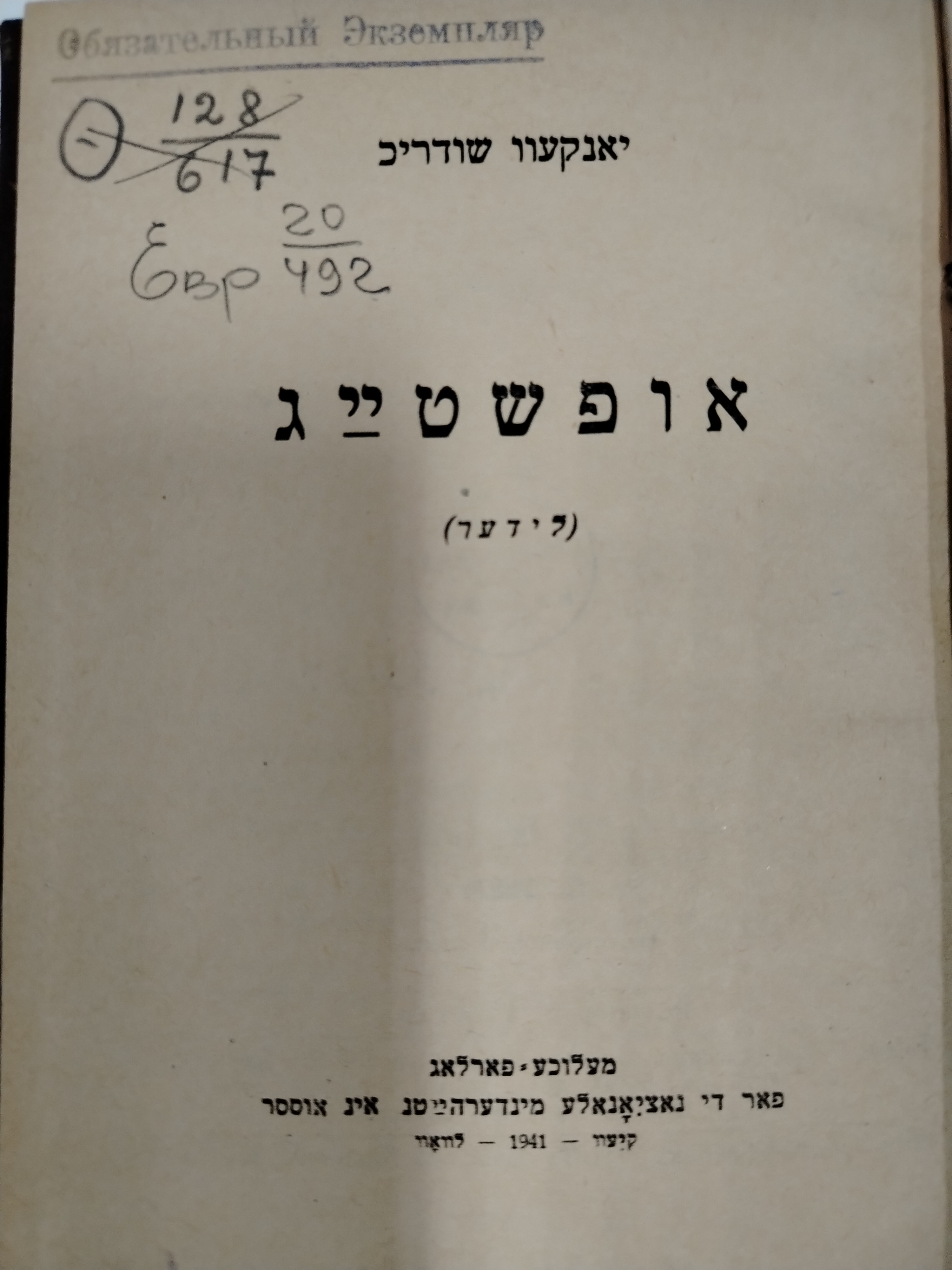
Image courtesy of the Russian State Library (Moscow), Oriental Centre.
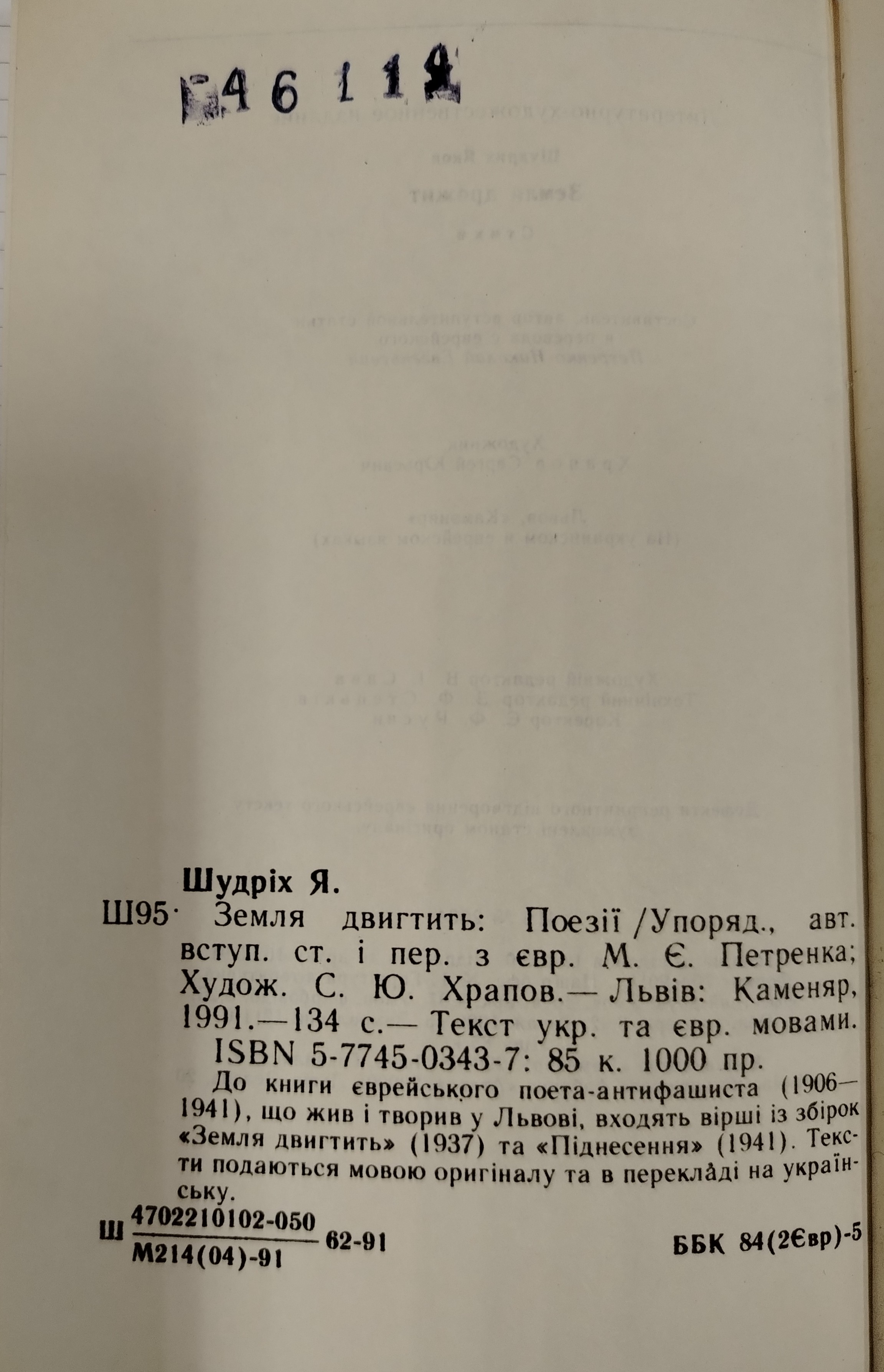
Poems from the collections Di erd rirt and Oyfshtayg were translated into Ukranian by Mikola Petrenko. This edition is bilingual : Yiddish-Ukranian. It was published in Lvov, 1991.- 133, [3] pp., ill. Here are some images from that edition:
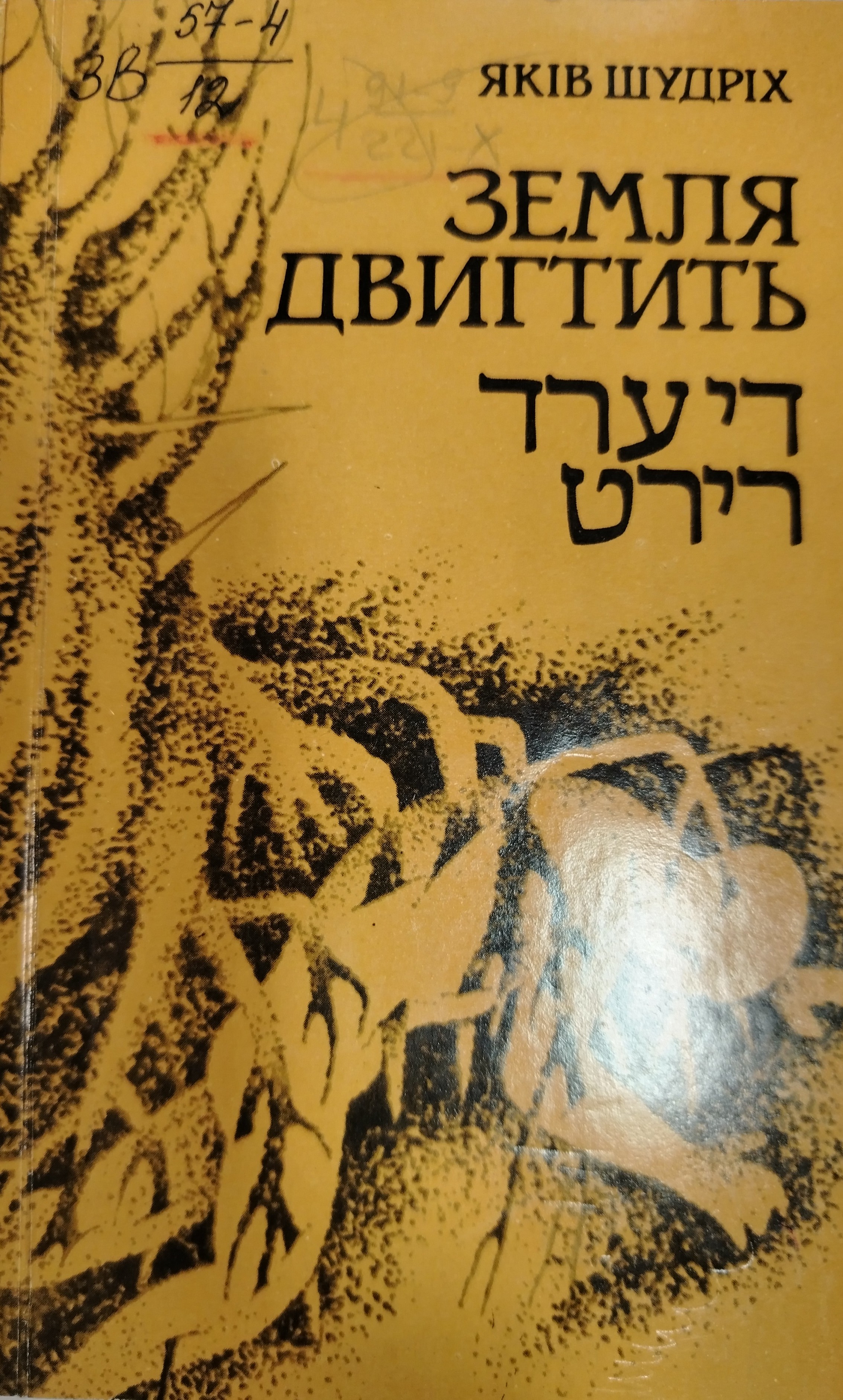
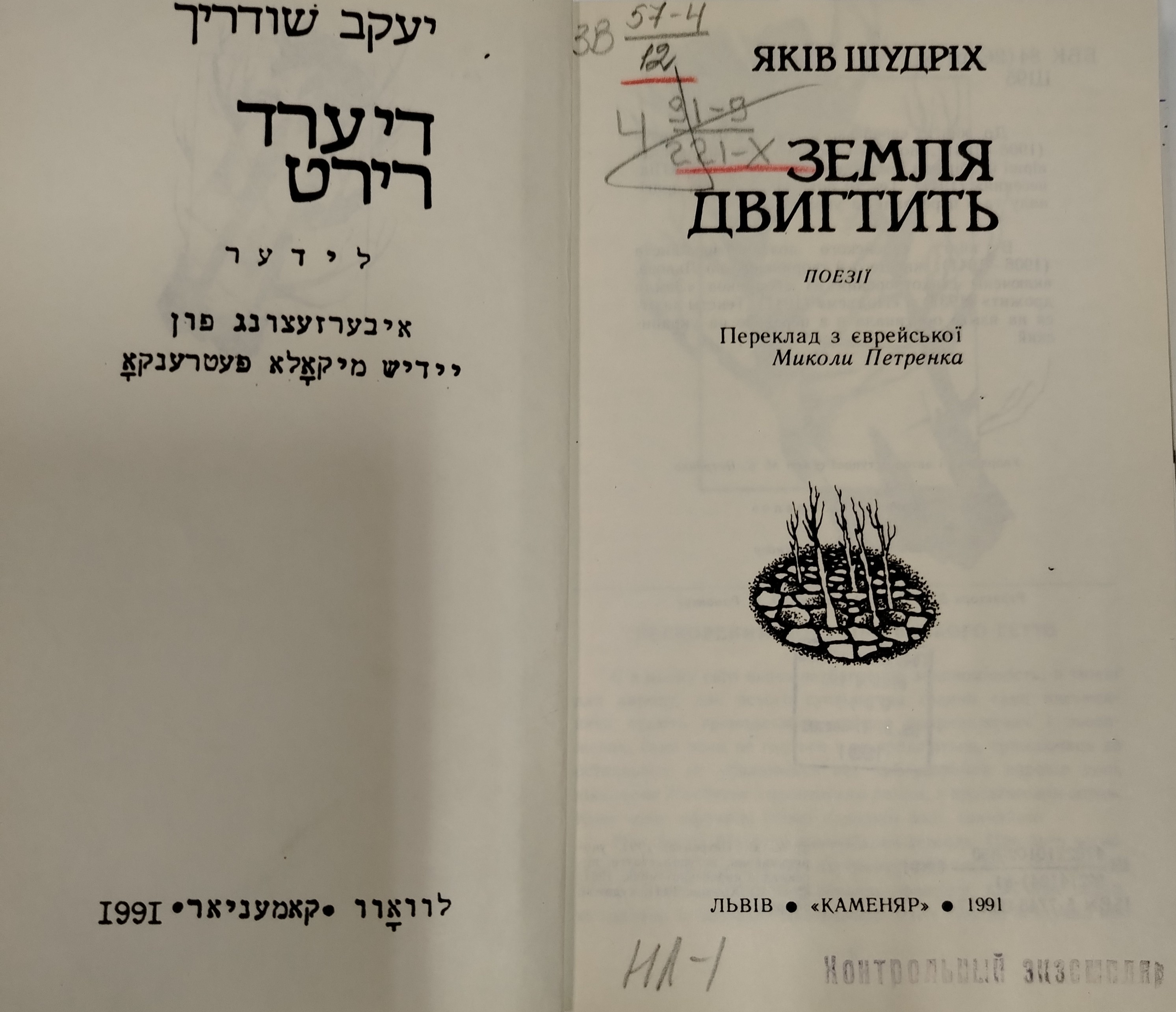
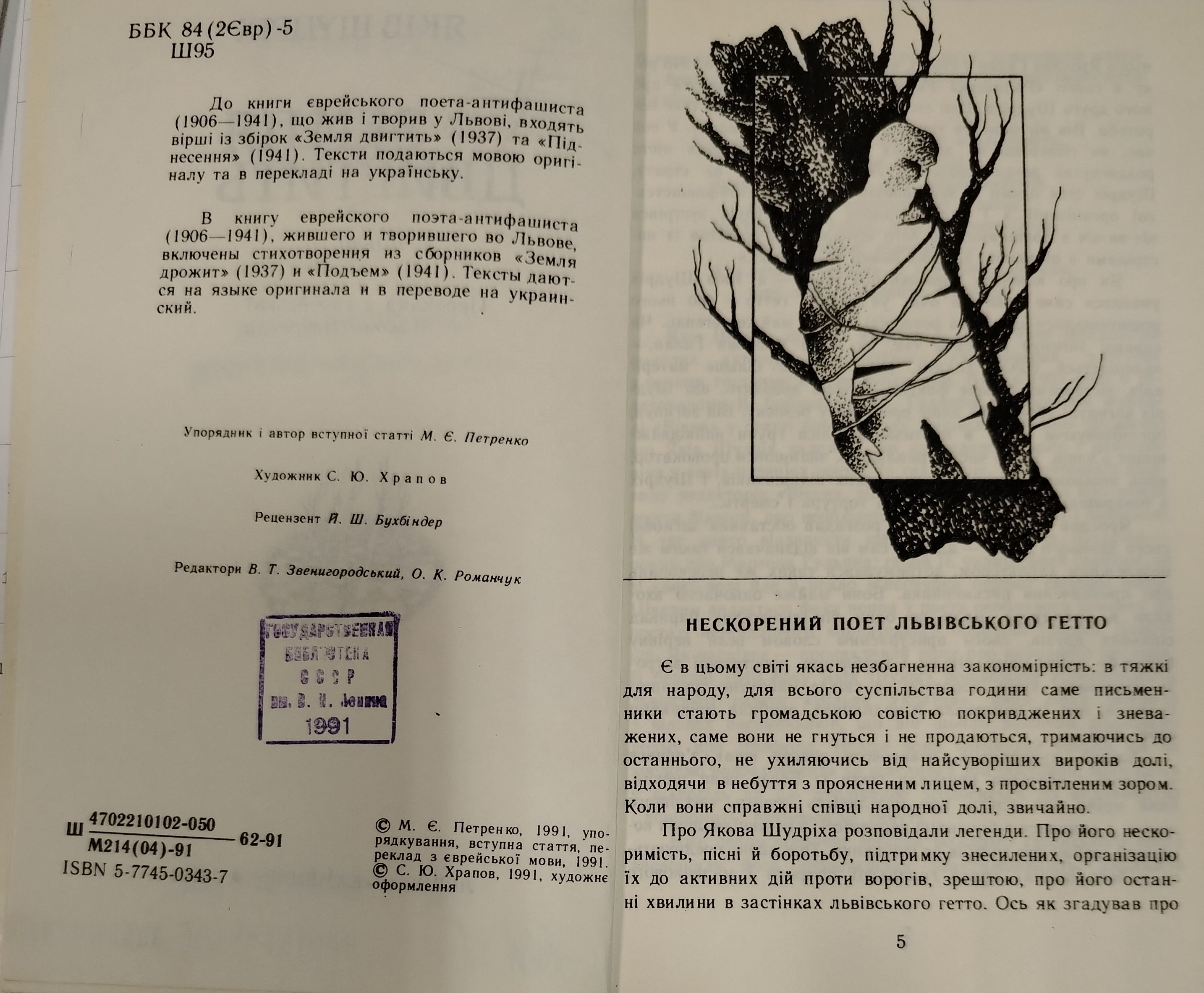
Sources: Nokhum Bomze, in Yidishe Kultur (New York) (April 1946); B. Mark, Umgekumene Shrayber fun di Getos un Lagern (Murdered Writers from the Ghettos and Camps) (Warsaw, 1954), p. 206; Entsiklopediya shel Galiyut (Encyclopedia of the Diaspora), vol. 7 (Jerusalem-Tel Aviv, 1956), p. 764; Y. Shulmayster, in Sovetish Heymland (Moscow) 7 (1977); Sh. Shtern, in Morgn Frayhayt (New York) (August 21, 1977); Forverts (New York) (January 21, 1979); Yeshurin archive, YIVO (New York).