

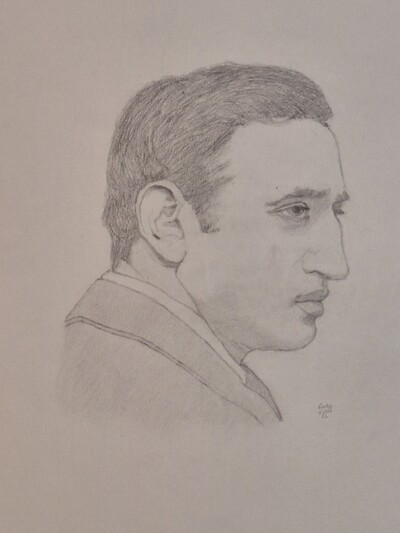


Schwartz, Maurice
June 15, 1889–May 10, 1960
He was born Avrom-Moyshe Shvartz in Sidilkov [some sources: Zhydachiv], Ukraine. He attended religious elementary school and public school. On his way to join his father in the United States, he was left alone in London at age eleven, worked in a factory, and later sang with a cantor. Two years later he arrived in New York. He graduated public school and worked in his father’s rag shop.
At age fifteen he began his theatrical career. He acted with various troupes and very often with the best actors, until he himself became director and founder of the Yiddish Art Theater in New York (1918), where he produced plays of a better literary repertoire. Schwartz was distinguished from other Yiddish actors in that he read a great deal, attended lectures on theater, and studied and (in the worlds of Sholem Perlmuter) “had ambitions for a better Yiddish theater,…not simply to act in the theater but also to write for the theater.”
Among the roughly 150 plays that he staged, he wrote:
Der Volkn (The Cloud) (1913);
Shekspir un Kompanye, Komedye (Shakespeare and Company, a Comedy) (1925, writing as “M. Tshernov”);
Di Legende fun Yidishn Kenig Lir, Tragishe Komedye fun Yidishn Aktyorn-Lebn (The Legend of the Yiddish King Lear, Tragic Comedy of the Life of Yiddish Actors) (1932).
According to Zalmen Zilbertsvayg, Schwartz was also the author of
Dzhak Berson (Jack Berson), which he produced under the name “Viktor Felder” (1936).
Schwartz reported that he wrote the play
Hershele Ostropoler (Hershele Ostropoler) which was staged in 1947 under the name “M. Lifshits.”
He also wrote songs for other plays.
His translations include:
John Hartley Manners, Hoyz nekst dor (House Next Door) (1912);
Camille Honig’s Take Now Thy Son as Der mishpet (The judgment);
Yigal Mossinsohn, Der kamf farn negev (The fight for the Negev) (1954); and
Arnold Schulman’s musical comedy, A lokh in kop (A Hole in the Head) (1958).
His dramatizations:
Sholem Asch, Kidesh hashem (Martyrdom) (1928);
Asch, Di Kishev-Makherin fun Kastilyen (The Witch of Castile) and
Unkl Mozes (Uncle Moses) (1930);
Asch, Khayim Lederers Tsurikkumen (The Return of Khayim Lederer) (1932);
Asch, Dray Shtet (Three Cities) (1938);
Asch, Der Tilim-Yid (The Sayer of Psalms) (1939);
Asch, Grosman un Zun (Grossman and Son) (1956);
Sholem-Aleichem, Stempenyu (Stempenyu) (1929);
Sholem-Aleichem, Blondzhende Shtern (Wandering Stars) (1930; new adaptation, 1946);
Sholem-Aleichem, Ven Ikh bin Rotshild (If I Were Rothchild) (1939);
Sholem-Aleichem, Yosele Solovey (Yosele Solovey);
Lion Feuchtwanger, Yud Zis (The Jew Süss [original: Jud Süß]);
Feuchtwanger, Yozefus (Josephus) (1933);
Y. Y. Zinger, Yoshe Kalb (Yoshe Kalb [calf]) (1932), “which was,” according to Zalmen Zilbertsvayg, “one of the greatest successes of the Yiddish theater”;
Zinger, Di Brider Ashkenazi (The Brothers Ashkenazi) (1937);
Zinger, Di Mishpokhe Karnovski (The Family Karnovsky) (1943);
John Sorsky, Yom hadin (The Day of Judgment) (1941);
Y. L. Perets, Dray Matones (Three Gifts) (1945);
Zalmen Shneur, Noyekh Pandre (Noah Pandre) under the title Dos Gezang fun Dnyepr (Song of the Dnieper) (1946); and
Ari Ibn-Zahav, Shaylok un zayn Tokhter (Shylock and his Daughter).
With his rich repertoire, Schwartz traveled the entire Jewish world. In America, he also played in English, in Argentina in Spanish, and in Israel in Hebrew, but always “he delighted in the Yiddish language.”
“Of all Yiddish stage actors,” wrote N. Bukhenvald, “Maurice Schwartz was the only one whose name possessed a symbolic and heroic significance…. Schwartz was considered a builder, a creator…of better Yiddish theater…in the struggle against ‘trashy’ theater.”
Schwartz created unforgettable stage figures, contributed to film, produced record albums, and even planned to establish a world Yiddish art theater. He wrote numerous articles on Yiddish actors and writers, theoretical articles on theatrical issues, and on the Yiddish theater of the past in: Di Idishe Velt (The Jewish World) in Philadelphia; Forverts (Forward), including his memoirs entitled “Moris Shvarts Dertseylt” (Maurice Schwartz Recounts), Tog (Day), Morgn-Zhurnal (Morning Journal), and Fraye Arbeter Shtime (Free Voice of Labor)—in New York; Di Tsayt (The Times) in London; Idishe Tsaytung (Jewish Newspaper) and Di Prese (The Press) in Buenos Aires; and Literarishe Bleter (Literary Newspaper) in Warsaw; among others.
He also published articles in the souvenir programs, published for performances (Yoshe Kalb, Di Brider Ashkenazi, Yozefus, and Dray Shtet), in Teater-Bukh Lekoved der Nayer Heym (Theater Book Honoring the New Home) (New York, 1928), and contributed to Elye Tenenholts Yoyvl-Bukh (Jubilee Volume for Elye Tenenholts) (Los Angeles, 1955).
He died in Tel Aviv and was buried in New York.
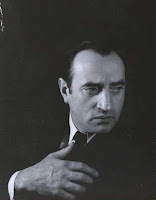
Schwartz in 1933
Sources: Zalmen Reyzen, Leksikon, vol. 4; Zalmen Zilbertsvayg, Leksikon fun Yidishn Teater (Lexicon of the Yiddish Theater), vol. 3 (New York, 1959); Moyshe Nadir, Mayne Hent Hobn Fargosn dos Dozike Blut (My Hands Have Shed This Blood) (Vilna: Kletskin, 1927), pp. 200-4; Arn-Hersh Byalin, Moris Shvarts un der Idisher Kunst-Teater (Maurice Schwartz and the Yiddish Art Theater) (New York: Biderman, 1934); Sholem Perlmuter, Idishe Dramaturgn un Teater Kompozitors (Yiddish Playwrights and Composers) (New York, 1952); Tsili Adler Dertseylt (Celia Adler Recounts) (New York, 1959), see index; Mendl Osherovitsh, in Tsukunft (New York) 7 (1960); Yankev Glatshteyn, Mit Mayne Fartog-Bikher (With My Daybreak Books) (Tel Aviv, 1963), pp. 392-93; Dovid Denk, Shvarts af Vays (Black [i.e., Schwartz] on White) (New York, 1963); Yitskhok Turkov-Grudberg, Af Mayn Veg (On My Way) (Tel Aviv, 1971), pp. 71-82; Khayim Ehrenraykh, Figurn un Profiln af der Yidisher Bine (Figures and Profiles on the Yiddish Stage) (Tel Aviv: Bukh-Komitet, 1976).