

Shveyd, Mark
May 15, 1891–December 8, 1969
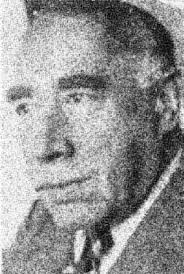
He was playwright, poet, translator, and artist, born in Warsaw. His original Jewish given name was Volf-Mortkhe. He descended from Ger Hassidim. He attended religious elementary schools and a yeshiva, and for general subject matter he studied with private tutors.
Early on he evinced a proclivity for the theater, and in 1911 he graduated from a Polish drama school in Warsaw and went on to act in Yiddish theaters and on the Polish stage as well. In 1911 he emigrated to the United States, performed in New York’s Yiddish theaters, and from 1921 was one of the principal artists in Maurice Schwartz’s Yiddish Art Theater. From 1926 he was also acting on the English-language stage.
He wrote poetry, drama studies, one-act plays, plays, and longer articles on theater. He debuted in print in 1907 with poems in Roman-Tsaytung (Fiction Newspaper), later contributing work to: Haynt (Today) (1908-1911, a reporter), Unzer Leben (Our Life), Naye Velt (New World), Moment (Moment), Zumer (Summer) (1910/1911), Teater-Velt (Theater World), Der Yunger Gayst (The Young Spirit) (1909), Nisn-Ier (Nisan-Iyar), Elel-Tishre (Elul-Tishrei) (1913), Shimins Ilustrirt-Literarishes Sukes-Blat (Shimin’s Illustrated Literary Sukkot Sheet), and Frihling Shtromen (Spring Stream)—all in Warsaw.
American publications include: Idishe Velt (Jewish World), Dos Naye Land (The New Land), Dovid Pinski’s Arbayter (Worker), In Zikh (Introspective), Der Farband (The Union), Undzer Bukh (Our Book), Kundes (Prankster) (under the pen name An Arlekin), Tsukunft (Future), Feder (Pen), Morgn Zhurnal (Morning Journal), Nay-Yidish (New Yiddish), Di Idishe Vokhenshrift (The Jewish Weekly Writing) (1912), Di Literarishe Velt (The Literary World) (1913), Der Onheyb (The Beginning), Oyfkum (Arise), and Chicago’s Ineynem (Altogether), among others. From 1946 he was an internal contributor to Forverts (Forward) in New York.
Shveyd wrote, adapted, or translated roughly fifty plays, among them:
Mikhail Artsybashev, Eyferzukht (Jealousy [original: Revnost’]) (New York: M. Gurevich, 1914), 111 pp.;
Maxim Gorky, Afn Opgrunt (The Lower Depths [original: Na Dne]);
Hermann Sudermann, Di Heym (The Home [original: Heimat]);
Henri Nathansen, Der Yudishe Gloyben (The Jewish Belief [original: Indenfor Murene (Inside the Walls)]) and Daniel Herts (Daniel Hertz);
Dem Tatns Zun (The Father’s Son), following Larange (?);
Gorky, Meshtshane (Burghers);
Albert Kevety (?), Der Goylem (The Artificial Man);
Paul Heyse, Shoyl hameylekh (King Saul [original: König Saul]) (New York?, 1930s?), 64 pp.;
Mazl Darf Men Hobn (You Need to Have Luck);
Zunenuntergang (Sunset).
All of these plays were staged, but only a few were published. His work also appeared in: Shmuel Rozhanski, Yidish in Lid, Antologye (Yiddish in Poetry, Anthology) (Buenos Aires, 1967); Nakhmen Mayzil, Amerike in Yidishn Vort (America in the Yiddish Word) (New York, 1955); and Joseph Leftwich, The Golden Peacock (New York, 1961).
His books include:
Burshtinene Shislen (Amber Dishes), poetry (New York: Verbe, 1921), 79 pp.;
Mit Peretsn (With Perets), memoirs (New York: Verbe, 1923), 47 pp.;
Tsu Got un tsu Layt (To God and to the People), poetry (New York: Verbe, 1926), 62 pp.;
Kh’Vel Makhn Tey (I’ll Make Tea), poetry (Boston: Vestend, 1927), 45 pp.;
Di Zaydene Maske (The Silk Mask) (Boston: Vestend, 1927);
Dos Folk Funem Seyfer (The People of the Book), poem (Philadelphia: Idishe velt, 1930), 8 pp.;
Un Ikh Red Prost, Sonetn (And I Speak Simply, Sonnets) (New York: Verbe, 1935), 28 pp.;
Ale Lider un Poemes (Collected Poems) (New York: Perets Publ., 1951), 350 pp.;
Treyst Mayn Folk, dos Lebn fun Y. L. Perets (Console My People, the Life of Y. L. Perets) (New York: Perets Publ., 1955), 307 pp.
Published plays include:
“Di Gasen-Meshugene” (The Street Lunatic), a “dramatic study,” in Roman-Tsaytung (December 19, 1907);
“Blumen” (Flowers), in Teater-Velt (October 15, 1908);
“Geshenkte Yohren” (Gift of Years), in Der Farband (November 1926-March 1927);
“Az Es Geyt, Geyt Es fun Ale Zaytn” (When it Comes, it Comes from All Sides), a comedy, in Undzer Bukh in New York (March-April 1929);
“Kuk in der Zun” (Look Into the Sun), in Oyfkum (April 1930);
“Heymarket” (Haymarket), a dramatic poem, in Tsukunft (April 1937).
His published translations of plays include (see above):
Mikhail Artsybashev, Eyferzukht;
Hillel Zolotarov, “Der Shturem fun der Neshome” (The Storm of the Soul), in Geklibene Shriften (Selected Writings), vol. 2 (New York, 1924).
Shveyd also translated novels from Polish, Russian, German, and English, some of which were published, such as:
Israel Zangwill, Troymers fun’m Geto (Dreamers of the Ghetto), vol. 1 (New York: M. Yankovitsh, 1929), 341 pp.;
Stanisław Przybyszewski, Fun’m Obgrund (Out of the Depths [original: De Profundis]) (New York, n.d.), 79 pp.;
Fyodor Dostoevsky, Erniderigte un Baleytigte (Humiliated and Insulted [original: Unizhennye i Oskorblennye]) (New York: Max Jankovitz, 1920s), 2 vols.
Two novels he adapted were published in Warsaw’s Moment: “Der Yudisher Oysleyzer in England” (The Jewish Savior in England), after Rodenberg; and Der Yudisher Minister (The Jewish Minister), after Kraszewski and other sources.
As concerns Shveyd’s literary works, Shmuel Niger notes: “A theatrical artist who imagined himself as a lyrical poet, he succeeded in the role the most when he attempted at the same time to be elegant and playful, when he embellished sentimentality with the silver dust of humor.”
He died in New York.
Sources: Zalmen Reyzen, Leksikon, vol. 4; Zalmen Zilbertsvayg, Leksikon fun Yidishn Teater (Lexicon of the Yiddish Theater), vol. 4 (New York, 1963); Shmuel Niger, in Tsukunft (New York) (September 1922); Zishe Vaynper, Idishe Shriftshteler (Yiddish Writers), vol. 1 (New York, 1933); Nokhum-Borekh Minkov, in Tsukunft 3 (1953); Yankev Glatshteyn, In Tokh Genumen (In Essence), vol. 2 (Buenos Aires, 1960), p. 240; Yeshurin archive, YIVO (New York).