Leksikon fun der Nayer Yidisher Literatur
לעקסיקאָן פֿון דער נײַער ייִדישער ליטעראַטור

Browse All People
By Subjects
By Volume:

search tips
✕
≡

How to Build Your Search:

A. In the below “Advanced Search,” use the drop down parameters under "Scope" - ALL words, ANY words, or EXACT word/phrase. Build the parameters row by row.


OR


B. To define your search using the basic one-line search, in the above textbox:

  • Use a plus to REQUIRE the word:
    +music +theory << must contain the words music and the word theory
  • Use quotes for a phrase:
    song "music theory" << anything with song or phrase "music theory"
    or "levin" < exact match, not levine
  • Use + and quotes to require the phrase:
    +"music theory" << must include phrase
  • Use a minus to EXCLUDE:
    +music -theory << must include music, but not theory
NOTE: When searching in Yiddish letters, this Lexicon should find the word(s) with or without diacritics (e.g., אברהם vs. אַבֿרהם) -- but when searching in other systems, if you can't find it one way, try searching the other way.
⋮⋮
⋮⋮
Search:
Text
Dates
Subjects
Living People ONLY
Women ONLY
Records w/ Images ONLY
Search in:
Scope:
ALL words
ANY words
EXACT word/phrase
א אַ אָ ב בּ בֿ ג ד ה ו װ ױ ז ח ט י יִ ײ ײַ כ כּ ך ל מ ם נ ן ס ע פּ פֿ פ ף צ ץ ק ר ש שׂ תּ ת ־

click for image pop-out

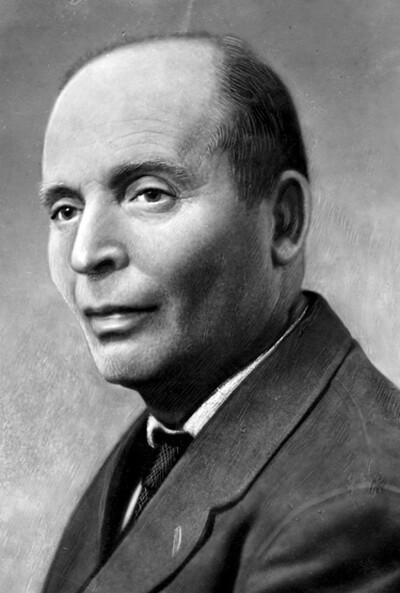
Image from Beider lexicon; see citation.

Click, drag, enlarge the below information boxes. (Then click the arrow in upper right to return them to their place & size.)
Places
Birth Place
Bila Tserkva, Ukraine
Death Place
Chelyabinsk
Images (click an image for slideshow)


Image from Beider lexicon; see citation.


Credits
  • Berl Kagan Author
  • Chaim Beider Author
  • Joshua Fogel Translation to English & Research
  • Tetiana Shyshkina Updates
  • Mark H. David OCR - Optical Character Recognition
  • Also See
    •

    Shturman, Motl

    1908–1995

    approx. 86 - 87 years

    He was a poet, born in Bila Tserkva, Ukraine, into a poor family. He spent his youth in the town of Sokolivke (Yustingrad), Kiev district. In 1919 his father was murdered during a pogrom, and the family moved to Uman, where he entered a children’s home and began to work in a factory. In 1925 he came to Kharkov. He graduated from a trade school and went to work as a locksmith at a train depot.

    He debuted in print in 1925 with a poem in the newspaper Yunge Gvardye (Young Guard), was a member of its literary group, and went on to publish poetry in the press. After publishing his first volume of poems, In Hoykhe Korpusn (In Tall Buildings) (Kharkov: Ukrainian State Publishers, 1930), 109 pp., he moved to Kiev, where he graduated from the literature department of the institute for professional education; he then entered the Institute for Jewish Culture as a research student.

    In addition to poetry, he published stories and artistic jottings, and he also translated poems from Ukrainian and Russian.

    He was evacuated during the years of WWII. From 1944 he was back living in Moscow. In 1949 he was purged, arrested, and deported to a Soviet camp. After being freed in 1956, he came back to Moscow.

    He published poetry in: Royte Velt (Red World), Prolit (Proletarian Literature), Farmest (Competition), Sovetishe Literatur (Soviet Literature), Heymland (Homeland), and a great deal in Sovetish Heymland (Soviet Homeland).

    His poems also appeared in: Leyb Kvitko, Deklamator (Declaimer) (Kharkov: Central Publishers, 1929); Fertsn Oktyabers, Literarishe Zamlung (Fourteen Octobers, Literary Collection) (Moscow: Emes, 1931); Shlakhtn (Battles) (Kharkov: Ukrainian State Publishers for National Minorities, 1932); Revolutsyonerer Deklamator Zamlung fun Lider, Poemes, Dertseylungen, Eynakters, Tsum Forleyenen, Shipln un Zingen bay Arbeter-Farveylung (Revolutionary Declamation, Collection of Songs, Poems, Stories, [And] One-Act Plays to Read Aloud, Enact, and Sing for Workers’ Entertainment) (New York: International Labor Order, 1933); and Horizontn (Horizons) (Moscow: Sovetski Pisatel, 1965).

    The main genres of his poetry were political lyricism and satire. After the death of his wife, he moved to join his son in Chelyabinsk, where he died.

    Other books by him include: Lider (Poetry) (Kiev-Kharkov: Ukrainian State Publishers for National Minorities, 1936), 46 pp.; Loyb dem Folk (Praise the People) (Kiev-Kharkov: Ukrainian State Publishers for National Minorities, 1940), 135 pp.

    Sources: Horizontn (Moscow) (1965), p. 532; Yeshurin archive, YIVO (New York).

    •

    © 2026 Congress for Jewish Culture 
    Rights are reserved. If you wish to quote small portions of text or data from this Lexicon, you may do so with full attribution to the Congress for Jewish Culture and a link to the specific site, which credits the sources. The Lexicon is perpetually in process; so some elements cited might change as we correct and update information.

    If you notice any errors or omissions in this Lexicon (or if you have any concerns or need help) please email us -- Or feel free to post a Public Comment, form at the end of each person's biography.

    NOTE
    A lot of our English and Yiddish texts and metadata are being worked on: researched, checked, corrected, fixed, formatted, updated, and translated.
    There are many ways you can help.

    Your Comment *
    Reminder - Please state your Source of info in your comment
    You will get an email for verification before your comment is put on the site. We will not make your email address public.