
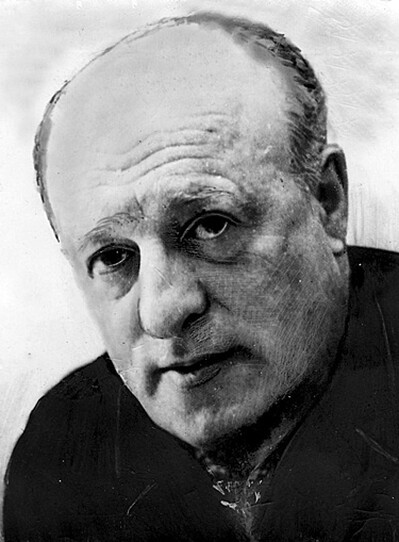
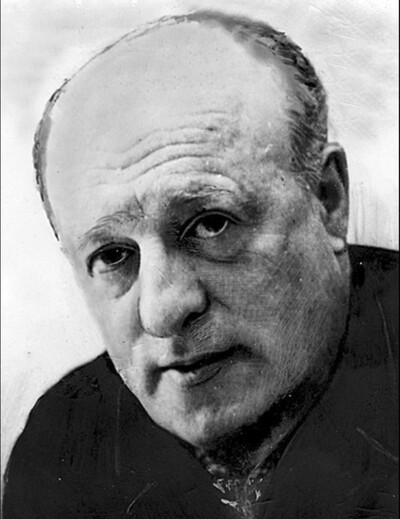
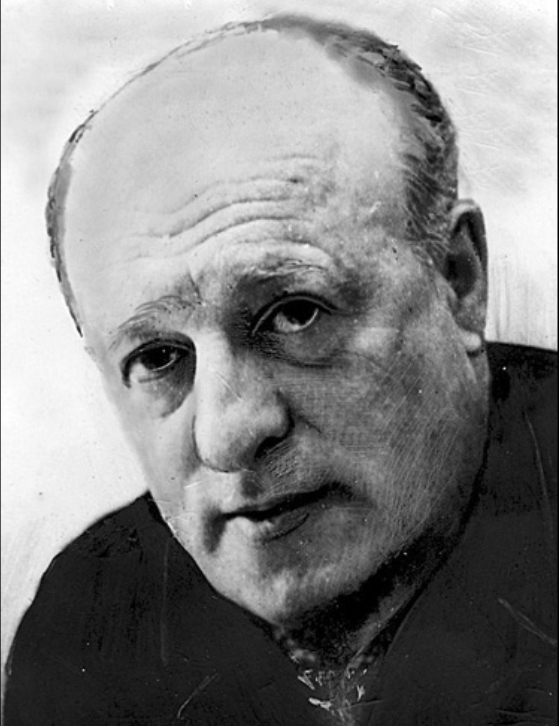
Miler, Buzi
April 21, 1913–January 25, 1988
He was a prose author, playwright, and poet, born in the village of Radovits (Radovychi), Podolia, Ukraine. He spent his youth in the town of Volkovinets (Volkovintsy), Ukraine. In his youth he worked in a factory as a nickel lacquerer. In 1929 he departed for Kharkov and worked as a polisher in various trades, before moving to Moscow where he studied at and later graduated in 1936 from the literature and linguistics department of the Moscow Pedagogical Institute. In 1937 he was sent by the Komyug ([Jewish] Communist Youth Association) to undertake teaching work in Birobidzhan, where for several years he served as a journalist for the newspapers:
Birobidzhaner Shtern (Birobidzhan Star) and
the Russian-language Birobidzhanaia Zvezda (Birobidzhan Star),
and as co-editor of the periodicals:
Forpost (Outpost) and
Birobidzhan (Birobidzhan),
--- which appeared until 1948.
He spent the next half century or more connected to Birobidzhan. He was a deputy from the regional council of the Jewish Autonomous Region and secretary of the Birobidzhan writers’ group.
He began publishing in 1931, while he was still in Kharkov, in the Yiddish-language press and brought out his first book that year.
He was purged in 1949 and sent to a camp, from which he returned after being “rehabilitated” (i.e., exonerated) in 1956. After the arrest of the Yiddish writers in Moscow, he was brought to trial, but he survived and went on to write further.
He published stories in:
Komyug,
Di Royte Velt (The Red World),
Eynikeyt (Unity),
and the almanacs
Sovetish (Soviet),
Birobidzhan,
Forpost, and
Af Naye vegn (On New Roads),
among others.
Publishing houses in Moscow and Khabarovsk brought out his prose and poetic works in Yiddish and translations into Russian. His plays—such as
Er iz fun Birobidzhan (He is from Birobidzhan),
Funem Himl Falt Gornisht Arop (Nothing Falls from the Sky), and
Dray un Draysik Giboyrim (Thirty-Three Heroes)
were performed in a string of theaters. The central theme of his work over several decades was the Jewish Autonomous Region, its people, and its problems. On the occasion of his sixtieth birthday, he received an honorary award and was presented with the title “Well-deserved cultural leader of the Russian Federation.”
There is a street in Birobidzhan named for him. He died in Birobidzhan.
In book form he published:
Mishmoyres Baytn Zikh, Dertseylungen (Changing of the Guards, Stories) (Kharkov, 1931), 64 pp.;
Kolvirtishe Hiner, Dertseylung (Chickens on the Collective Farm, Story) (Kharkov-Kiev: Ukrainian State Publishers for National Minorities, 1933), 15 pp.;
Untern Regnboygn, Noveles (Under the Rainbow, Novella) (Moscow: Emes, 1934), 86 pp.;
(Gold), stories (1935);
Birobidzhan, Dertseylungen (Birobidzhan, Stories) (Moscow: Emes, 1948), 132 pp., which he had adapted for the stage and in 1947 staged it at the Birobidzhan Yiddish State Theater.
They also staged at that theater his play 1941 and the translated drama Yakov sverdlov (Jacob Sverdlov), both in 1943.
Subsequent books include:
Yedn Dor Zayns, Roman, Dertseylungen, Noveln (To Each Generation its Own, Novel, Stories, Novellas) (Moscow: Sovetski Pisatel, 1980), 356 pp.;
Mentshn Geyen tsu der Arbet (People Going to Work) (Moscow: Sovetski Pisatel, 1981), 59 pp.;
Der Kval der Loyterer, Lider (The Pure Source, Poems) (Moscow: Sovetski Pisatel, 1984), 124 pp.
He also wrote poetry, stories for children, and a study of the Ukrainian poet Pavlo Tychyna, whom he taught Yiddish.
A book of his stories was also published in Russian.
His work was included in the anthology In Undzere Teg (In Our Time) (Moscow: Sovetski Pisatel, 1983) 558 pp. edited by Arn Vergelis.
He contributed to Sovetish Heymland (Soviet Homeland) in Moscow (July-August 1961; September-October 1961), on whose editorial board he also sat.
Sources: Sh. Kushnir, in Eynikeyt (Moscow) (August 25, 1942); B. Slutski, in Eynikeyt (April 13, 1947); I. Fefer, in Eynikeyt (April 15, 1947); N. Fridman, in Eynikeyt (May 17, 1947); S. Rabinovitsh, in Birobidzhan Byuletin (Montevideo) (May 7, 1948); Y. Emyot, in Yidishe Kultur (New York) (January 1958); L. Tshernyak, in Sovetish Heymland (Moscow) 1 (July-August 1961), pp. 119-20; M. Shklyar, in Folksshtime (Warsaw) (November 18, 1961).