

Shteynberg, Yitskhok-Nakhmen
July 13, 1888–January 2, 1957
A political and philosophical journalist and essayist, he was born in Dvinsk (Daugavpils), Latvia, the brother of Arn Shteynberg. He descended from a wealthy, well-pedigreed family. His mother was the older sister of Bal-Makhshoves. He received a fervently religious upbringing which left behind deep traces on the future revolutionary leader and writer and continued even at the time when he was a People’s Commissar in the Soviet Union. In 1906 he graduated from high school in Pernov (Pärnu), Estonia. He studied at Moscow University, later at the University of Heidelberg, where in 1910 he received his doctor of law degree.
He was arrested several times for his activities with the Socialist Revolutionaries (from 1906). In December 1917, as representative of the Left Socialist Revolutionaries, he served as People’s Commissar for Justice in Lenin’s coalition government (until February 1918). In 1923 he was living in Berlin, and over the years 1933-1939 in London. From 1935 he was on the world executive committee of the Freeland League and among its top leaders. In Australia he led work on behalf of Jewish colonization of the Kimberley region. From 1943 he was living in New York.
His literary activities began in Russian in scholarly legal and general periodicals. He contributed as well to German socialist newspapers. He began literary work in Yiddish as a contributor to Fraye Arbeter Shtime (Free Voice of Labor) and Tsukunft (Future) in New York. He published individual articles in: Tog (Day) and Fortshrit (Progress) in New York; Dos Naye Lebn (The New Life) in Bialystok; Der Shpigl (The Mirror) and Di Prese (The press) in Buenos Aires; Literarishe Bleter (Literary Newspaper), Haynt (Today), Naye Shtime (New Voice), and Dos Naye Vort (The New Word) in Warsaw; Folksblat (People's Newspaper) in Kovno; Unzer Tog (Our Day) in Vilna; Di Yidishe Post (The Jewish Mail) in Johannesburg; Idishe Velt (Jewish World) in Philadelphia; Oystralishe Yidishe Nayes (Australian Jewish News) in Melbourne; Frayland (Freeland) in Jassy (Iași) and Paris; and Foroys (Onward) in Mexico City; among others.
He published:
“Yidishe Kolonizatsye” (Jewish Colonization), in Algemeyne Entsiklopedye (General Encyclopedia), “Yidn” 1;
“Mayn Bobe Khaye-Sore” (My Grandmother Khaye-Sore), in Lite (Lithuania), vol. 1 (New York, 1951); and
“Di Shverd un di Flam” (The Sword and the Flame), in Dovid Edelshtadt Gedenk-Bukh (Dovid Edelshtadt Remembrance Volume), ed. B. Y. Byalostotski (New York: Dovid Edelshtadt Committee, 1953).
He edited:
Fraye Shriftn far Yidishn Sotsyalistishn Gedank (Free Writing for Jewish Socialist Thought), 18 vols. (Warsaw);
Dos Fraye Vort (The Free Word) (London, 1933-1935); and
Afn Shvel (On the Threshold) (from 1942).
His writings in Yiddish:
Der Moralisher Ponem fun der Revolutsye (The Moral Face of the Revolution), translated from the Russian by Shmuel Fridman (Berlin: Naye Gezelshaft, 1925), 351 pp.;
Maksimalizm in der Yidisher Velt (Maximalism in the Jewish World) (Berlin: N. Horwitz, 1925), 66 pp.;
Der Veg fun Payn, Dramatishe Stsenes fun der Rusisher Revolutsye (The Painful Way, Dramatic Scenes from the Russian Revolution [original: Dornenweg], trans. Shiye Rapoport (Warsaw: Kh. Bzhoza, 1928), 121 pp.;
Fun Februar biz Oktober 1917 (From February to October 1917), translated from the Russian by Shiye Rapoport (Warsaw: Kh. Bzhoza, 1928), 392 pp.;
Zikhroynes fun a Folks-Komisar (Memoirs of a People’s Commissar) (Warsaw: Kh. Bzhoza, 1931), 228 pp.;
30 Yor Sotsyalistishe Ideen in Rusland (Thirty Years of Socialist Ideas in Russia) (Warsaw: Kh. Bzhoza, 1935), 34 pp.;
Marya Spiridanova, ir Lebn un Kamf (Maria Spiridonova, her Life and Struggle), trans. Shiye Rapoport (Warsaw: Kh. Bzhoza, 1936), 3 vols., second edition (1937);
Gelebt un Gekholemt in Oystralye (Lived and Dreamt in Australia) (Melbourne, 1943), 403 pp., second edition (New York, 1945);
Ofene Reyd tsu Oysṭralishe Yidn, Baylage Tsum Bukh “Gelebt un Gekholemt in Oysṭralye” (Straightforward Talk to Australian Jews, Supplement to the Book “Lived and dreamt in Australia”) (Sydney, 1943), 39 pp.;
A Land far Yidn in Oystralye (A Land for Jews in Australia) (New York: Frayland-Lige, 1944), 16 pp., republished in Tsukunft;
Nider mit der Milkhome (Down with the War!) (New York: Frayland-Lige, 1947), 15 pp.;
Mi Eyn Fus in Amerike, Perzonen, Gesheenishn un Ideen (With One Foot in America, People, Events, and Ideas) (Mexico City: Jewish Cultural Center, 1951), 293 pp.;
In Kamf far Mentsh un Yid (In the Struggle for Man and Jew) (Buenos Aires, 1952), 439 pp.
He also published books, some of them translated, in Russian, German, and English. As a journalist and thinker, Shteynberg strove to justify a new school of Jewish socialism with an ethical ideal of human solidarity and social justice.
He died in New York.
“In essence,” wrote Khayim-Shloyme Kazdan, “Yitskhok-Nakhmen Shteynberg was of an artistic nature…. In his writing there was a rhythm, a temperament, and…a poetic quality…. For works of fine literature, he felt free to express his feeling and ideas. There was more air to perpetuate images and people from the era of the revolution,…to perpetuate his own sorrow and pain from violated ideas and people. His main weapon in journalism was his ardent sense of justice and humanism: not only individual, moral justice but also historical and cultural-national [justice]. He controlled this direct sensibility with the strength of his logical analysis, of his cultural-scientific and Jewish-national experience…. His Yiddish was pure and simple. A juicy Litvak Yiddish, a bit Germanicized, with a Hassidic aristocratic coloration, and always on the level of the modern Yiddish literary word. One could often hear this in his writing—the speaker, the tribune. This was his own innovative style—the style of a blessed journalist and essayist.”
“He always caressed a wonderful dream of politics,” noted Ezriel Naks, “that need not sully nor dishonor morality, because he knew that, without morality, politics is not politics, and a person is not a person.”
“Shteynberg,” in the words of Shiye Rapoport, “was an editor and a writer of the highest ideological and literary purity,…one of the few editors among us who elevated the profession of an editor to the level of art…. His journal [Fraye Shriftn] gave Y. N. Shteynberg the opportunity to enrich Yiddish journalistic literature.”
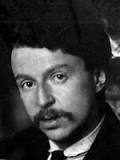
Leyzer Podryatshik
Sources: Zalmen Reyzen, Leksikon, vol. 4; Shmuel Niger, in Tog (New York) (April 17, 1926); Shiye Rapoport, Tsvishn Yo! un Neyn! Kritik un Esey (Between Yes! and No!, Critic and Essay) (Warsaw: Kh. Bzhoza, 1937), pp. 97-129; Meylekh Ravitsh, in Tsukunft (New York) 1 (1945); A. Suskovitsh, in Davke (Buenos Aires) 30 (1957); Yitskhok Nakhmen Shteynberg Gedenk-Bukh, der Mentsh, zayn Vort, zayn Oyftu, 1888-1957 (Yitskhok-Nakhmen Shteynberg Remembrance Volume, the Man, his Word, his Accomplishment, 1888-1957) (New York, 1961), with a bibliography, and the citations above from Kazdan, Naks, and Rapoport may be found here; Rabbi Binyamin, Keneset ḥakhamim (Congregation of the Wise) (Jerusalem, 1960), pp. 252-54; Leyzer Pines, in Di Goldene Keyt (Tel Aviv) 41 (1961); Grigori Aronson, Rusish-Yidishe Inteligents (Russian-Jewish Intellectuals) (Buenos Aires: Yidbukh, 1962), pp. 188-217; Michael Astour, Geshikhte fun der Frayland-Lige un Funem Teritoryalistishn Gedank (History of the Freeland League and of the Territorialist Idea) (New York, 1967), pp. 42-43; Shoyl Gutman, Traditsye un Banayung, Eseyen (Traditional and Renewal, Essays) (New York: Matones, 1967); Berl Locker, Mikitov ad Yerushalaim (From Kuty to Jerusalem) (Jerusalem, 1970), pp. 97-99; Mortkhe Shekhter, in Afn Shvel (New York) 227 (1977).