Leksikon fun der Nayer Yidisher Literatur
לעקסיקאָן פֿון דער נײַער ייִדישער ליטעראַטור

Browse All People
By Subjects
By Volume:

search tips
✕
≡

How to Build Your Search:

A. In the below “Advanced Search,” use the drop down parameters under "Scope" - ALL words, ANY words, or EXACT word/phrase. Build the parameters row by row.


OR


B. To define your search using the basic one-line search, in the above textbox:

  • Use a plus to REQUIRE the word:
    +music +theory << must contain the words music and the word theory
  • Use quotes for a phrase:
    song "music theory" << anything with song or phrase "music theory"
    or "levin" < exact match, not levine
  • Use + and quotes to require the phrase:
    +"music theory" << must include phrase
  • Use a minus to EXCLUDE:
    +music -theory << must include music, but not theory
NOTE: When searching in Yiddish letters, this Lexicon should find the word(s) with or without diacritics (e.g., אברהם vs. אַבֿרהם) -- but when searching in other systems, if you can't find it one way, try searching the other way.
⋮⋮
⋮⋮
Search:
Text
Dates
Subjects
Living People ONLY
Women ONLY
Records w/ Images ONLY
Search in:
Scope:
ALL words
ANY words
EXACT word/phrase
א אַ אָ ב בּ בֿ ג ד ה ו װ ױ ז ח ט י יִ ײ ײַ כ כּ ך ל מ ם נ ן ס ע פּ פֿ פ ף צ ץ ק ר ש שׂ תּ ת ־

click for image pop-out

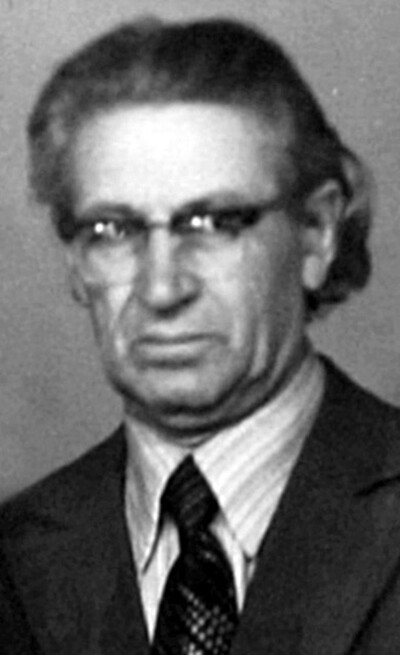
Image from Beider lexicon; see citation.

Click, drag, enlarge the below information boxes. (Then click the arrow in upper right to return them to their place & size.)
Places
Birth Place
Chernin, Kiev district
Death Place
Unknown (Israel?)
Images (click an image for slideshow)


Image from Beider lexicon; see citation.


Credits
  • Chaim Beider Author
  • Berl Kagan Author
  • Yekhezkl Lifshits Author
  • Joshua Fogel Translation to English & Research
  • Tetiana Shyshkina Updates
  • Mark H. David OCR - Optical Character Recognition
  • Also See
    •

    Katsev, Arn-Avrom

    1916–2000

    approx. 83 - 84 years

    He was a poet, born in the village of Chernin, Kiev district, into a family of farmers. When young, he lived in the Kalinindorf Ethnic Jewish District amid the Kherson steppes. While still a student at the Odessa Pedagogical Institute, he published his first poems.

    He debuted in print in 1931 in Zay Gerekht (Get Ready!) He was particularly successful with children’s poems which appeared in: Emes (Truth), Oktyaberl (Little October), and Yunge Gvardye (Young Guard).

    Under the supervision of Leyb Kvitko, the state publishers in Kiev in 1940 brought out Katsev’s first collection for these youngest lovers of the Yiddish word. Even after WWII he continued writing children’s poetry in Yiddish, when conditions under the Stalinist regime meant that there were no Jewish schools and no institutions in which children might hear a Yiddish word spoken openly.

    He graduated from the Odessa Pedagogical Institute and worked as a teacher in Jewish schools in the city of Konotop, Chernihiv district, Ukraine. During the period when Jewish schools were closed in the Soviet Union, he taught for several decades of Russian and Ukrainian in the Saratov, Kam"yanets'-Podil's'kyy, and Kherson districts.

    His poetry was well known to readers of Sovetish Heymland (Soviet Homeland) in Moscow, Folks-Shtime (Voice of the People) in Warsaw, and Birobidzhaner Shtern (Birobidzhan Star). In 1980, the Moscow publishing house of Sovetskii Pisatel' brought his poetry anthology Dos Gute Vort (The Good Word). And his collections of poetry were translated into Russian and Ukrainian.

    In 1990 he made aliya to Israel and published work in: Di Goldene Keyt (The Golden Chain), Yerusholaimer Almanakh (Jerusalem Almanac), Letste Nayes (Latest News), Naye Tsaytung (New Newspaper), and Kind-Un-Keyt (Young and Old).

    His books include: Kinder Lidelekh (Children’s Poetry) (Kiev, 1940), 24 pp.; Dos Gute Vort, poems (Moscow: Sovetski Pisatel, 1980), 129 pp. His work appeared in Ukrainian translation: Bulitsiya Povna Liudei (The Street Full of People) (Simferopol, 1972); and List do Dida (A Letter to Grandfather), children’s poetry (Kiev, 1975).

    Sources: Supplement to Folks-Shtime (Warsaw) (February 25, 1961); Yankev Glatshteyn, In der vElt Mit Yidish (The World with Yiddish) (New York, 1972), p. 369; H. Rabinkov, in Birobidzhaner Shtern (Birobidzhan) (July 6, 1980).

    •

    © 2026 Congress for Jewish Culture 
    Rights are reserved. If you wish to quote small portions of text or data from this Lexicon, you may do so with full attribution to the Congress for Jewish Culture and a link to the specific site, which credits the sources. The Lexicon is perpetually in process; so some elements cited might change as we correct and update information.

    If you notice any errors or omissions in this Lexicon (or if you have any concerns or need help) please email us -- Or feel free to post a Public Comment, form at the end of each person's biography.

    NOTE
    A lot of our English and Yiddish texts and metadata are being worked on: researched, checked, corrected, fixed, formatted, updated, and translated.
    There are many ways you can help.

    Your Comment *
    Reminder - Please state your Source of info in your comment
    You will get an email for verification before your comment is put on the site. We will not make your email address public.