

Reuveni, Arn
August 2, 1886–September 10, 1971
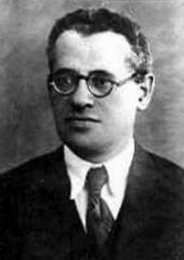
A Hebrew and Yiddish writer, he was born in Poltava, Ukraine. His original surname was Shinshelevitsh. He was the brother of the second president of the State of Israel, Yitsḥak Ben-Tsvi. From 1904 he spent two years in the United States, before returning home. For participating in Jewish self-defense (1906), he was sentenced to perpetual banishment, but in 1909 he escaped. After various ups and downs, he arrived in the Land of Israel and settled in Jerusalem. He was active with Labor Zionism both earlier and in Israel.
While still young, he wrote poetry and novels of bandits and pirates in Russian. After arriving in Israel, he became very productive in Yiddish and Hebrew. He was a columnist for Hebrew newspapers—such as Bustanai (Gardener), Haboker (This Morning), and Haolam (The World).
In Hebrew he wrote poetry, stories, novels, literary essays, and research pieces on the history of the Land of Israel and did many translations from world literature. He debuted in print in Yiddish in 1911 (although he had already written several stories while in America) in Avrom Reyzen’s weekly Dos Naye Land (The New Land) (issue 11).
He later published poems, stories, literary criticism, and journalistic articles in: Der Fraynd (The Friend) in Warsaw, Di Tsayt (The Times) in London, Dos Leben (The life) in Odessa, Di Yidishe Velt (The Jewish World) in Warsaw, Di Naye Velt (The New World) in Vilna, and Literarishe Bleter (Literary Newspaper) in Warsaw; and in America, Dos Naye Leben, Idisher Kemfer (Jewish Fighter), Tog (Day), Varhayt (Truth), Tsukunft (Future), Renesans (Renaissance), and Di Literarishe Velt (The Literary World), among others.
His work also appeared in: Morris Basin, 500 Yor Yidishe Poezye (500 Years of Yiddish Poetry) (New York, 1917); Yisroel Rabinovitsh, Der Arbeter in der Yidisher Literatur (The Worker in Yiddish Literature) (Moscow-Minsk: Central Publ., 1931); Arie Shamri, Vortslen (Roots) (Tel Aviv, 1966); Mordekhai Ḥalamish, Mikan umikarov, antologya shel sipure yidish beerets yisrael (From Near and from far Away, Anthology of Stories in Yiddish in Israel) (Merḥavya, 1966); Shmuel Rozhanski, Dos Kind in der Yidisher Poezye un Proze (The Child in Yiddish Poetry) (Buenos Aires, 1971); and Joseph Leftwich, The Golden Peacock (New York, 1961).
His writings include:
In Dulhoyz (In an Insane Asylum) (Kiev: Kunst-farlag, 1914), second edition including the story “Kinder” (Children) (Warsaw, 1934);
Undern Vand, Ertseylung (Under the Wall, a Story) (Jerusalem: Dos land, 1914), 95 pp.;
Berg un Viste, Lider (Mountains and Sights, Poetry) (Jerusalem: Akhdes, 1914/1915), 117 pp.;
Kinder (Kiev: Kiever farlag, 1918), 23 pp., second edition (Warsaw: Kultur-Lige, 1921), 27 pp.;
Koykhes (Strengths), stories (Kiev: State Publ., 1921), 120 pp.;
Yerusholaim in Shotn fun Shverd (Jerusalem in the Shadow of the Sword), a novel (New York: Der kval, 1963), 220 pp.
The first part of his novel Payn (Anguish) was published in Tsayt (Times) in New York; the novel Blut un Shand (Blood and Disrepute) appeared in Tog (New York, 1927), and many of Reuveni’s stories as well were not published in book form.
Other novels, written originally in Yiddish, were only published in Hebrew, such as his trilogy—Bereshit haveukha (In the Beginning of Confusion), Haoniyot haaḥaronot (The Last Ships), and Shamot (Devastation).
He translated into Yiddish Y. Ben-Tsvi’s Nidḥey Yisroel—di Farvoglte un Oysgeleyzte Shvotim (The Dispersed of Israel—the Banished and Redeemed Tribes) (New York: 1962/1963), 341 pp.
“In…all of his stories,” wrote Zalmen Reyzen, “Reuveni reveals himself as a writer with a powerful capacity to describe in a simple, fresh, and clear language.”
The last three or four decades of his life, however, Reuveni was almost severed from Yiddish literature, and that effectively prevented him from assuming an honored place in it, given his literary talent.
He died in Jerusalem.
Sources: Zalmen Reyzen, Leksikon, vol. 4; Getzel Kressel, Leksikon hasifrut haivrit (Lexicon of Hebrew Literature), vol. 2 (Merḥavya, 1967); Sefer haishim (Biographical Dictionary) (Tel Aviv, 1936/1937), pp. 449-50; Tsvi Shimshi, Megilat yuḥasin (Genealogical Record) (Jerusalem, 1940), including a listing of his Hebrew books, pp. 159-61; Dov Sadan, Avne miftan, masot al sofre yidish (Milestones, Essays on Yiddish Writers), vol. 3 (Tel Aviv: Perets Publ., 1972), see index; A. A. Kabak, Masot vedivre bikoret (Essays and criticism) (Jerusalem, 1974).