
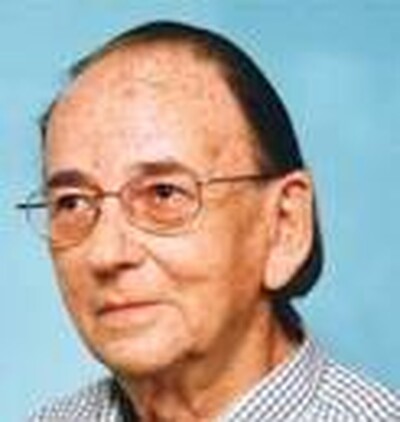
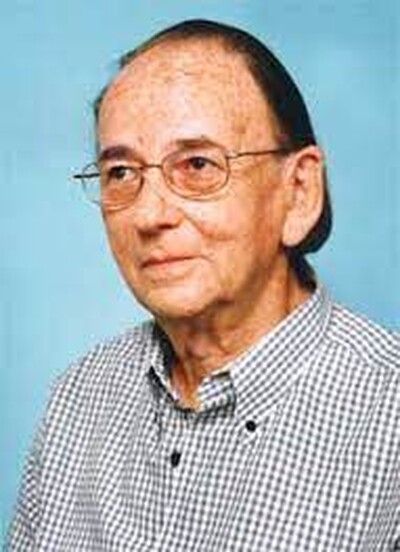
Shpiglblat, Aleksandr
August 20, 1927–November 25, 2013
He was a poet, born in Câmpulung Moldovenesc, Bukovina. He attended religious elementary school and a Romanian high school. His mother tongue was German. He spent the years 1941-1944 in the Transnistria concentration camp. After the war he studied at the University of Bucharest, and over the years 1954-1958 he was a lecturer in Russian literature there. In 1964 he settled in Petaḥ Tikva, Israel.
He wrote poetry and essays. He debuted in print in 1950 in IKUF-Bleter (Pages from IKUF [Jewish Cultural Association]) in Bucharest. He went on to contribute to: Tsaytshrift-Ktav-et (Periodical) in Bucharest, Tsukunft (Future) in New York, Shloyme Bikl Yoyvl-Bukh (Memorial Volume for Shloyme Bikl) (New York, 1967), Letste Nayes (Latest News) and Di Goldene Keyt (The Golden Chain [from 1972 the secretary to the editorial board]) in Tel Aviv; among others. He was also co-editor of Almanakh (Almanac) published by the Yiddish writers’ association in Israel (Tel Aviv, 1967).
He died in Petaḥ Tikva.
His writings include: Heymland, Lider (Homeland, Poetry) (Bucharest: State Publ., 1952), 80 pp.; Yidishe Shprakh, Leyenbukh Farn 5-Tn Klas (Yiddish Language, Textbook for the Fifth Class), with Herta Donenfeld (Bucharest, 1957), 247 pp.; Yidishe Shprakh, Leyenbukh Farn 6-Tn Klas (Yiddish Language, Textbook for the Sixth Class), with Herta Donenfeld (Bucharest, 1958), 153 pp.; Umruike Oysyes (Unsettling Letters), poetry (Tel Aviv: Hamenorah, 1969), 61 pp.; Papirene Zeglen, Lider (Paper Sails, Poetry) (Tel Aviv: Di Goldene Keyt, 1973), 84 pp.; Volknbremen, Lider (Cloud on the Brow, Poems) (Tel Aviv: Di Goldene Keyt, 1979), 64 pp.; Neshome-Likht (Light of the Soul) (Tel Aviv, 1997); In Geln Tsvishnlikht fun Erev-Regn, Lider 1964-1997 (The Yellow Twilight on the Eve of Rain, Poetry 1964-1997) (Tel Aviv, 1997), 181 pp.; Griner Umet, Lider (Green Sadness, Poetry) (Tel Aviv: Leivick Farlag, 2007), 45 pp.; Getunken in Honik-Tsar, Lider 2005-2009 (Soaked in the Honey of Bitterness, Poetry 2005-2009) (Tel Aviv: Beys Sholem-Aleykhem, 2009), 116 pp.
His work also appeared in Oyfshtayg (Ascent) in Bucharest. He was a winner of Manger Prize (1984).
“Poetic frugality, lyrical miniature, the short poem” wrote Yitskhok Yanasovitsh, “found in Shpiglblat a highly talented singer.”
“His poetry could serve,” noted Yitskhok Paner, “as an exemplar of word- and verse-austerity…short flashes that light up a distant, dark domain for a time.”
Sources: Froim Oyerbakh, in Svive (New York) (May 1969); Yitskhok Paner, in Letste Nayes (Tel Aviv) (May 30, 1969); Yitskhok Yanasovitsh, in Folksblat (Tel Aviv) (January 1974); Froim Roytman, in Yisroel-shtime (Tel Aviv) (August 7, 1974); Yeshurin archive, YIVO (New York).