
Rozhanski, Shmuel
April 14, 1902–February 19, 1995
Born in Warsaw, he was a literary research, journalist, and editor. He studied Bible, Talmud, and general subject matter. In 1912 he completed Kowalski’s high school in Warsaw, where he engaged in a campaign for Yiddish among assimilated youth groups. In 1923 he made his way to Argentina.
He cofounded and for many years chaired the Congress for Jewish Culture in Argentina, YIVO, and an array of other local Jewish institutions. From 1925 he worked as a teacher and director in Jewish schools; from 1949 to 1973, he was professor in the Jewish teachers’ seminary and later in the academy.
From July 1923 he published in the daily newspaper Di Prese (The Press): sketches, stories, the one-act play Shpil (Game), literary critical articles, and fragments of his translation of the play “Yidn” (Jews [original: Żydzi]) by Józef Korzeniowski. He was theater and literary critic (1928-1973) for the daily Di Idishe Tsaytung (The Jewish Newspaper), for which he also wrote journalistic pieces and a daily column. He also wrote articles on literature and theater, schools, and the like for: Zeglen (Sails) (1924-1925), Dorem-Afrike (South Africa), Di Pen (The Pen), Far Groys un Kleyn (For Big and Small), Rozaryer Vokhnblat (Rosario Weekly Newspaper), and Sotsyalistishe Bleter (Socialist Newspaper) which he edited.
He placed works of research in: Argentiner Yidishe Shriftn (Argentinian Jewish Writings): “y. L. Perets un zayn Interes tsu Argentine” (Y. L. Perets and his Interest in Argentina) and “‘hebreyishe Melodyes’ fun an Argentiner Dikhter in 1837” (“hebrew Melodies” by an Argentinian Poet in 1837). He wrote a longer piece, “Der Yud” (The Jew), in Pinkes far der Forshung fun der Yidisher Literatur un Prese (Record of Research on Yiddish Literature and the Press) (New York) 3 (1975).
In book form:
D”r Khayim Zhitlovski, Der Shafer fun Yidishn Modernem Kultur-Gedank (Dr. Chaim Zhitlovsky, the Creator of the Modern Jewish Cultural Thought) (Buenos Aires, 1925), 16 pp.;
Gezamlte Shriftn (Collected Writings) (Buenos Aires: Koyfman, 1941), 6 vol.s (vol. 5 never appeared);
Mikhl Hakoyen Sinai (Mikhl Hakoyen Sinai), on his seventieth birthday (Buenos Aires, 1947), 16 pp.;
Yankev Dinezon, di Mame Tsvishn Undzere Klasiḳers (1856-1919) (Yankev Dinezon, the Mother Among Our Classical Writers, 1856-1919) (Buenos Aires, 1956), 131 pp.;
Moyshe Broderzon, der Shpilman fun Yung-Yidish (Moyshe Broderzon, the Minstrel of Young-Yiddish) (Buenos Aires, 1959), 21 pp.;
Shprakh un Shul (Language and School) (Buenos Aires, 1960), 8 pp.;
Der Nes fun Yidishn Lid (The Miracle of the Yiddish song), a songbook (Buenos Aires, 1974);
Yidishe Literatur (Yiddish Literature), 3 vols. (Buenos Aires: Vaad Haḥinukh, 1970-1975);
Yidishe Literatur-Yidish Lebn (Yiddish Literature, Jewish Life), 3 vols. (Buenos Aires: YIVO literature association, 1973-1977);
Iberlebungen (Experiences) (Buenos Aires, 1982), 278 pp.;
“Martin Fyerro,” in Goles bay Zikh in der Heym, Sarmientos Batsiung tsu Yidn (“Martín Fierro,” in the Diaspora all by Himself, Sarmiento’s Ties to the Jews) (Buenos Aires, 1985), 191 pp., which deals with the Argentinian folk poet José Hernández and the journalist and statesman Domingo Faustino Sarmiento.
He edited: Fun Argentine, Land un Yishev, Poezye, Proze, Publitsistik, Bilder (From Argentina, Land and Community, Poetry, Prose, Journalism, Images) (Buenos Aires, 1960), 150 pp.; Dovid Pinski, Oysgeklibene Shriftn, Dertseylungen, Dramen, Eseyen, Memmuarn (Dovid Pinski, Selected Writings, Stories, Dramas, Essays, Memoirs) (Buenos Aires, 1961), 348 pp.; Menakhem-Mendl, 60 Briv, Fragmentn fun Forsharbetn tsu der Kharakteristik, Zikhroynes, Bilder ([sholem-Aleichem’s] Menakhem-Mendel, Sixty Letters, Fragments of Research on the Character, Memoirs, Images) (Buenos Aires, 1963), 266 pp.; Dray Drames (Three Dramas [by Yankev Gordin]) (Buenos Aires, 1973), 317 pp.; Antologye, Katsetlers, Fragmentn fun Forsharbetn tsu der Kharakteristik, Zikhroynes, Bilder (Anthology, Concentration Camp Survivors, Fragments of Research Into Their Character, Memoirs, Images) (Buenos Aires, 1982), 242 pp.
He also published books in Spanish on Yiddish writers.
One of his most important achievements for Yiddish literature was his series Musterverk fun der Yidisher Literatur (Exemplars of Yiddish Literature), published in Buenos Aires, which he began editing in 1957 (with the help of the Yoysef Lifshits Fund at Argentina’s YIVO). The planned one hundred volumes appeared in print by 1984, each volume equipped with the editor’s research on the given literary theme. As Yankev Glatshteyn wrote about the Musterverk series: “The selected works are supplied with lengthy introductions by the editor who elucidates the epoch of the work, with detailed bibliographic and critical information on the writer’s place in Yiddish literature in general. The prefaces that have appeared thus far comprise, as of today, a distinctive ‘anthology’ of Yiddish literature and its creators.”
Additional anthologies that he created:
Dos Yidishe Gedrukte Vort un Teater in Argentine, Gezamlte Shriftn (The Yiddish Printed Word and Theater in Argentina, Collected Writings), 10 vol. (Buenos Aires: ), 1941.
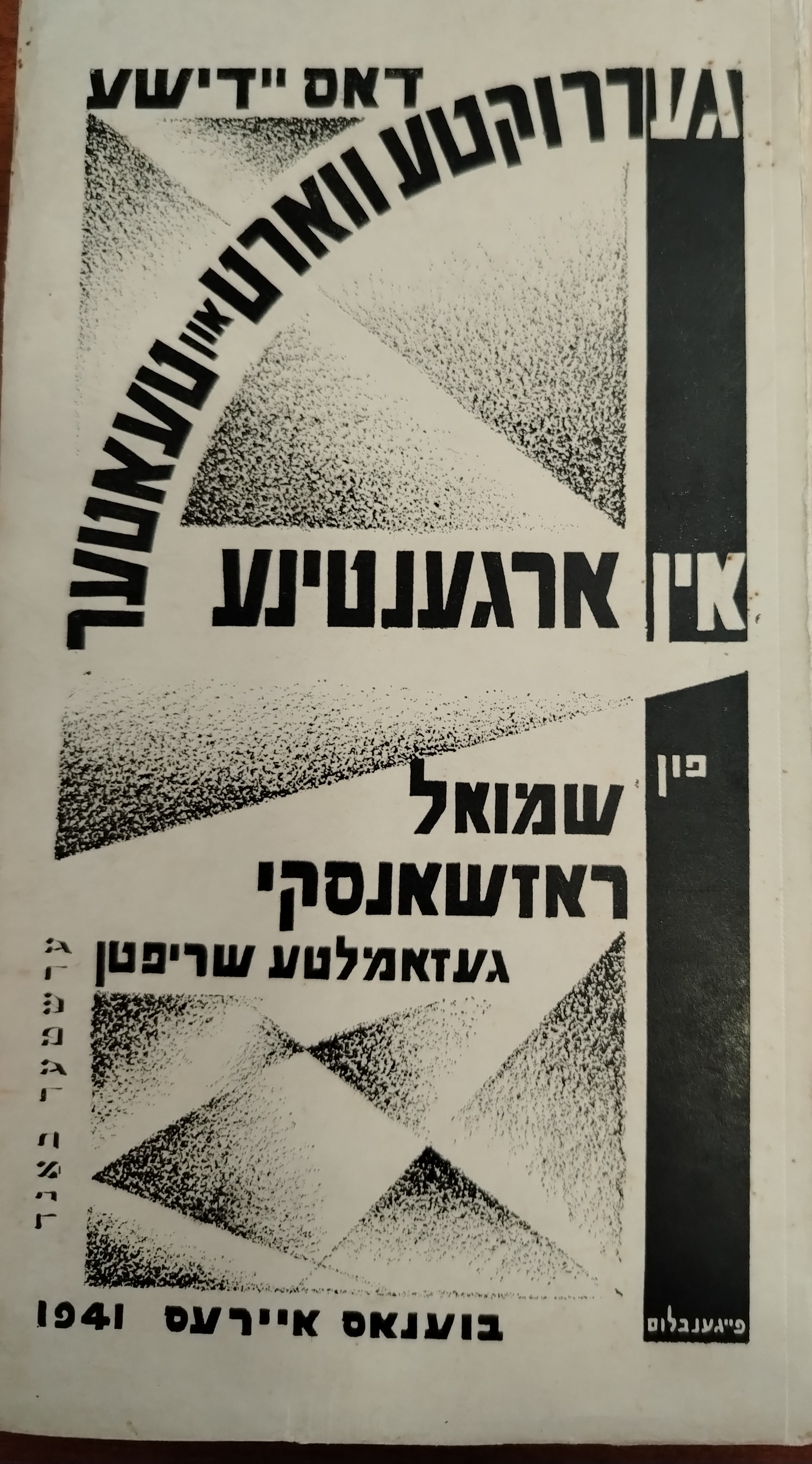
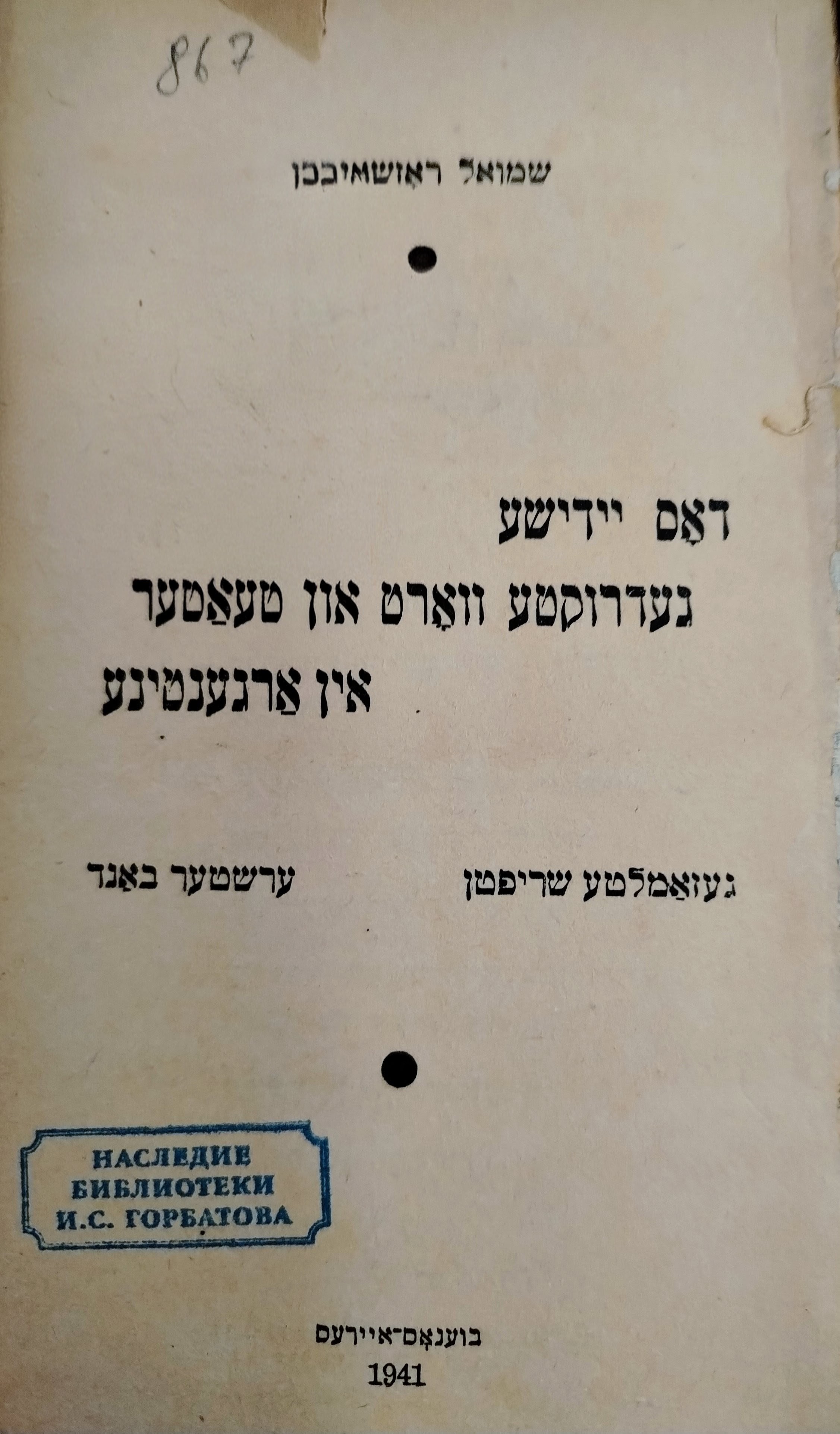
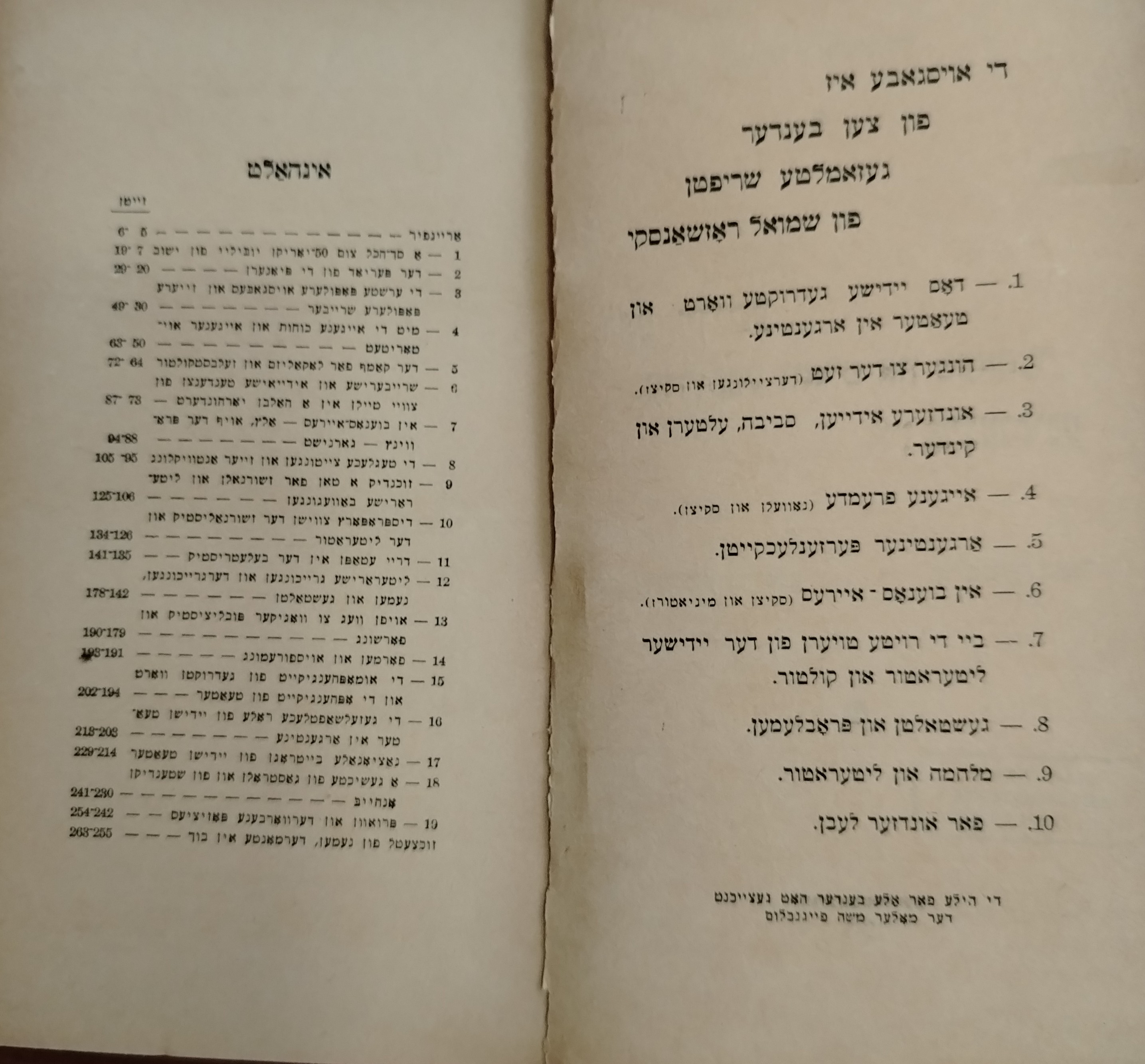
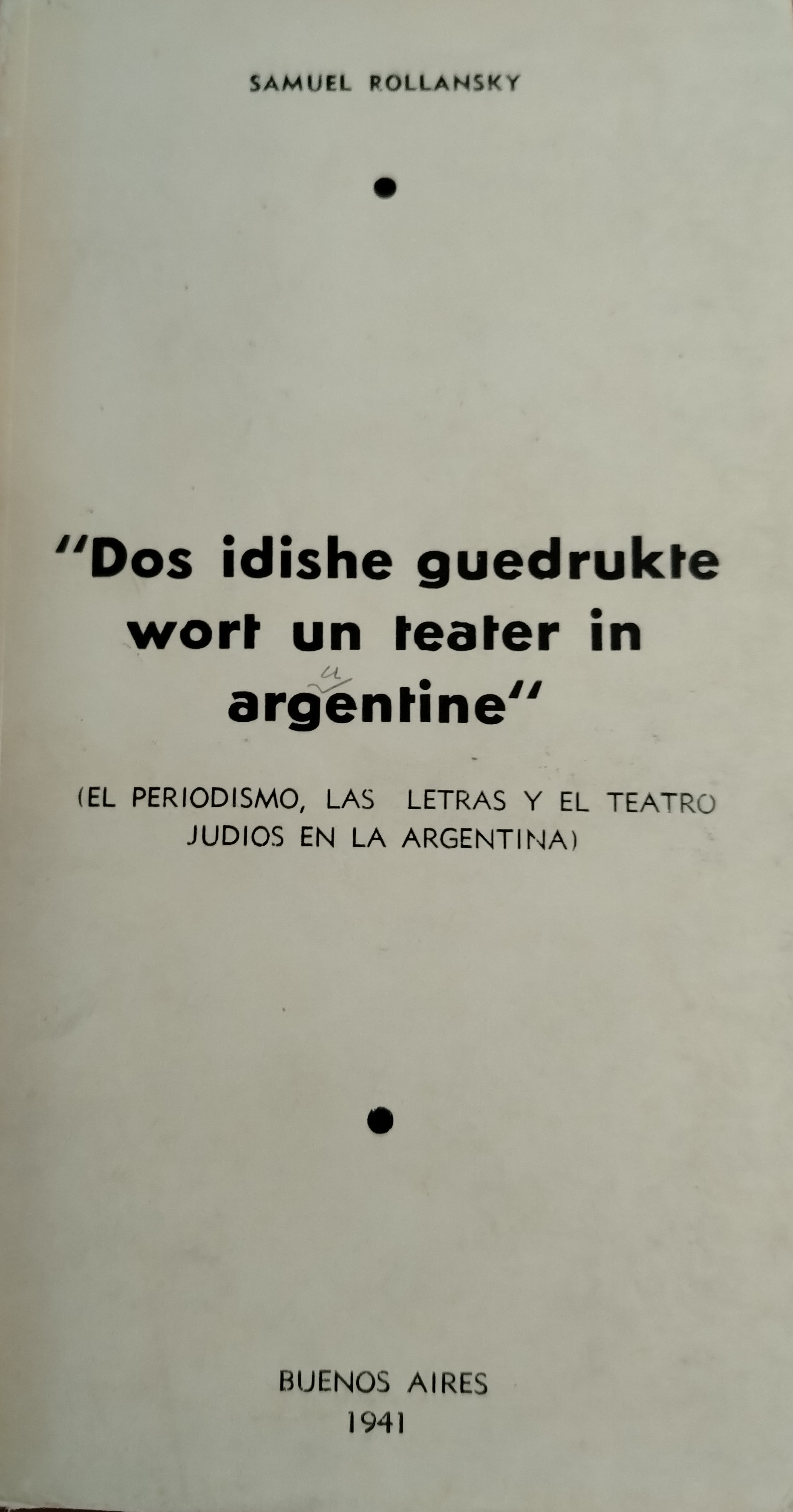
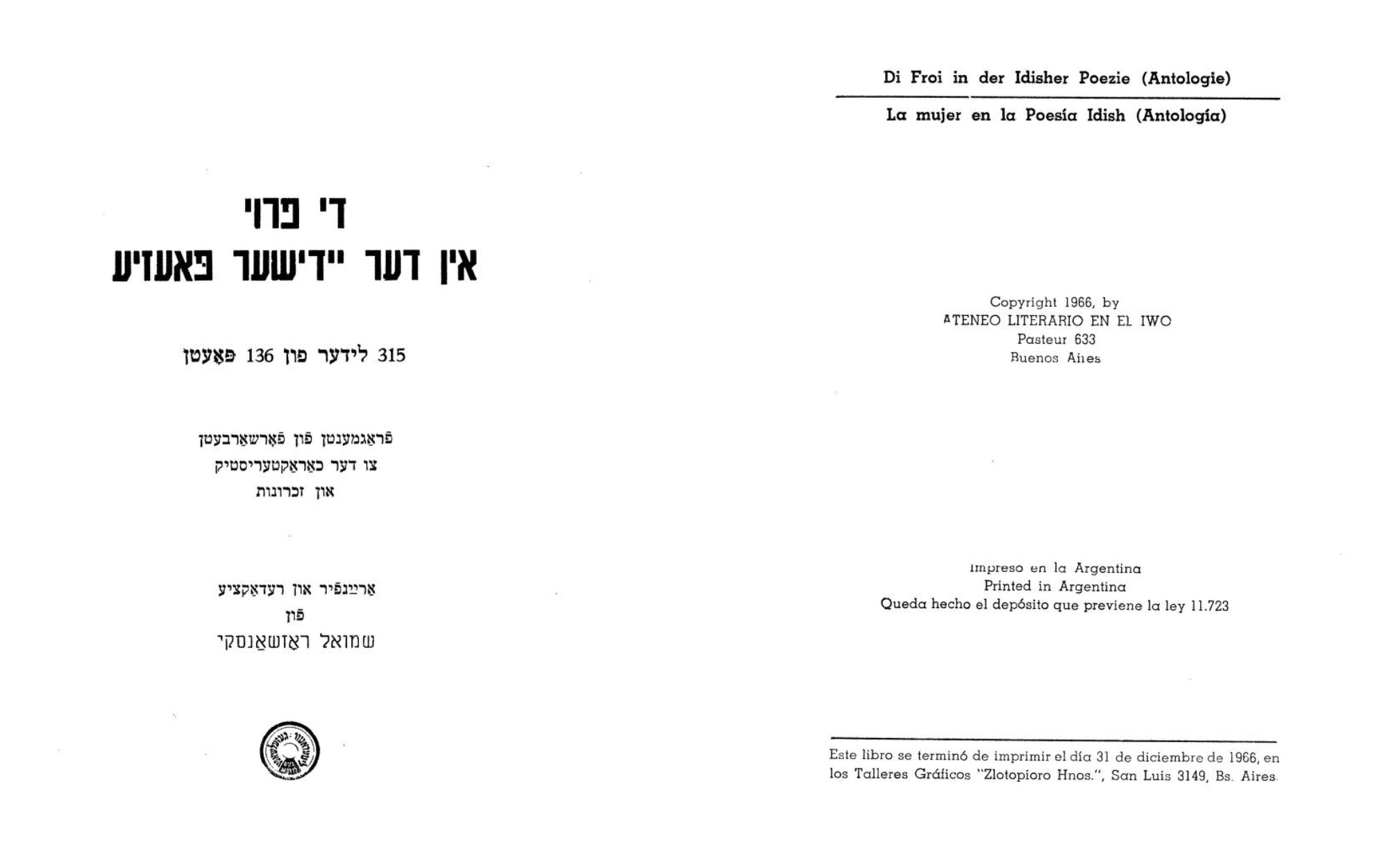
Di Froy in der Yidisher Poezye (The Woman in Yiddish Poetry) (Buenos Aires: Ateneo Literario en el IWO [YIVO]), 1966. 417 pp. This collection contains poems by or about women but not necessarily written by women.
His pen names: Abe Shayn and Khayim Felman.
He died in Buenos Aires.
Sources: Zalmen Reyzen, Leksikon, vol. 4; Hersh-Dovid Nomberg, in Moment (Warsaw) (November 7, 1924); Shmuel Niger, in Tog (New York) (April 26, 1941); V. Bresler, Antologye fun der Yidisher Literatur in Argentine (Anthology of Jewish Literature in Argentina) (Buenos Aires, 1944); Arn Glants-Leyeles, Velt un Vort, Literarishe un Andere Eseyen (World and Word, Literary and Other Essays) (New York, 1958), pp. 241-46; Yankev Glatshteyn, In der Velt mit Yidish, Eseyen (In the World with Yiddish, Essays) (New York, 1972), pp. 292-97; Yeshurin archive, YIVO (New York).
I have been going through a part of Rozhansky's archival material, and found a curious note about the musterverk series. Rozhansky typed on a sheet full of other notes: "musterverk, un nisht maysterverk." A muster is an example, a mayster is a master artisan. So maybe the "musterverk" would be better translated as Exemplars of Yiddish Literature, rather than "masterworks"? A small difference in connotation, but seemingly an important one.
REPLY FROM LEXICON: Thank you! Word change agreed and posted./sry