
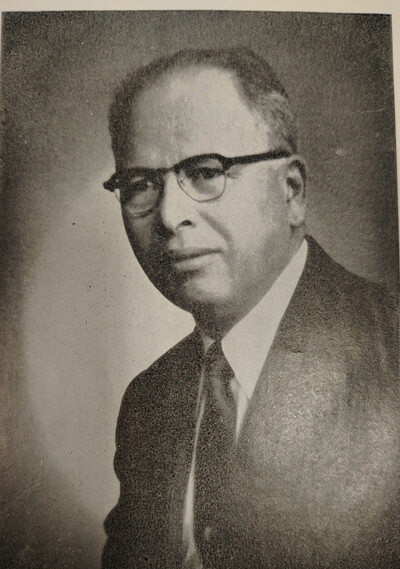
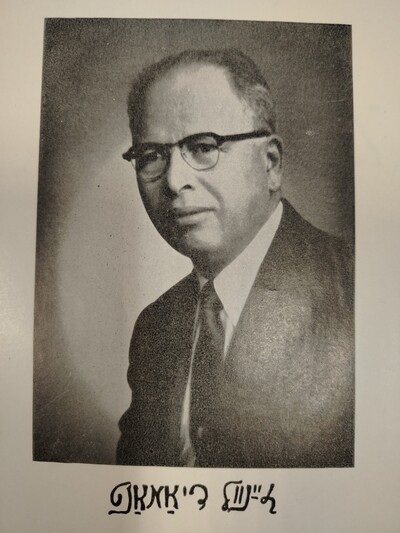
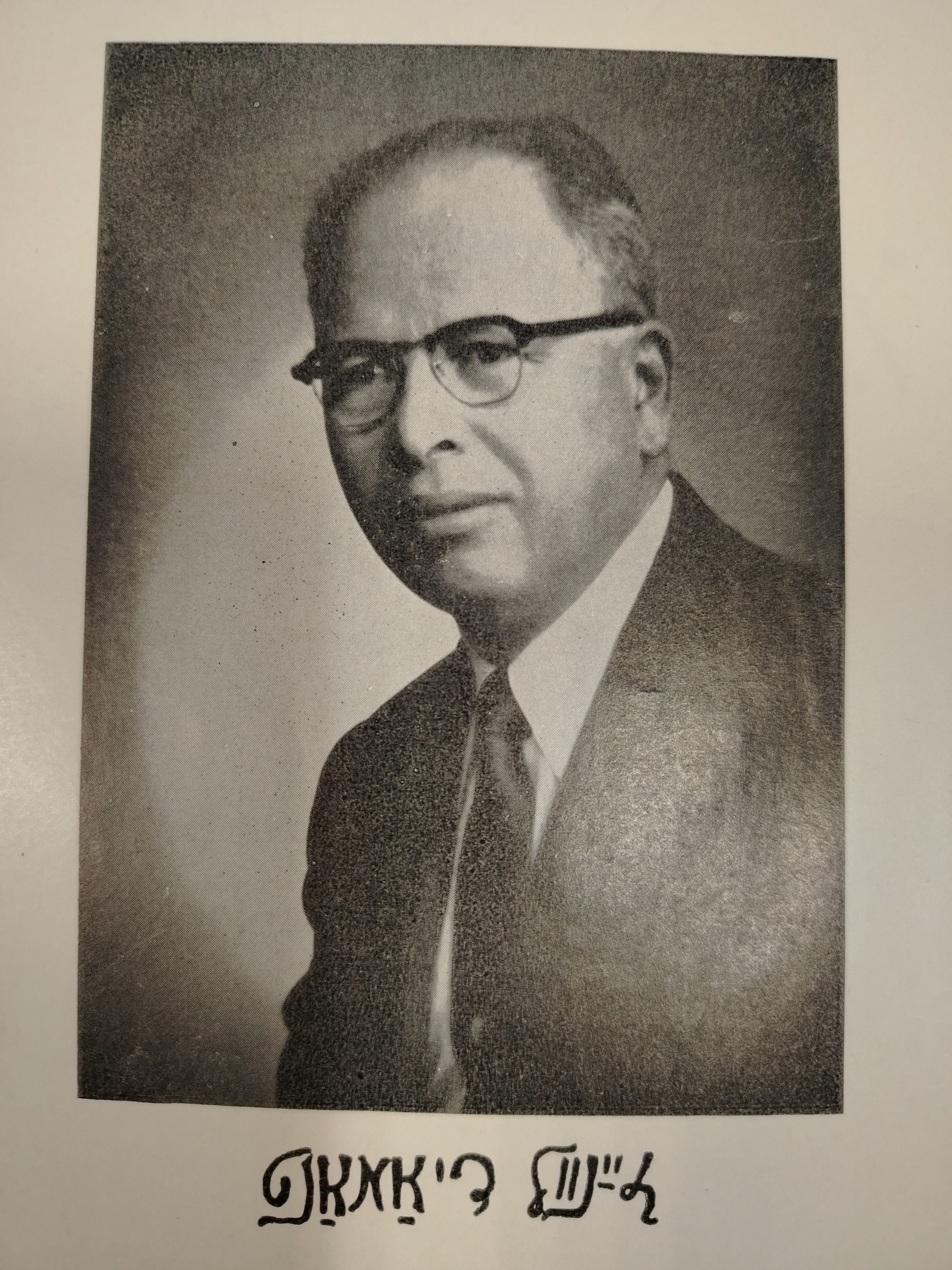
Diamant, Zaynvl
April 14, 1904–June 26, 1963
He was born in Turbin (Turobin), Lublin district, Poland. At the age of four, he moved with his parents to Krushnik (Kraśnik), Lublin district. He studied in religious primary school, with a Talmud tutor, and in yeshiva and synagogue study hall. Secular subjects he acquired in school and with private tutors.
From his earliest youth, he had a passion about writing. At age ten, he was keeping a diary, in which he noted in verse the events transpiring during WWI.
During the years of war and hunger, he was forced to stop his studies and begin work as a tailor. He devoted much time to self-study and acquainted himself with Hebrew, Yiddish and world literature. Through his older brother Shmuel, he became involved with the Bund. It quickly became apparent that he was a talented speaker and organizer. He was the founder and secretary of local trade unions, of the Socialist Artisans Union, and of the Peretz Library. He organized evening courses of study for adults, where he taught. He also organized amateur drama circles in which he participated as a prompter, director, and amateur actor. In the early 1920s, he served as a delegate from Lublin district to conferences of trade unions and to Bundist conferences in Lublin and Warsaw.
Using the initials “Z. D.” and the pseudonym “Sekretar” (secretary), he published correspondence pieces and notices in Lebnsfragn (Life Issues), Folkstsaytung (People’s Newspaper), and Yugnt-Veker (Youth Alarm) in Warsaw, and in Lubliner Togblat (Lublin Daily Newspaper).
In 1928 he emigrated to France and settled in Paris. He worked in a factory and diligently studied French and French literature in an evening school. He was active in the Jewish sector of the Parisian trade union movement, as well as in Jewish community and cultural life, and for a time he served as secretary of the association of people from his hometown.
In 1933 he published his first literary piece, a humorous story about Parisian Jewish life in the weekly newspaper Parizer Handls-Tsaytung (Parisian Commercial Newspaper). He went on to publish novellas, stories, skits, humorous pieces, and reportage works in Folkstsaytung in Warsaw, Naye Prese (New Press) and Undzer Shtime (Our Voice) in Paris, Belgishe Bleter (Belgian Newspaper) in Brussels (edited by Beynish Zilbershteyn), Idishe Folkstsaytung (Jewish People’s Newspaper) in Rio de Janeiro, Forverts (Forward) in New York, and other serials as well.
When WWII broke out in 1939, he volunteered to join the French Army. He was mobilized in 1940 in France by the Polish Army in Exile. He was taken into German military captivity in the summer of 1940 at the officers school in Saint-Maizent, France, and after a short time, he escaped. He lived in Paris, 1940-1941, under the German occupation, and in the summer of 1941 he made his way to the Free Zone. He spent 1941-1942 in Nice, in the south of France. When southern France fell under Italian occupation in 1942-1943, he was active in the cultural realm with a group of refugee writers involved in the Nice Jewish aid and rescue committee. In the summer of 1943, when the Germans occupied all of France, he lived for awhile in hiding to the mountains in a suburb of Nice. In October 1943 he was rescued with help from an uprising to make his way to Switzerland.
Over the years 1943-1944 he was interned in Swiss military camps. He was active in the social and cultural realms with Swiss Jewish Refugee assistance in the camps. He organized evening courses in which he was himself the teacher. He was released from the camps in late 1944 and lived in Geneva. For a time he contributed together with Dr. A. Singalovski in the cultural realm for World ORT (Association for the Promotion of Skilled Trades) and with Professor Libman-Hersh for the Geneva Jewish Cultural Association.
He also placed pieces in the Yiddish weekly newspaper for survivors Der Baginen (The Dawn) in Bonstetten, Switzerland. In 1944 he wrote for the French-language Jewish newspaper La Revue Juive in Geneva (edited by Shiye Yehuda), which published his novellas: La Mort de Beltrami (The Death of Beltrami) and Soeur Marie (Sister Marie) (August-September and October 1945).
Following the conclusion of WWII, he published stories, poems, children’s tales, current events articles, and essays on literature in: Kiem (Existence), Undzer Vort (Our Word), Undzer Shtime (Our Voice), Undzer Veg (Our Way), and Arbeter-Vort (Workers’ Word) in Paris; Tsukunft (Future), Tog (Day), Morgn-Zhurnal (Morning Journal), Idisher Kemfer (Jewish Fighter), Unzer Tsayt (Our Time), Der Veker (The Awakener), Forverts (Forward), Tog-Morgn-Zhurnal (Day-Morning Journal), Kultur un Dertsiung (Culture and Education), Kinder Tsaytung (Children’s Newspaper), Kinder Zhurnal (Children’s Journal), and Gerekhtikeyt (Justice) in New York; In Gang (In Progress) in Rome); Loshn un Lebn (Language and Life) and Fraye Yidishe Tribune (Free Jewish Tribune) in London; Der Shpign (The Mirror), Argentiner Lebn (Argentine Life), and Argentiner Beymelekh (Little Argentine Trees) in Buenos Aires; Naye Velt (New World), Haiton Hademokrati (The Democratic Newspaper), Davar (Word), Davar Leyeladim (Word for Children), Heymish (Familiar), Aḥdut Haavoda (Unity of Labor Party), and Undzer Haynt (Our Today) in Israel; Keneder Adler (Keneder Odler, Canadian Eagle) in Montreal; Dos Naye Lebn (The New Life) in Poland; Faroys (Onward) and Der Veg (The Way) in Mexico City, and other serials as well.
In the summer of 1948 he moved to the United States. In 1950 he was a traveling agent for Algemeyne Yidishe Entsiklopedye (General Jewish Encyclopedia). From June 1954 he was a contributor to Leksikon fun der Nayer Yidisher Literatur (Lexicon of Modern Jewish Literature),[1] for which he wrote a significant number of important biographies, and until late 1956 he was the manager of its files and archives.
In book form, he published:
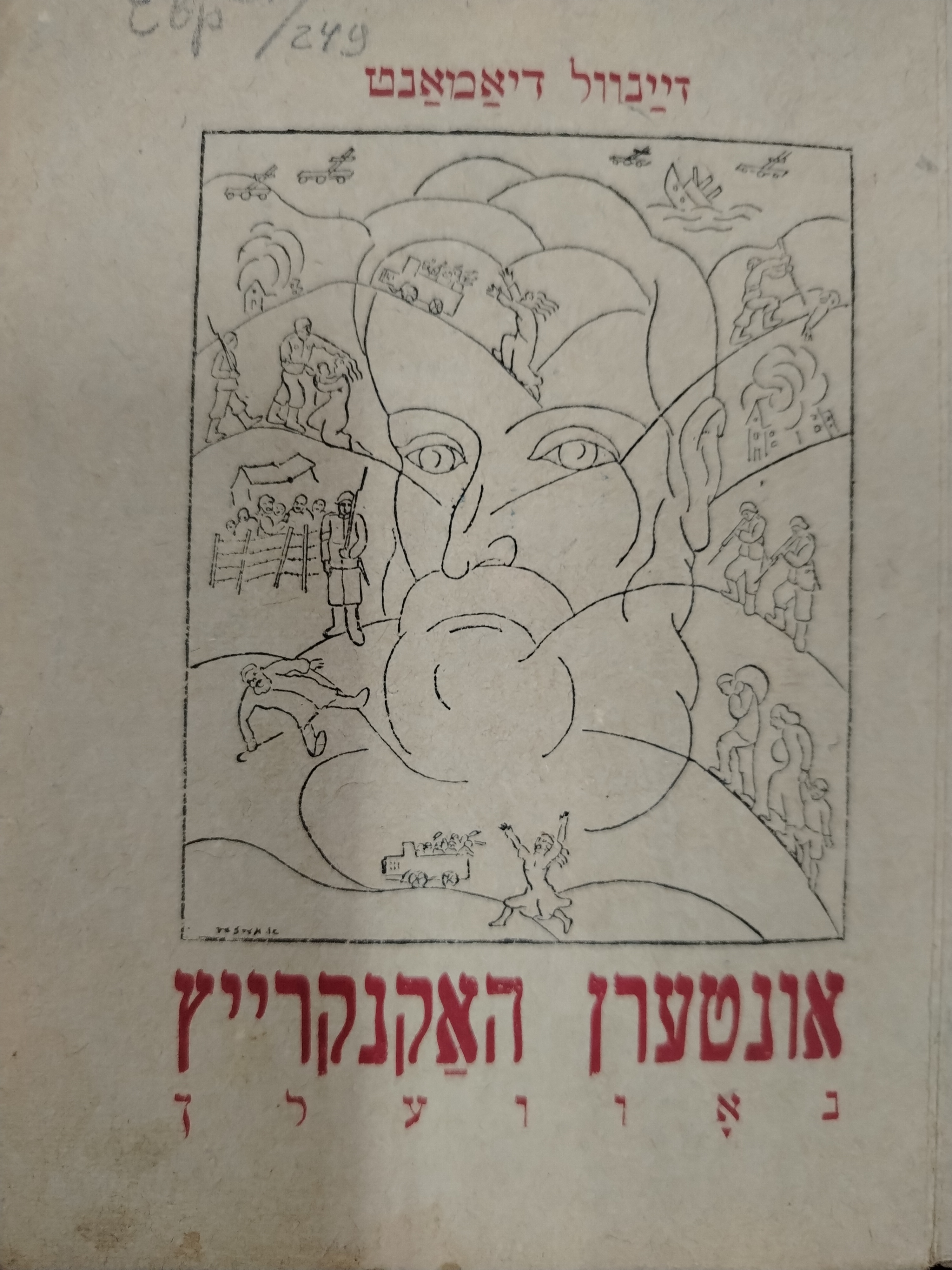
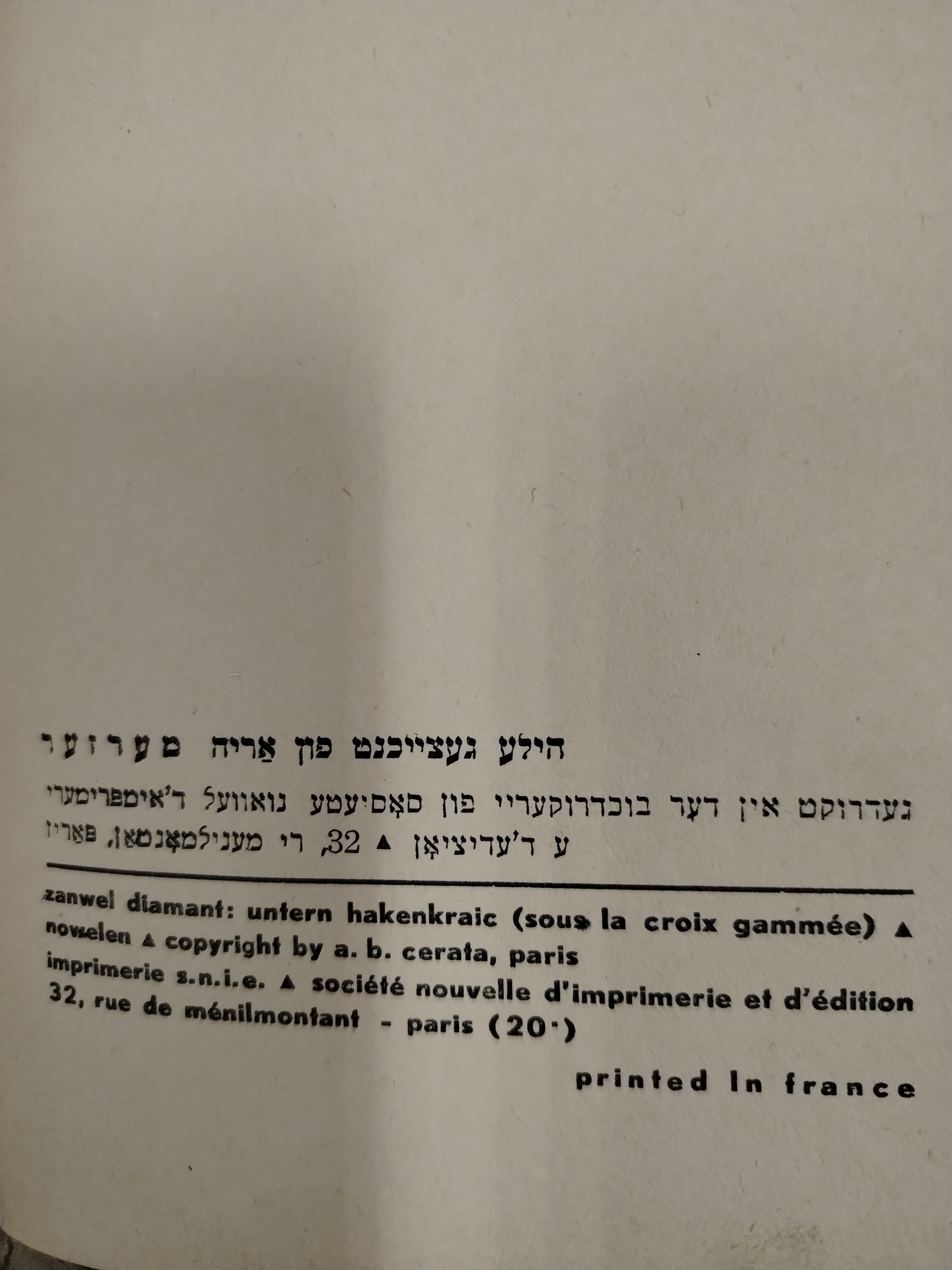
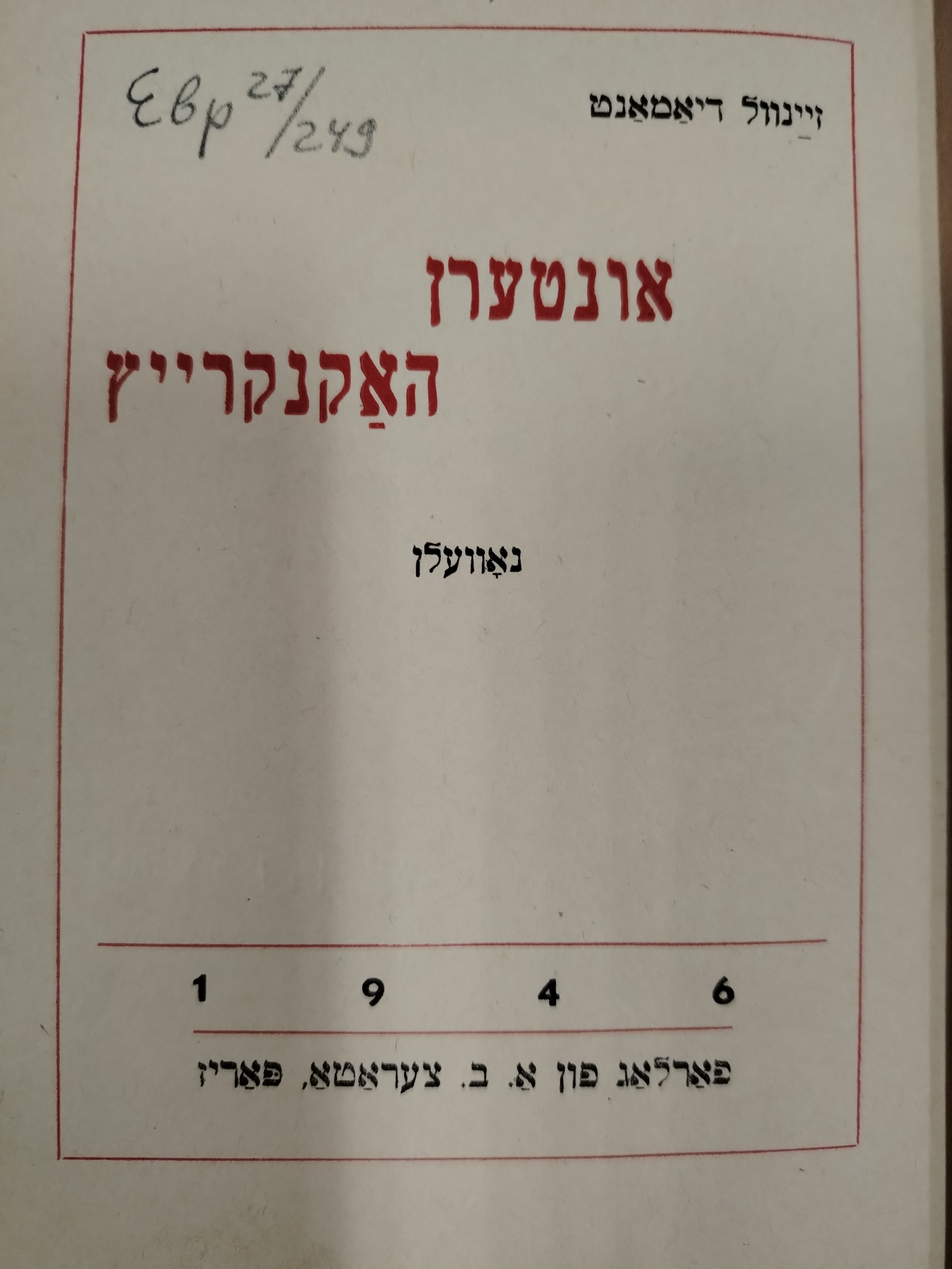
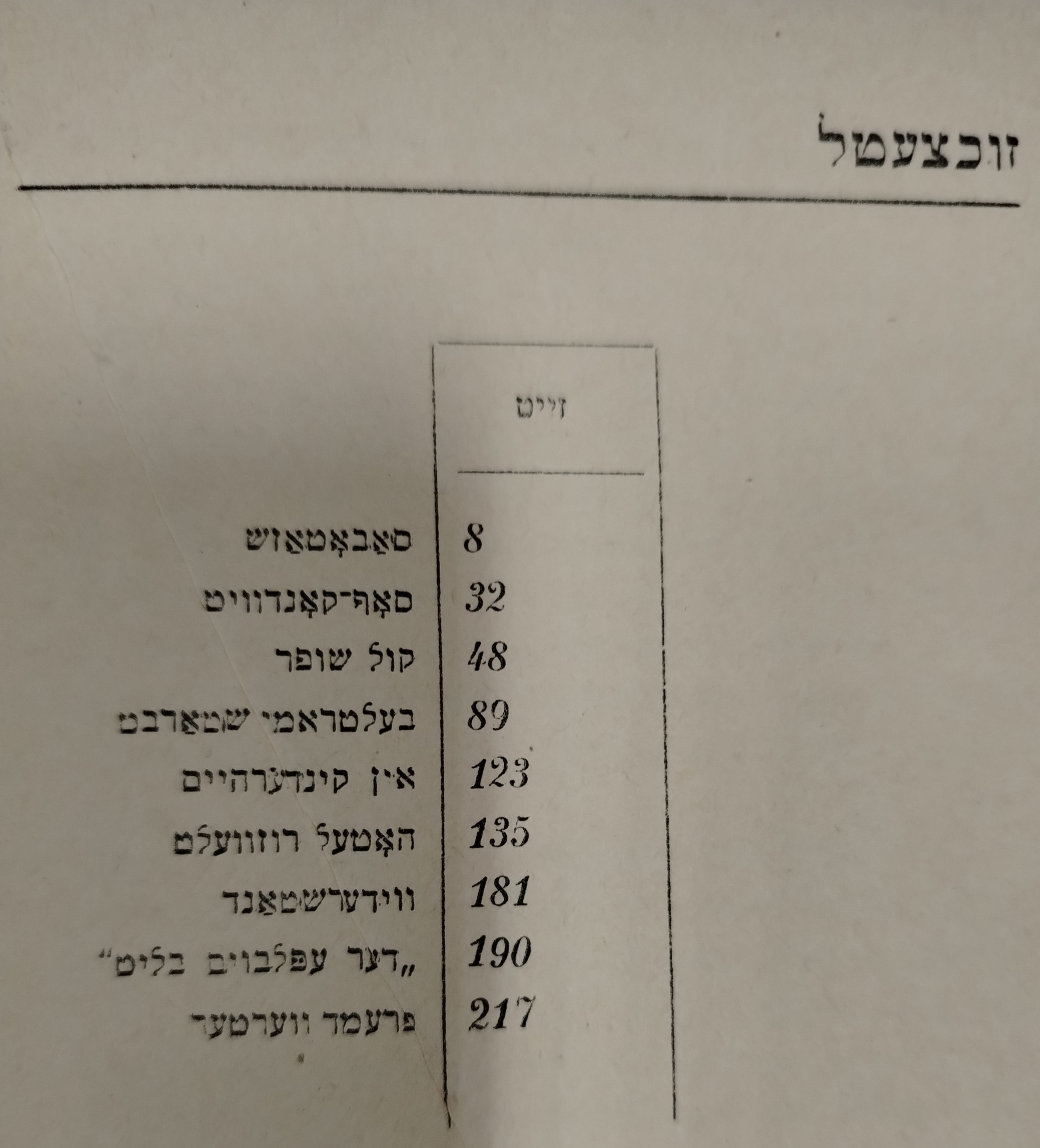
Untern Haknkreyts, Noveln (Under the Swastika, Novellas) (Paris, 1946), 216 pp., with a glossary of foreign words (6 pp.), the cover designer was the well known Arye Merzer (Мерцер Арий) 1905-1966;
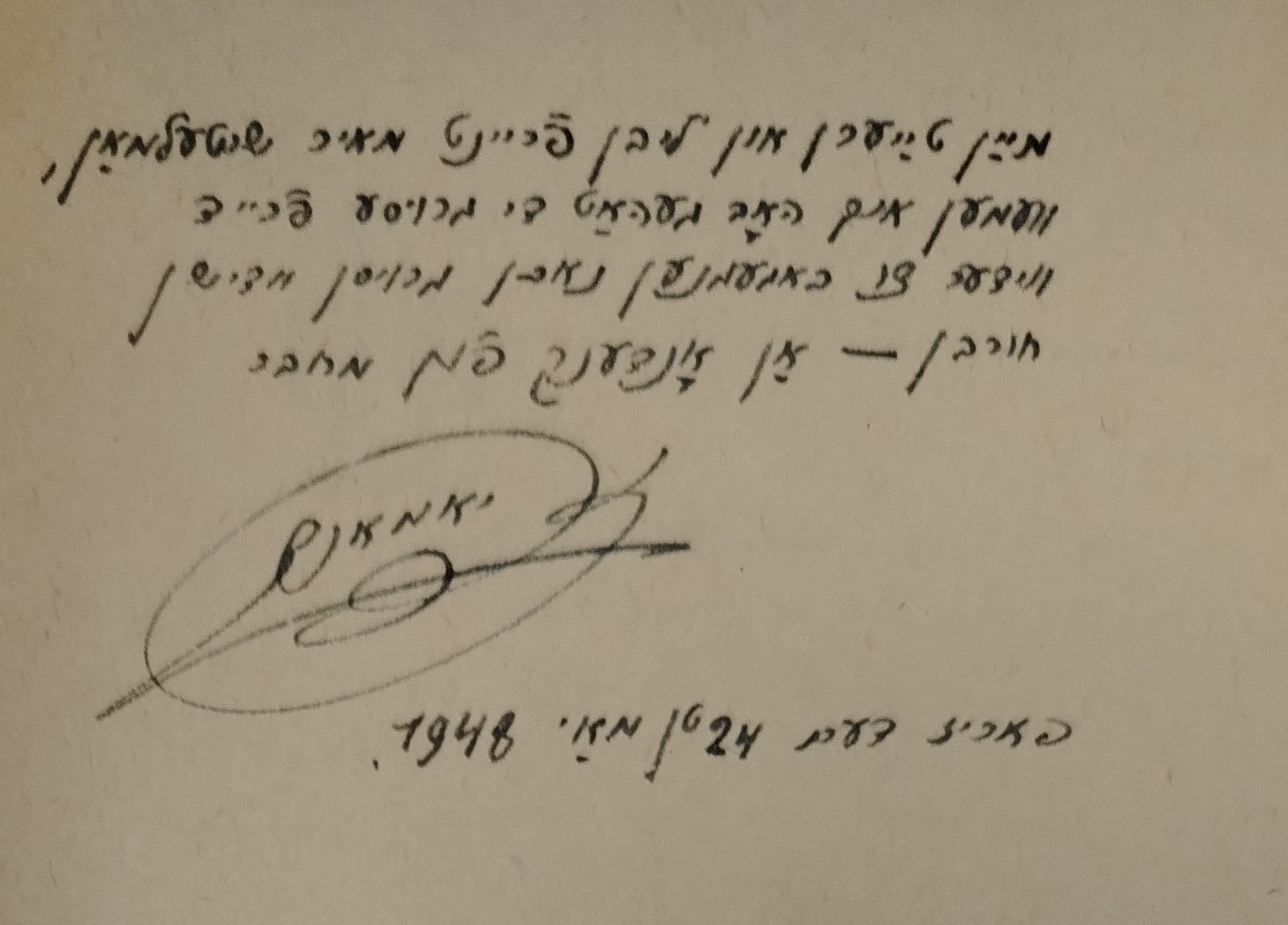
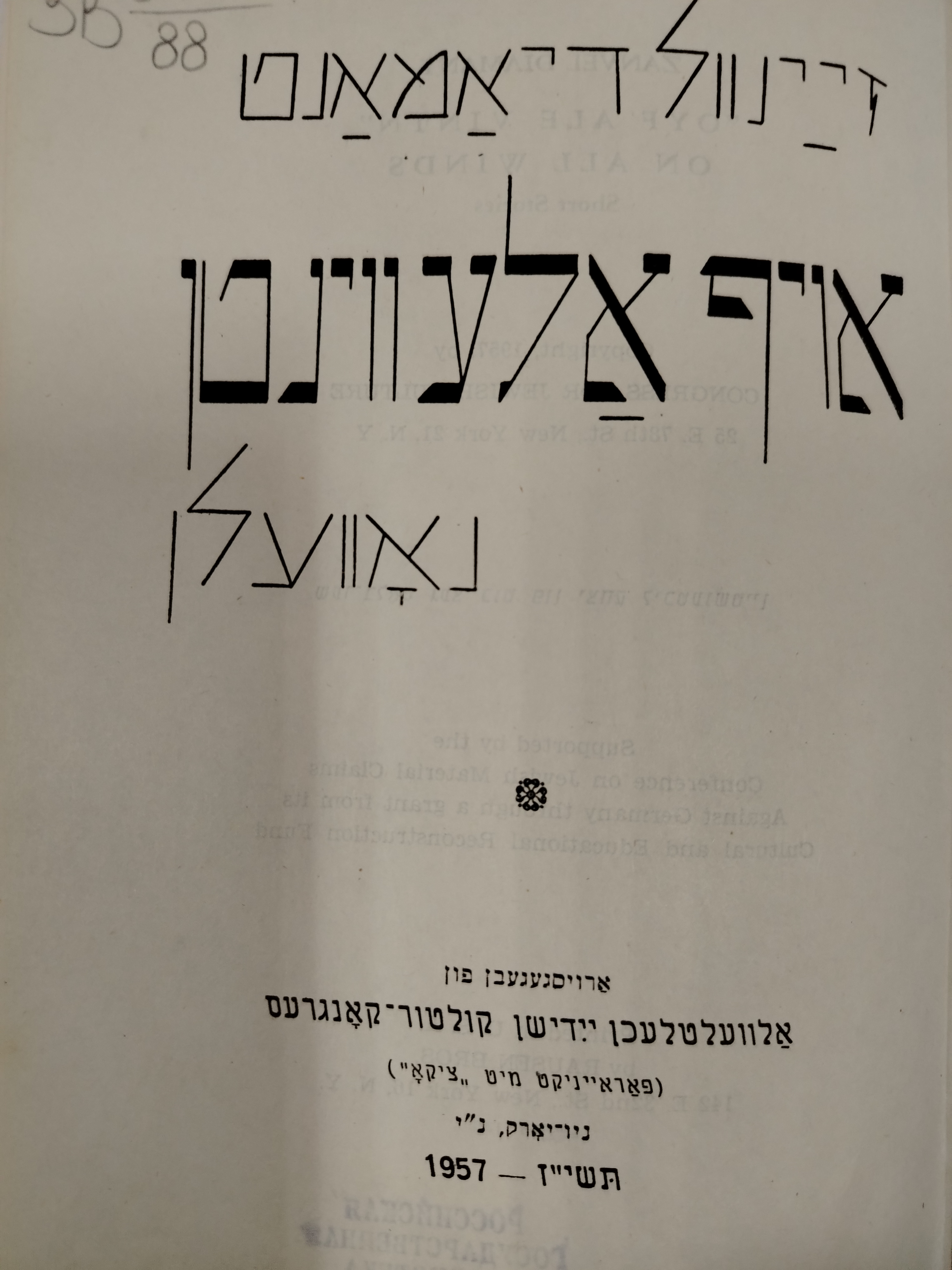
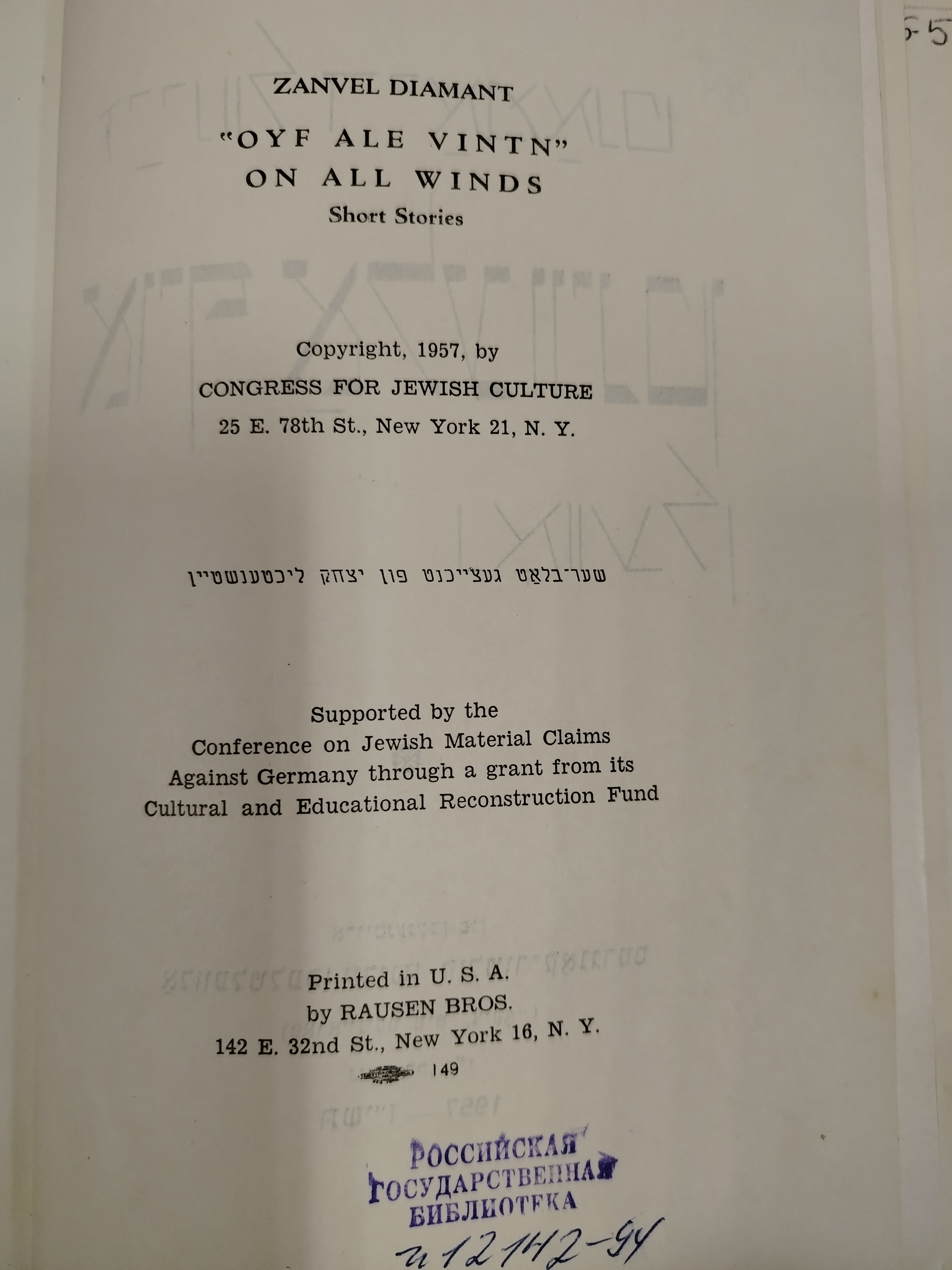
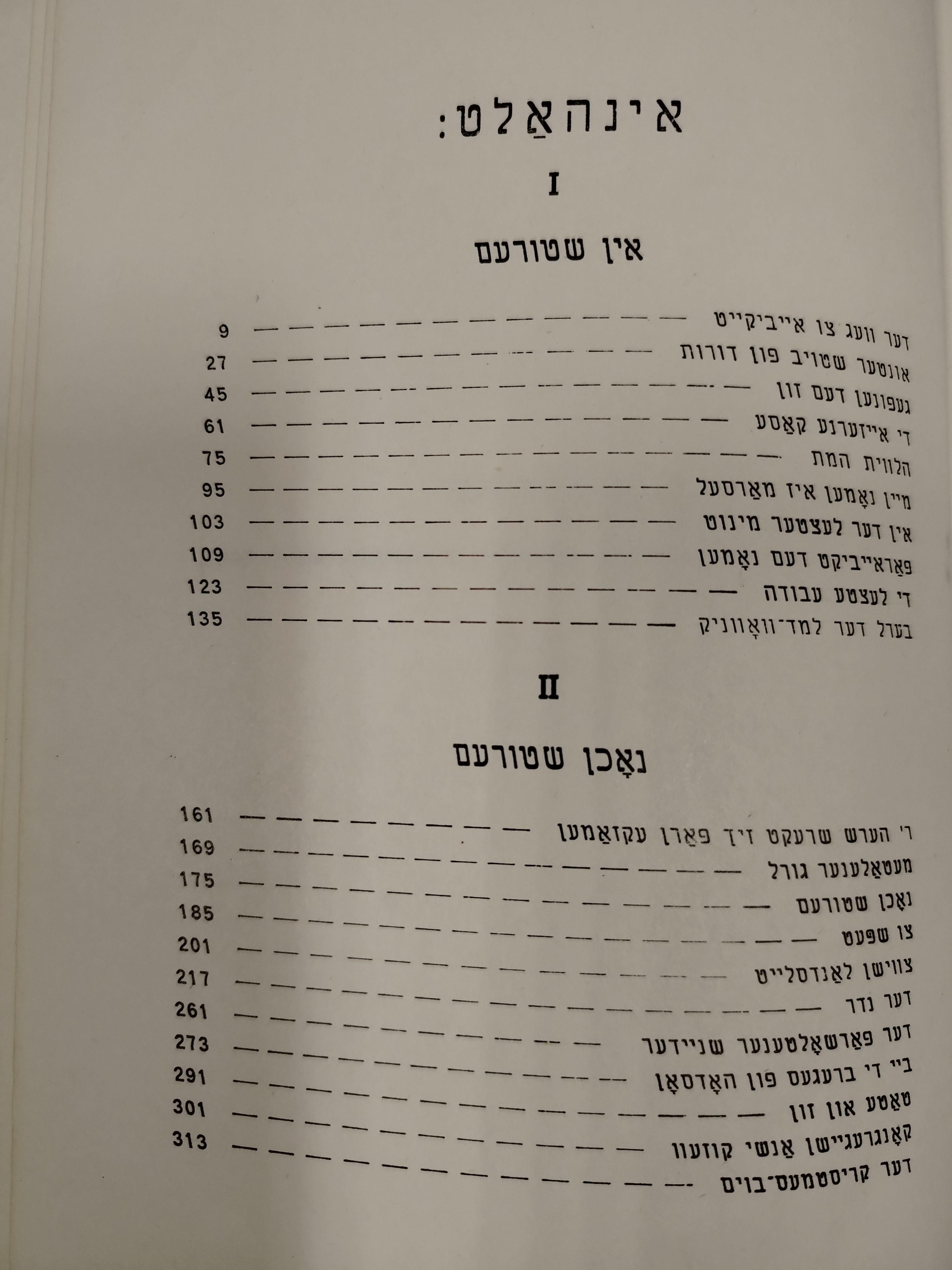
Af Ale Vintn, Noveln (To All the Winds, Novellas) (New York: Congress for Jewish Culture, 1957), 324 pp. Designer of the title page is Yitskhok Likhtenshteyn 1888-1981.
For this book, Diamant received the Zvi Kessel Prize (Mexico City) for the year 1957.
He also contributed the works: “Yidn af der Frantsoyzisher Rivyere Unter Italyenisher Okupatsye” (Jews on the French Riviera Under Italian Occupation), YIVO-Bleter (YIVO Monthly Bulletin) (New York) 37 (1953), pp. 234-48; and in English, “Jewish Refugees on the French Riviera Under Italian Occupation,” YIVO Annual of Jewish Social Science (New York) 8 (1953), pp. 264-80. Both were also published as offprints from YIVO. He also translated a number of works from Hebrew, French, English, and German for Algemeyne Yidishe Entsiklopedye.
A number of his stories were also translated into Hebrew, English, French, and Portuguese.
He was living in New York where he died.
“Zaynvl Diamant belongs to the generation of Jewish realistic storytellers who were known just after the end of WWII,” wrote Melech Ravich in a manuscript, “and perforce their subject matter was largely linked to the events in the years of the Third Catastrophe [i.e., the Holocaust, after the destruction of the First and Second Temples]. In essence he is a romantic and hence he gravitates toward the passionate and external natural events in his realistic stories. Although his novellas were mostly tragic, one never misses in the best of them the element of a quiet humor. Diamant has the art as well of presenting these extraordinary episodes in a dignified manner. He prepared this in the solid manner of an honest storyteller who is able to observe well and to paint well the appearance and the character of a hero. Presumably, as a great number of the stories are derived from his own experience and first-hand observation.”
[1] Translator’s note: The very biographical dictionary translated here in eight volumes.
Sources: D. Tsharni (Charney), in Tsukunft (New York) (January 1943); Tsharni, in Fraye Arbeter Shtime (New York) (May 23, 1947); M. Ravich, in Der Veg (Mexico City) (November 7, 1946); Ravich, in Keneder Adler (Montreal) (November 18, 1946); Dr. Y. Yerushalmi, in In Gang (Rome) (June-July 1947); Dr. M. Dvorzhetski (Mark Dvorzetsky), in Morgn-Zhurnal (New York) (March 9, 1947); Dvorzhetski, in Undzer Vort (Paris) (June 26, 1947); R. Shafran (Palatnik), in Yidishe Prese (Rio de Janeiro) (January 3, 1947); A. Beyzer, in Forverts (New York) (August 10, 1947); M. Kh. LikhtshtEyn, in Undzer Shtime (Paris) (April 22, 1947); Meim-Bayis (Ber Mark), Dos Naye Lebn (Lodz) (August 1, 1947); L. Finkelshteyn, Pidyen-hashem (Redemption of the Lord) (Toronto, 1948), p. 11; Y. Korenhendler, in Arbeter-Vort (Paris) (February 7, 1948); A. A. Liberman, in Undzer Vort (May 12 and May 27, 1948); L. D. (L. Domenkevitsh), in Arbeter-Vort (May 28, 1948); F. (Borvin Frenkel), in Undzer Shtime (May 13, 1948); M. Z. (Zeldov), in Naye Prese (Paris) (May 22, 1948); B. Kohen, in In Gang 15 (1948); Y. Varshavski, in Forverts (New York) (November 6, 1949); Shmuel Niger, in Tog (New York) (May 8, 1954); Der Lebediker, in Tog-Morgn-Zhurnal (New York) (October 24, 1954); Yedies fun YIVO (New York) (June 1954); P. Shvarts, in Fun Noentn Over 2 (New York, 1956), p. 356; Dr. A. Mukdoni, in Tsukunft (September 1957); D. Naymark, in Forverts (November 17, 1957); H. Fenster, in Undzer Shtime (December 28-29, 1957); Forverts (December 27, 1957); Tog-Morgn-Zhurnal (December 27, 1957); “Fun Lebedign” (Der Lebediker), in Tog-Morgn-Zhurnal (January 12, 1958); M. Gelbart, in Heymish (Tel Aviv) (January 17, 1957); B. Ts. Goldberg, in Tog-Morgn-Zhurnal (February 2, 1958); E. Shulman, in Undzer Shtime (February 8-9, 1958); (February 8-9, 1958); Y. Botoshanski, in Di Prese (Buenos Aires) (November 23 and November 27, 1957); Dr. Sh. Bikl, in Tog-Morgn-Zhurnal (March 2, 1958); Y. Gar, in Unzer Tsayt (New York) (April-May 1958); Domenkevitsh, in Undzer Vort (June 7, 1958); A. Gordin, in Fraye Arbeter Shtime (June 15, 1958); Abraham G. Duker, in Jewish Social Studies (New York) (January 1955), p. 76.