
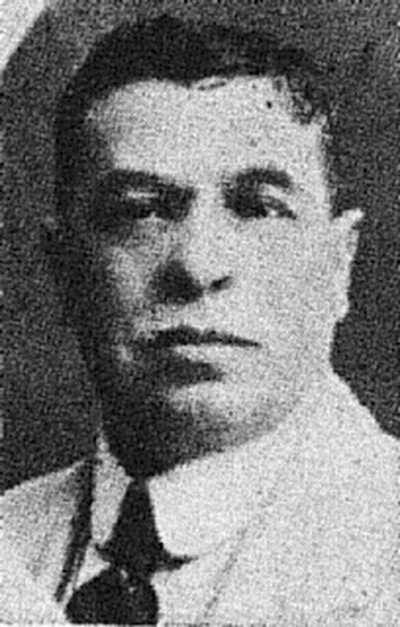
Vaksman, Yankev
October 22, 1866–December 1942
He was born in Lublin, Poland, to a father who worked as a lawyer. He graduated from the fourth class of a Russian state school for Jews. At age sixteen he became a choral singer in Shvarts’s Yiddish theatrical troupe in Lublin, and thereafter a wandering actor, traveling over Lublin province. He returned to Lublin in 1885 and until 1887 he worked as assistant secretary in the town management committee, and afterward until 1889 he was an employee of a trial lawyer.
In 1890 he was drafted into military service and sent to Kronstadt. There he came into contact with proudly nationalist Jews who introduced him to the new tides and new works of Yiddish literature.
After completing his military service, he returned to Lublin and for a long time worked as a chronicler for the Russia newspaper Lublinskaia Gubernskaia Vedomosti (Lublin District Gazette).
Before printing a notice that the police had beaten up a Jew under arrest, he was removed from his job and turned to work as hedge lawyer.
In 1906 he wrote the drama Makabi Muter (Mother of the Maccabees) in four acts, staged by Kompaneyets’s Muranov Theater in March 1908. This staging so encouraged Vaksman that he abandoned his law office and threw himself completely into writing.
He wrote, adapted, and translated from foreign languages over 150 plays, among them: In Yene Teg (In Those Days), following Perets Smolenskin’s story “Dervakhung” (Awakening), a tragedy in three acts (staged in 1908 and soon banned by the Tsarist authorities); Di Farshtoysene (The Repudiated), in four acts; Berek Yoselovitsh (Berek Yoselovitsh), historical drama with song in four acts (appeared in book form in Warsaw in 1910, 47 pp.), staged initially in Polish in Vaksman’s translation; Dos Gasn-Meydl (The Street Girl), a tragedy in three acts, performed over a lengthy period of time, also in Hebrew in the colony of Rosh Pina in Israel; Ukrainer Pogrom-Karbones (Ukrainian Pogrom Victims), a tragedy in four acts about Jewish life in Ukraine in the era of Petlura’s pogroms, which appeared in book form (Warsaw, 1927, 47 pp.), staged in Warsaw and later banned by the authorities; Kidesh-haShem (Martyrdom), a tragedy in three acts; Di Zindike Muter (The Sinning Mother), a drama in four acts; Di Kales fun Hong-Kong (The Wives from Hong Kong), in three acts; Shvartsbards Protses (Shvartsbard’s Trial), a tragedy in four acts; A Zeung (A Vision), a one act play; In Keler-Shtub (In the Basement), in one act, written in Russian and translated by him into Yiddish, staged in Odessa’s Russian Theater; Shayke Koyekh Geyers (Gang of Power Peddlers), scenes with song.
His operettas include: Di Sheyne Berte (The Lovely Berta), Malvine Vil Azoy (Malvina Wants it This Way), Vos a Moyd Ken (What a Girl Knows), Di Primadone (The Prima Donna), Di Lustike Mari (The Cheerful Mary), and Gekhapt a Khosn (Snatched Up a Groom), among others.
He translated the following operettas for the Yiddish stage: Khave (Eve), Di Perl fun Shankhai (The Pearl from Shanghai), Tsigayner-Libe (Romani Love), Puptshik (Small Fry), Di Dame in Roytn (The Lady in Red), Meydl-Mark (Girl Market), Dos Himl-Bet (The Heavenly Request), Di Shansonete (The Little Singing Girl), Friling-Lust (Spring Joy), Di Dolar-Printsesin (The Dollar Princess), Suzi (Suzy), Di Tshardash-Firstin (The Czardas Duchess), Shoshane di Tsnue (The Chaste Susanna), Baron-Kimel (Baron Kimel), Ven Mener Shvindlen (When Men Cheat), and Di Dray Farlangen (The Three Requests), among others.
Vaksman also reworked and dramatized novels, stories, and chronicles, such as: Mendl Beylis (Mendel Beilis), following the stenographic report from the courtroom; Mendele’s Fishke der Krumer (Fishke the Lame); Opatoshu’s In Poylishe Velder (In the Polish Woods); Segalovitsh’s Unzer Froy (Our Woman); Victor Hugo’s Glok-Tsier fun Notr Dam (The Bill-Ringer [hunchback] of Notre Dame); L. Andreev’s Zibn Gehangene (The Seven Who Were Hanged); Gorky’s Di Muter (The Mother); Der Goyrl (Destiny); Frank Wedekind’s Erdgayst (Spirit of the Earth).
The Polish novels: Dos Kind fun Libe (The Child of Love) and Dos Toplte Ponem (The Doubled Face).
The dramas: Yashivara, Di Froy Vos Hot Derharget (The Murderess), Di Nakete (The Naked One), and Mandarin Vou. The operettas: Di Fledermoyz (The Bat), Froyen-Harts (Women’s Heart), and Grefin Maritsa (Gräfin Mariza), among others.
From 1916 until the mid-1930s he directed by himself a theatrical troupe in Poland, Ukraine, and Russia. He survived the pogroms in Uman and elsewhere in 1919-1920, thereafter barely escaping with his life to Odessa, but soon he was staging Yiddish theater there. In 1932 all of Poland celebrated Vaksman’s fifty years in the Yiddish theater.
Vaksman then ceased acting in theater and turned to writing plays and popular novels which were published in: Lodzer Tageblat (Lodz Daily Newspaper), Lodzer Folksblat (Lodz People’s Newspaper), Voliner Lebn (Volhynia Life), and Lubliner Togblat (Lublin Daily Newspaper), and other Yiddish newspapers in Poland. He was nonetheless unable to make a living, and until WWII he supported himself mainly by writing “administrative petitions.”
He also published humorous sketches, skits, and his memoirs about the Yiddish theater and about the Ukrainian pogroms in: Lodzer Tageblat and Teater un Kunst (Theater and Art) in Lodz; Teater-Shpigl (Theater Mirror) in Paris; and Teater-Shtern (Theater Star) (New York) 6 (1926); among others.
He was in Lublin during WWII. He was shot by the Nazis during the deportation of a group of Jews to Majdanek in the winter of 1942.
Sources: Zalmen Reyzen, Leksikon, vol. 1; Z. Zilbertsvayg, Leksikon fun Yidishn Teater (Lexicon of the Yiddish Theater), vol. 1 (with a bibliography); M. Spektor, in Unzer Lebn (Warsaw) (June 27, 1909); Dr. M. Vaykhert (Weichert), Teater un Drame (Theater and Drama), vol. 2 (Vilna, 1926), pp. 72-76; A. Kompaneyets, in Nayer Folksblat (Lodz) (May 12, 1928); Biblyografishe Yorbikher fun YIVO (Bibliographic Yearbooks from YIVO) (Warsaw, 1928), see index; Y. Akhtman, Dos Bukh fun Lublin (The Book from Lublin) (Paris, 1952), pp. 141-42; Yonas Turkov, Farloshene Shtern (Extinguished Stars), vol. 2 (Buenos Aires, 1954), pp. 7-14, 45.