
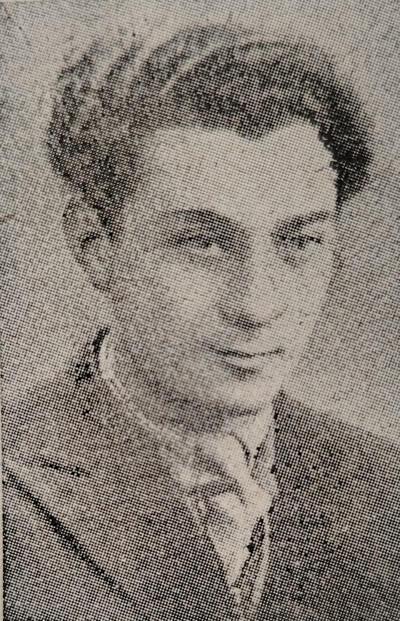
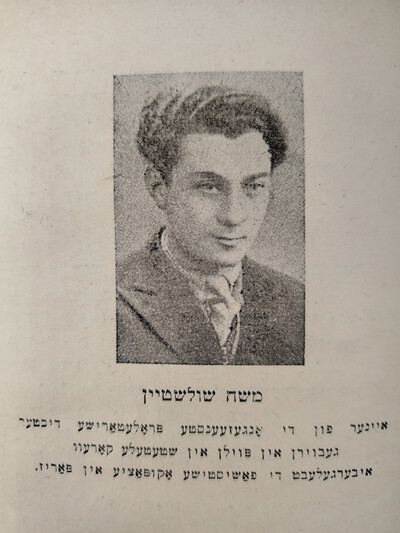
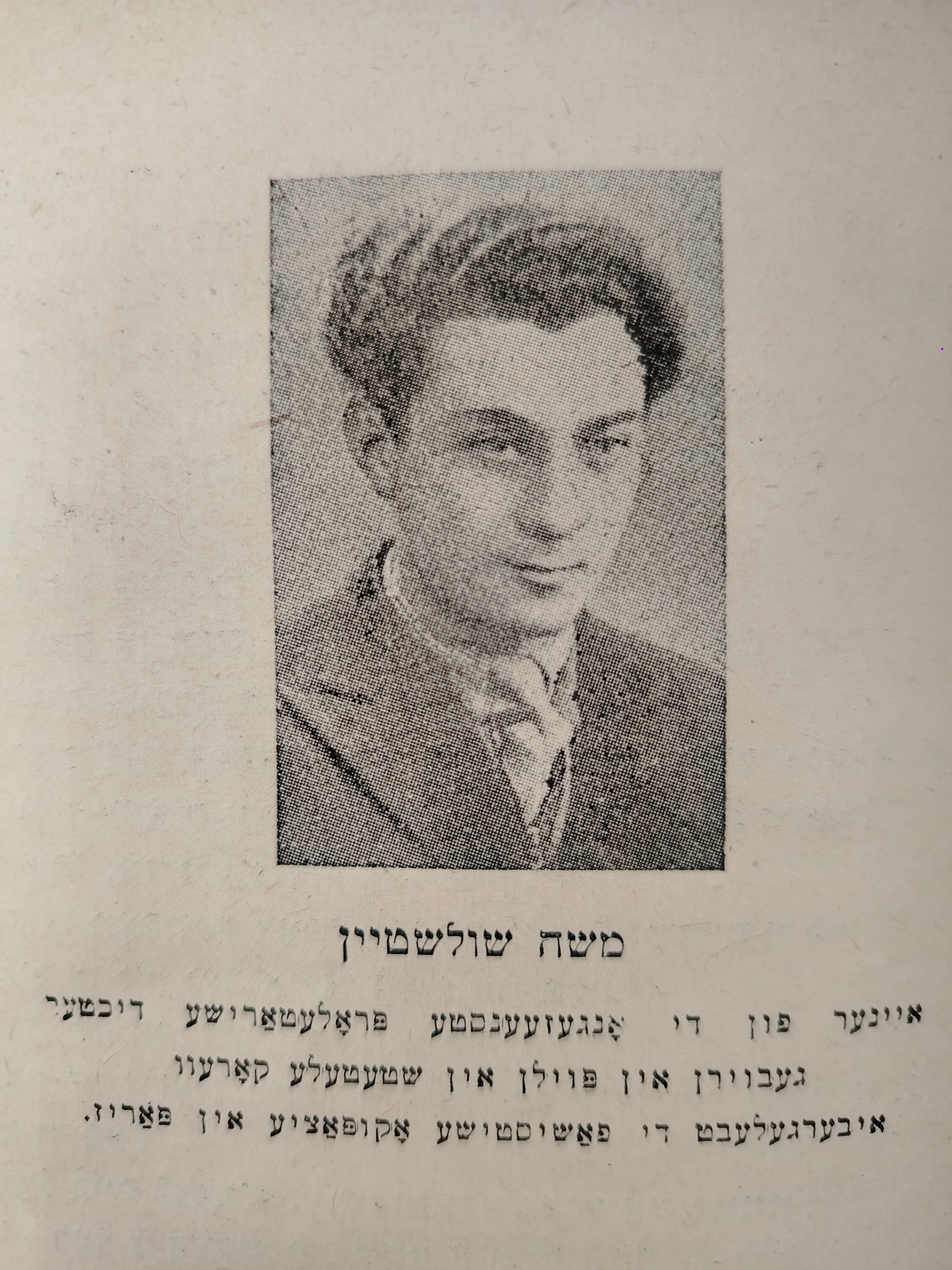
Shulshteyn, Moyshe
September 15, 1911–1981
The author of poetry, stories, and essays, he was born in Koriv (Kurów), Poland. He attended religious elementary school, yeshiva, and a Jewish public school. In 1923 he moved with his parents to Warsaw, and there he worked as a tailor while studying in evening school classes. In 1937 he settled in Paris and performed a variety of different kinds of work.
At the time of the German occupation, he hid in a number of cities. He participated in the resistance movement and spent time in a Gestapo jail in Paris. He initially joined the Labor Zionists, later becoming an active Communist. In the late 1950s he left the leftist camp and became ethnically identified.
He composed poetry, stories, and literary critical articles. He debuted in print in 1927 with poems in Y. M. Vaysenberg’s Inzer Hofinung (Our Hope). At first he wrote for leftist Yiddish periodicals and newspapers, later for other Yiddish publications: Literarishe Tribune (Literary Tribune) in Lodz; Naye Prese (New Press), Parizer Zhurnal (Parisian Journal), Parizer Shriftn (Parisian Writings), Parizer Tsaytshrift (Parisian Periodical), Kiem (Existence), and Parizer Heftn (Parisian Notebooks)—in Paris; Yidishe Kultur (Jewish Culture) in New York; Literarishe Bleter (Literary Newspaper) in Warsaw; and Di Goldene Keyt (The Golden Chain) in Tel Aviv; among others.
He also placed work in: Yizker-Bukh Tsum Ondenk fun 14 Umgekumene Parizer Yidishe Shrayber (Remembrance Volume to the Memory of Fourteen Murdered Parisian Yiddish Writers) (Paris: Oyfsnay, 1946); and Parizer Almanakh (Parisian Almanac) (Paris, 1972). His writings also appeared in: Lebn un Kamf (Life and Struggle) (Minsk, 1936); Kadia Molodowsky, ed., Lider fun Khurbn, T”Sh-Tsh”H (Poetry from the Holocaust, 1939-1945) (Tel Aviv, 1962); Nakhmen Mayzil, Y. l. Perets in der Yidisher Dikhtung (Y. L. Perets in Yiddish Poetry) (Tel Aviv: Perets Publ., 1965); Shmuel Rozhanski, Di Froy in der Yidisher Poezye (Women in Yiddish Poetry) (Buenos Aires, 1966); Yoysef Papyernikov, Yerusholaim in Yidishn Lid, Antologye (Jerusalem in Yiddish Poetry, Anthology) (Tel Aviv: Perets Publ., 1973); Charles Dobzynski, Anthologie de la poésie Yiddish, le Miroir d’un People (Anthology of Yiddish Poetry, the Mirror of a People) (Paris: Gallimard, 1971); and Hubert Witt, Der Fiedler vom Getto: Jiddische Dichtung aus Polen (The Fiddler of the Ghetto, Yiddish Poetry from Poland) (Leipzig, 1966).
His books include:
Broyt un Blay, Lider (Bread and Lead, Poetry) (Lublin: Nay Bukh, 1934), 104 pp., later confiscated by the police;
Dos Fayfl in di Berg, Karpatn-Lider (Whistle in the Mountains, Carpathian Poems) (Warsaw: Literarishe Bleter, 1936), 32 pp.;
Afn Ash fun Mayn Heym (On the Ashes of My Home) (Paris: A. B. Tserata, 1945), 30 pp., second edition (London: Naroditski, 1946);
A Boym Tsvishn Khurves, Lider un Poemes (A Tree Among the Ruins, Poetry) (Paris: Oyfsnay, 1947), 290 pp.;
Tsvishn Ruinen un Rushtovanyes, fun a Rayze in Poyln (Amid the Ruins and Scaffolding, from a Trip to Poland) (Paris: Yidishe Folks-Biblyotek, 1949), 109 pp.;
A Regnboygn Iber Grenetsn, Lider un Poemes (A Rainbow Over the Frontiers, Poetry) (Paris: Yidishe Folks-Biblyotek, 1950), 251 pp.;
Der Nign fun Doyres, Dramatishe Poeme in Nayn Bilder (The Melody of Generations, a Dramatic Poem in Nine Scenes) (Paris: Yidishe Folks-Biblyotek, 1950), 100 pp.;
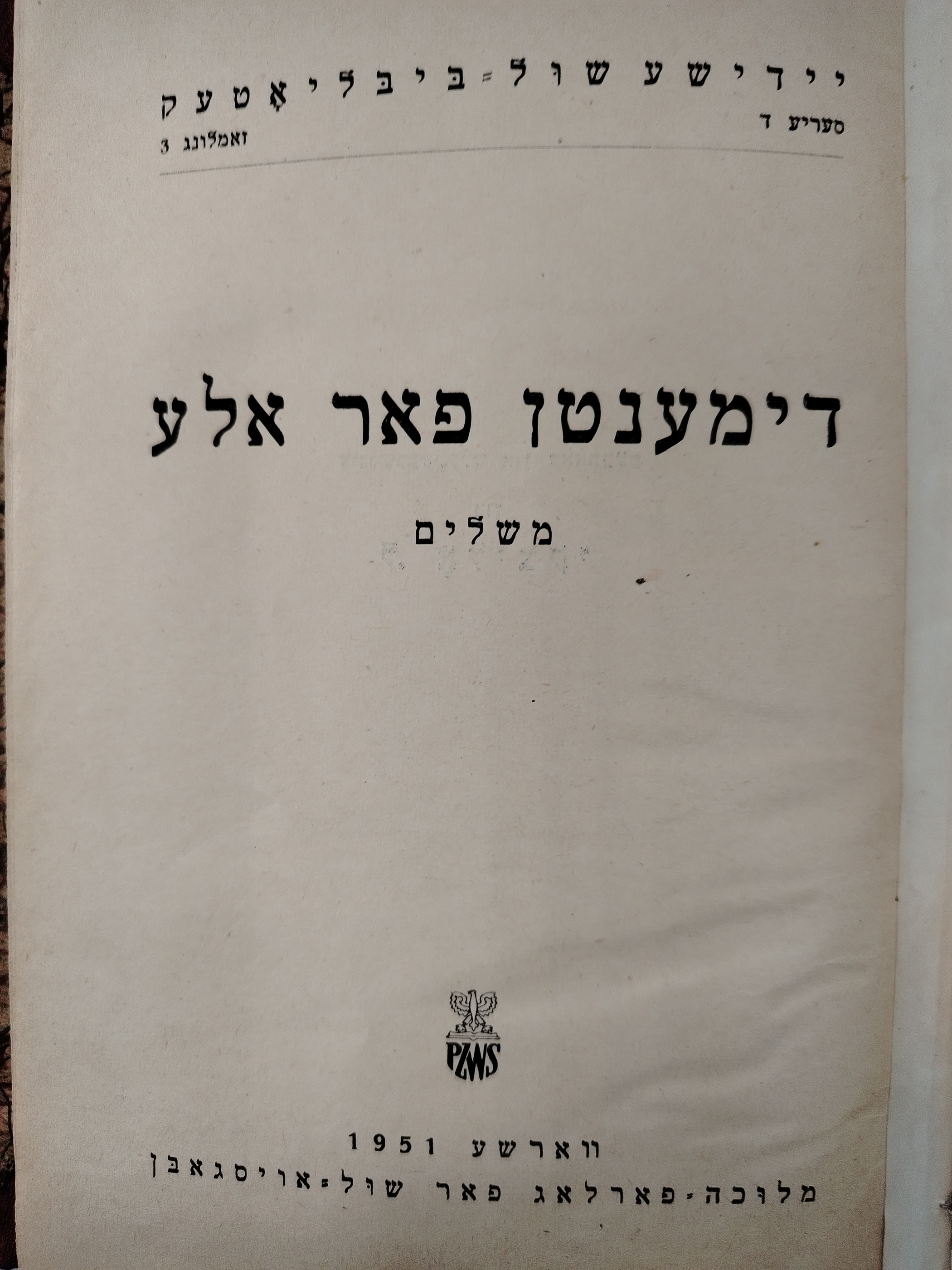
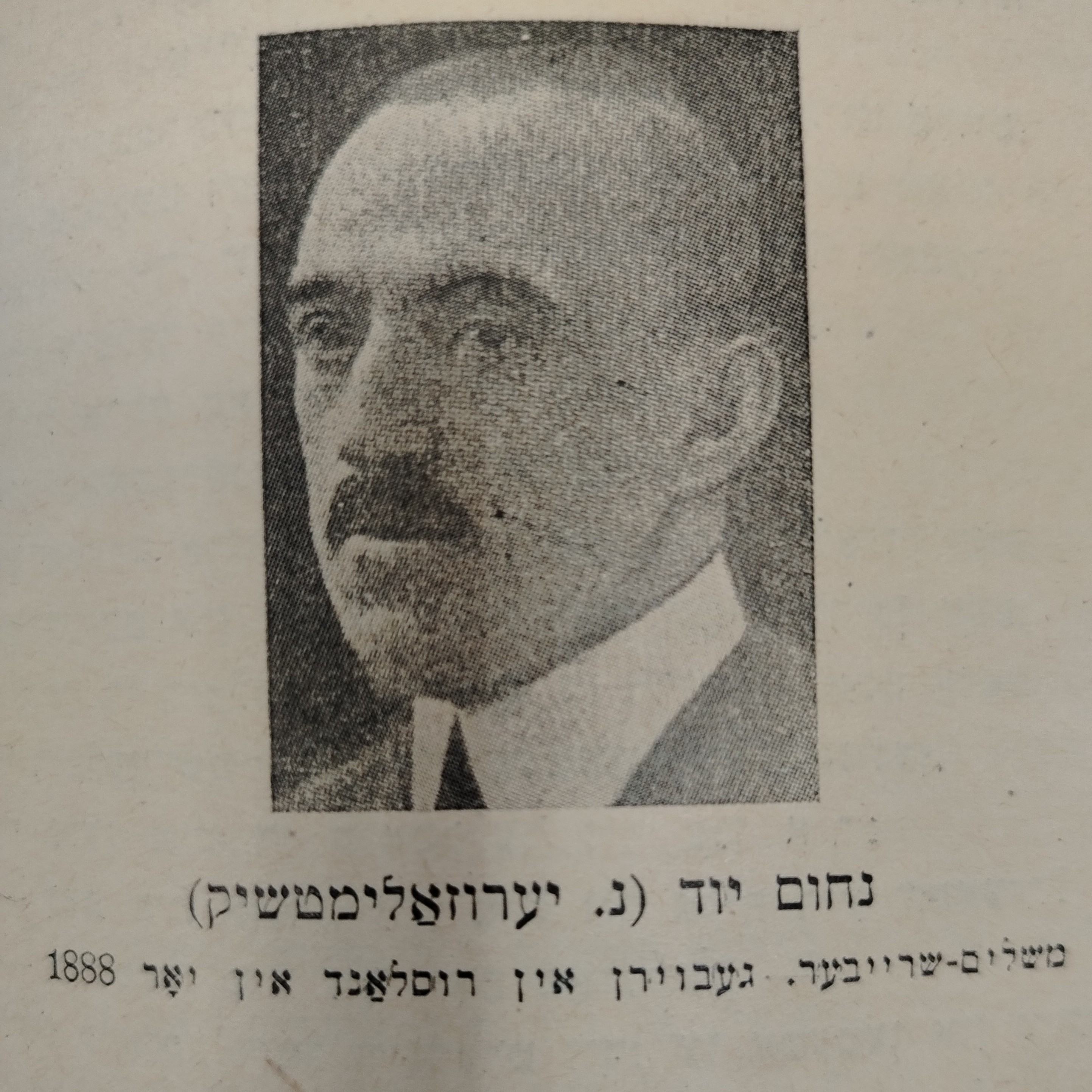
Dimentn far Ale, Mesholim (Diamonds for All, Fables) co-author with Nokhum Yud (Warsaw: Melukhe Farlag far Shul-Oysgabn, 1951)
Geklibene Lider (Selected Poems) (Warsaw: Yidish Bukh, 1954), 159 pp.;
A Leyter tsu der Zun, Lider un Poemes (A Ladder to the Sun, Poetry) (Paris: Oyfsnay, 1954), 237 pp.;
Blumen fun Badoyer, Lider un Poemes (Flowers of Regret, Poetry) (Paris: Di goldene pave, 1959), 260 pp.;
Gold un Fayer, Mesholim un Lider (Gold and Fire, Fables and Poetry) (Paris, 1962), 173 pp.;
Baym Pinkes fun Lublin, Dramatisher Khizoyen in a Kupe Ash (Before the Chronicle of Lublin, a Dramatic Vision in a Pile of Ashes) (Paris, 1966), 62 pp.;
Iber di Dekher fun Pariz, Dertseylungen (Over the Roofs of Paris, Stories) (Tel Aviv: Yisroel-bukh, 1968), 338 pp.;
Geshtaltn far Mayne Oygn, Eseyen, Portretn, Dermonungen (Figures Before My Eyes, Essays, Portraits, Remembrances) (Paris, 1971), 337 pp.;
Der Morgnshtern in Mayn Fenster, Lider un Poemes (The Morning Star in My Window, Poetry) (Paris, 1974), 248 pp.;
A Ring in a Ring, Eseyen un Reportazhn (A Link in a Link, Essays and Reportage Pieces) (Paris, 1975), 265 pp.;
Der Orem fun Libshaft, Lider un Poems (The Arm of Love, Poetry) (Paris, 1977), 310 pp.;
Dort vu Mayn Vig iz Geshṭanen (There Where My Cradle Sits) (Paris, 1982), 352 pp.
In his first period, Shulshteyn was mainly a poet of the social poem, poet-revolutionary of workers’ hardship and struggle. Later, after his ideological crisis, he took notice not solely of the hardship of workers and the sadness of the world, but also the difficulties of Jews and the sorrow of his people—and his poetry became full of notes of ethnic grief and rebirth, and without the fetters of ideology it became lyrical.
“Moshe Shulshteyn,” wrote Dovid Sfard, “was always outstanding for his everyday simplicity and concrete subject matter. His theme was a real event which in its poetic transformation took off the elements of chance and became a general, typical phenomenon, characteristic for its time and environment…. The ground for Shulshteyn’s poetry was the Jewish laboring man…and not only the Jewish one.”
“Shulshteyn is a fine poet,” noted Meylekh Ravitsh, “a natural with inate rhythm, flexible language, a heart full of sentiment and nostalgia…and in the main—talented, but because of his identification with the left,…he is scarcely mentioned in general Yiddish literature and under appreciated, while the leftists dreadfully—though not comparably—overrate him.”
In the words of Nakhmen Mayzil: “The great tragedy of Polish Jewry continues to dominate the poet’s [i.e., Shulshteyn’s] disposition, his thoughts, and fantasy…. This called forth in the poet…new, powerful poems of rage and sorrow…. [These last few years] he has developed with his subject matter, with his artistic abundance and full responsibility into a significant poet.”
Berl Cohen
Sources: Avrom Shulman, in Oyfboy (Melbourne) (March 1946); Daniel Tsharni (Charney), in Fraye Arbeter Shtime (New York) (July 2, 1948); Shloyme Lastik, Mitn ponem tsum morgn (Facing the morning) (Warsaw, 1952), pp. 111-19; Dovid Sfard, Shtudyes un skitsn (Studies and sketches) (Warsaw: Yidish Bukh, 1955), pp. 77-91; Nakhmen Mayzil, Noente un eygene, fun yankev dinezon biz hirsh glik (Near and one’s own, Yankev Dinezon and Hirsch Glick) (New York, 1957), pp. 348-61; Meylekh Ravitsh, in Keneder Adler (Montreal) (September 10, 1962); Ben-Tsien Goldberg, in Tog-Morgn-Zhurnal (New York) (December 12, 1962); Yankev Glatshteyn, Mit mayne fartog-bikher (With my daybreak books) (Tel Aviv, 1963), pp. 318-25; :Leyzer Domankevitsh, Verter un vertn (Words and worth) (Tel Aviv: Peretz Publ., 1965), pp. 31-37; Yisroel Emyot, in Tsukunft (New York) 7 (1967); Rivke Kope, Intim mitn bukh, mekhabrim, bikher, meynungen (Intimate with a book, authors, books, opinions) (Paris, 1973).