
Stolarski, Yisroel
1900–April 19, 1986
He was born in Krinki (Krynki), Grodno region, Russian Poland, the son of Shiye-Heshl Stolarski, a follower of the Jewish Enlightenment and a Labor Zionist. He studied in a “cheder metukan” (improved religious elementary school) and the Krinki yeshiva, and he attended a Russian middle school where the students adhered to circles of various political shades. At thirteen years of age, he was already active in a Zionist youth organization. When the Labor Zionist party of Poland split in 1920, he moved with the left wing and worked in the trade union movement of the left Labor Zionists.
In 1925 he was arrested in Lodz for illegal political activity and thrown in prison in Grodno; at his trial he was freed and returned to activity in the Lodz trade union movement. In 1934 he was sent by the party to Warsaw.
At the time of the outbreak of WWII, he was in Geneva as a delegate to the Zionist congress, and he soon set off back to Poland via Czechoslovakia and Hungary. In Warsaw he found his wife and son, and together they fled to the East. They were separated along the way and only seven years later were reunited in New York.
He came to the United States in late 1940 via Russia and Japan, as one of a group that was brought by the Jewish Labor Committee. For a time he tried to make a living by writing articles and giving lectures, later he turned to working in a tailor shop, initially as a cutter and later as a presser. He worked for seven years by day in the shop and in the evenings for the Histadruth campaign. In 1947 he turned to the right Labor Zionists. In 1949 he became solely linked to the Histadruth campaign, later becoming an associate director. In 1960 the Histadruth campaign celebrated Stolarski’s sixtieth birthday.
He began writing in 1920 for
Arbeter-Tsaytung (Labor Newspaper) in Warsaw.
He wrote about labor Zionism and general political issues as well in:
Haynt (Today) and
Undzer Vort (Our Word)
— in Warsaw; and
Lodzer Folksblat (Lodz People’s Newspaper) and
Lodzer Arbeter (Lodz Worker).
In America he wrote for:
Morgn-Zhurnal (Morning Journal),
Idisher Kemfer (Jewish Fighter),
Proletarisher Gedank (Proletarian Idea), and
Fraye Arbeter-Shtime (Free Thought of Labor)
— in New York;
Keneder Adler (Keneder Odler, Canadian Eagle) in Montreal;
Hibru Dzhoyrnel (Hebrew Journal) in Toronto;
Dos Vort (The Word) in Paris;
Di Naye Tsayt (The New Times),
Di Prese (The Press), and
Idishe Tsaytung (Jewish Newspaper)
— in Buenos Aires;
Der Veg (The Way) and
Dos Vort
— in Mexico City; and
Davar (Word) in Tel Aviv; among others.
He also published in English in:
Jewish Frontier,
Contemporary, and
Jewish Record.
He edited
Yidish-Zamlung (Yiddish Collection), dedicated to the thirteenth year of the State of Israel and to the fortieth year of Histadruth, published by the Latin American Department of the Histadruth Campaign (Mexico City, 1961), 200 pp.;
the anthology Hazikaron leshoa veligvure (The Memory of the Holocaust and Heroism) (Mexico City: Latin American Department of the Histadruth Campaign, 1963);
Di 71ste Sesye Funem Rat fun der Histadrut Haovdim, Opgehaltn in Tel Aviv (The 71St Session of the Federation of Labor, held in Tel Aviv)
(New York, 1959), 48 pp.;
Di Histadrut un di Medine, di Akhte Histadrut Konferents Oyfgehaltn in Tel-Aviv (The General Labor Organization and the State [of Israel], the Eighth Histadruth Conference held in Tel Aviv) (New York, 1956), 78 pp.
He also edited the annual
Histadrut-Almanakh (Histadruth Almanac), organ of the same department.
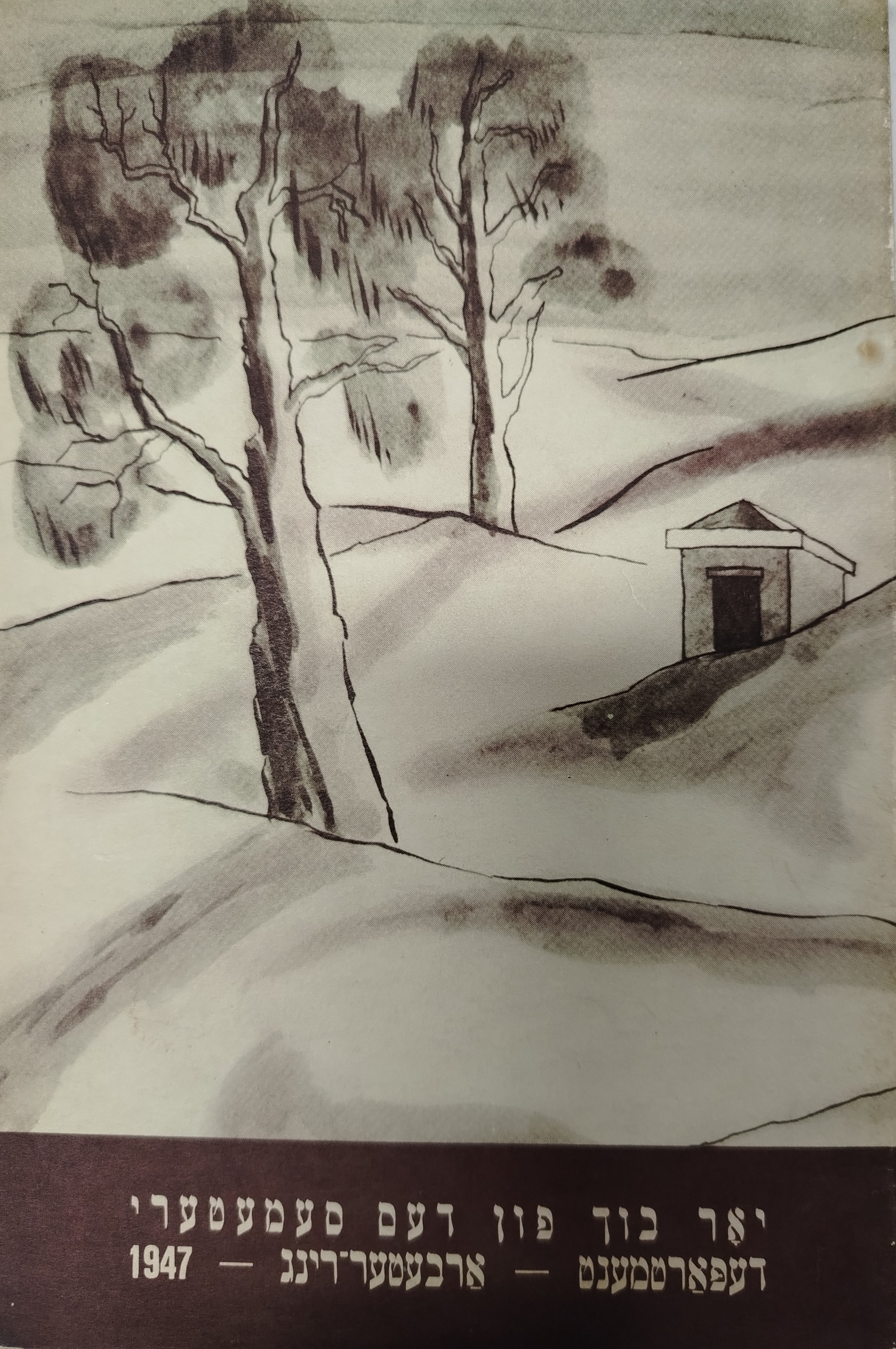
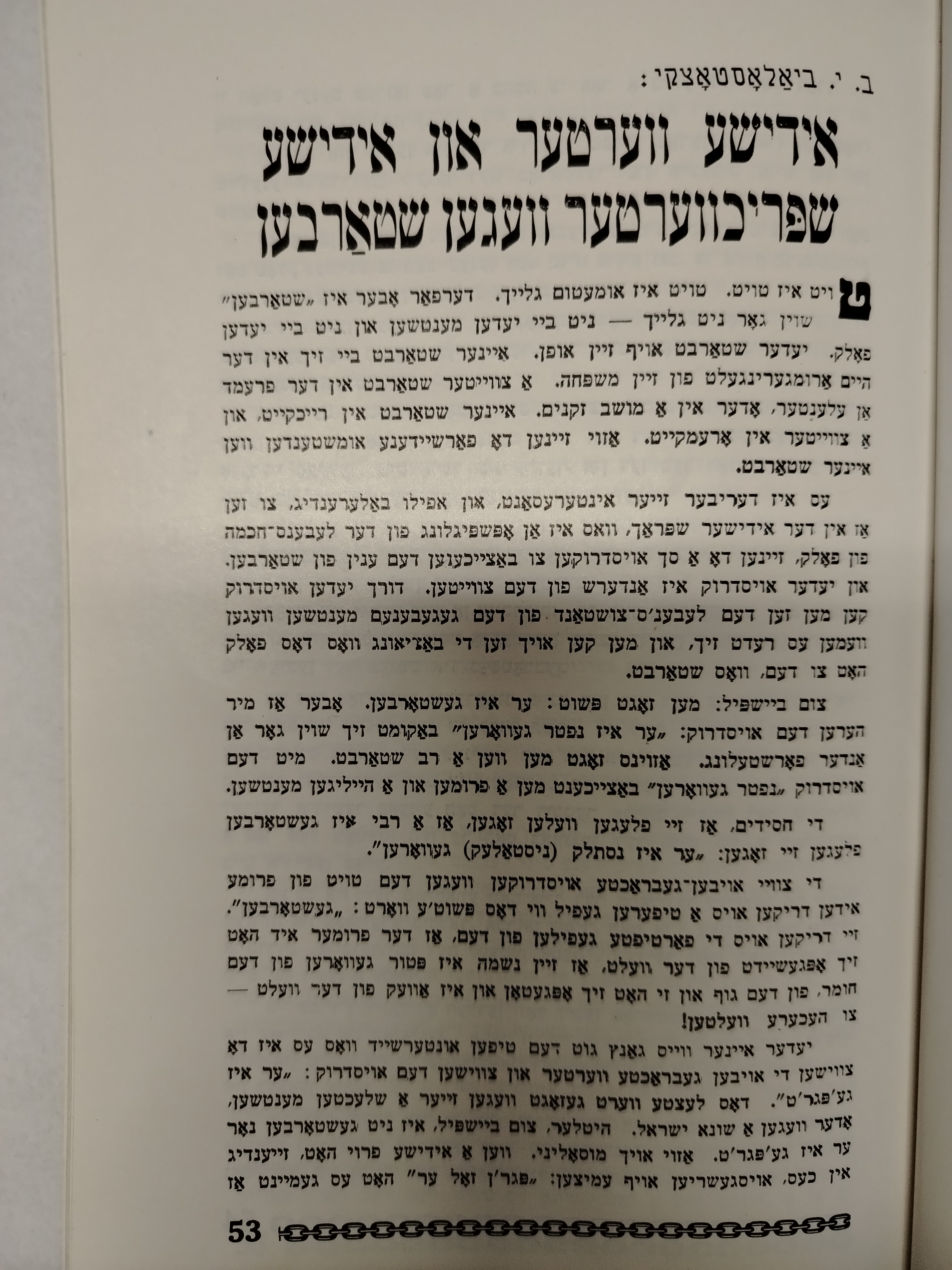
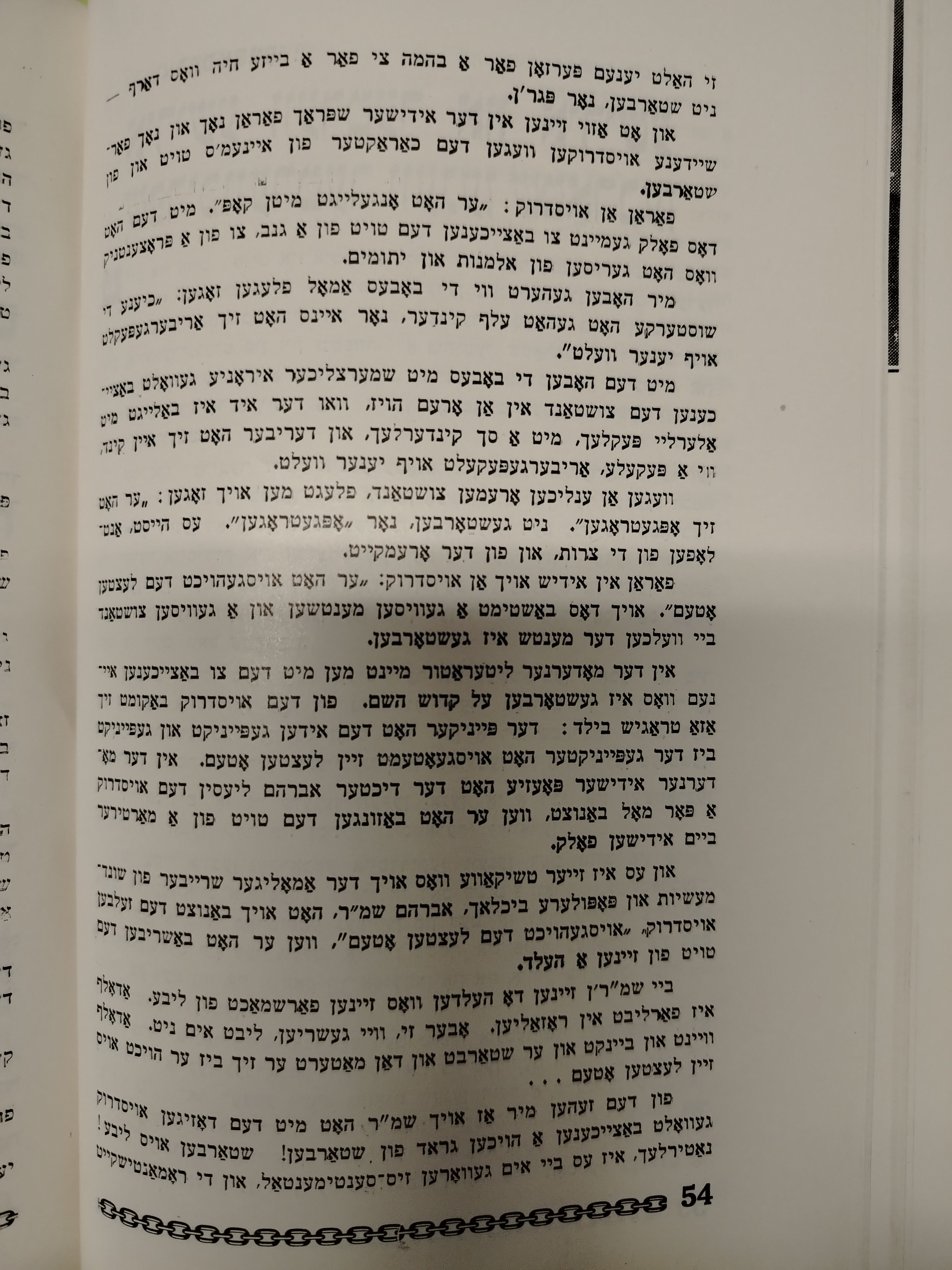
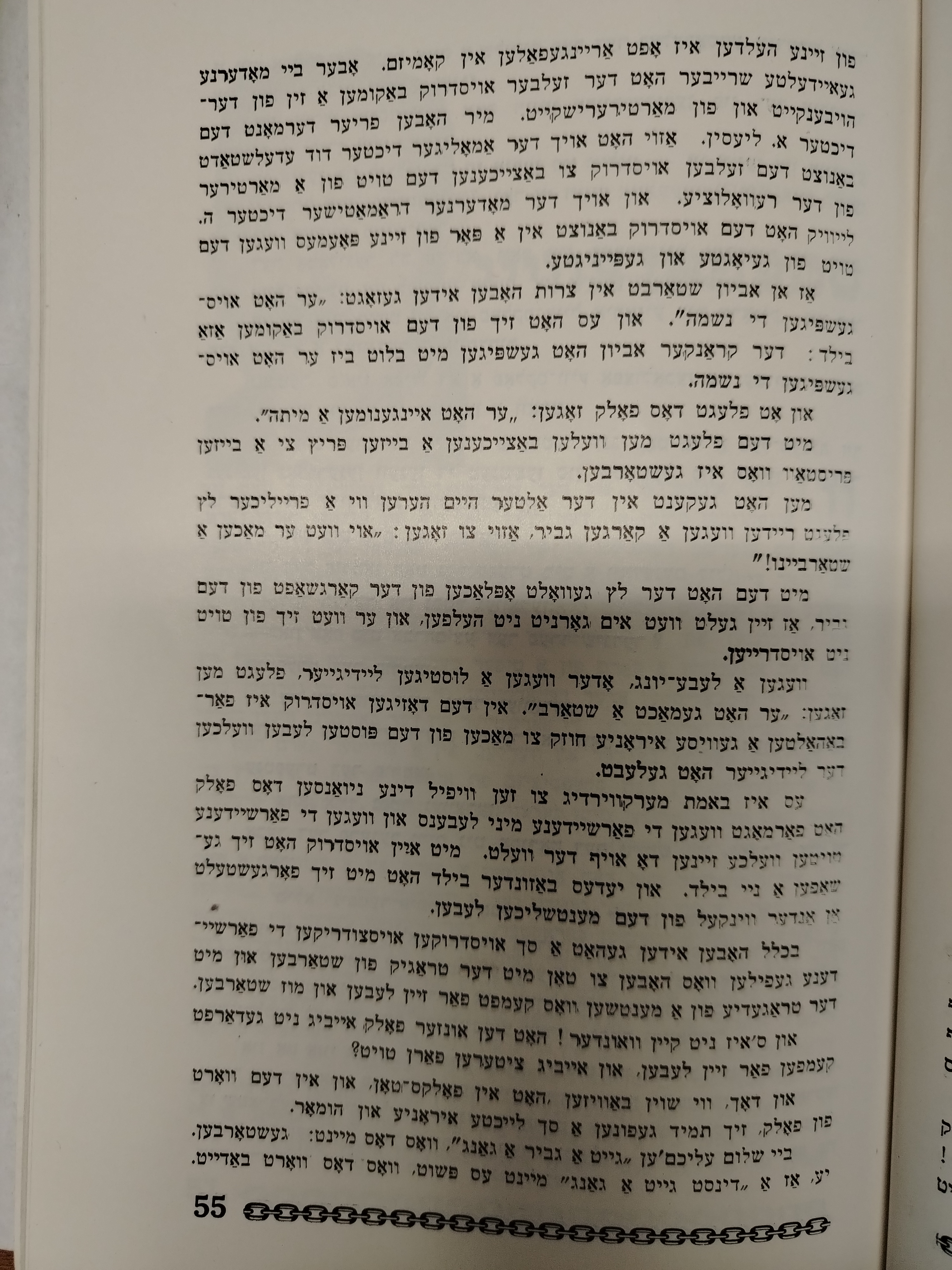
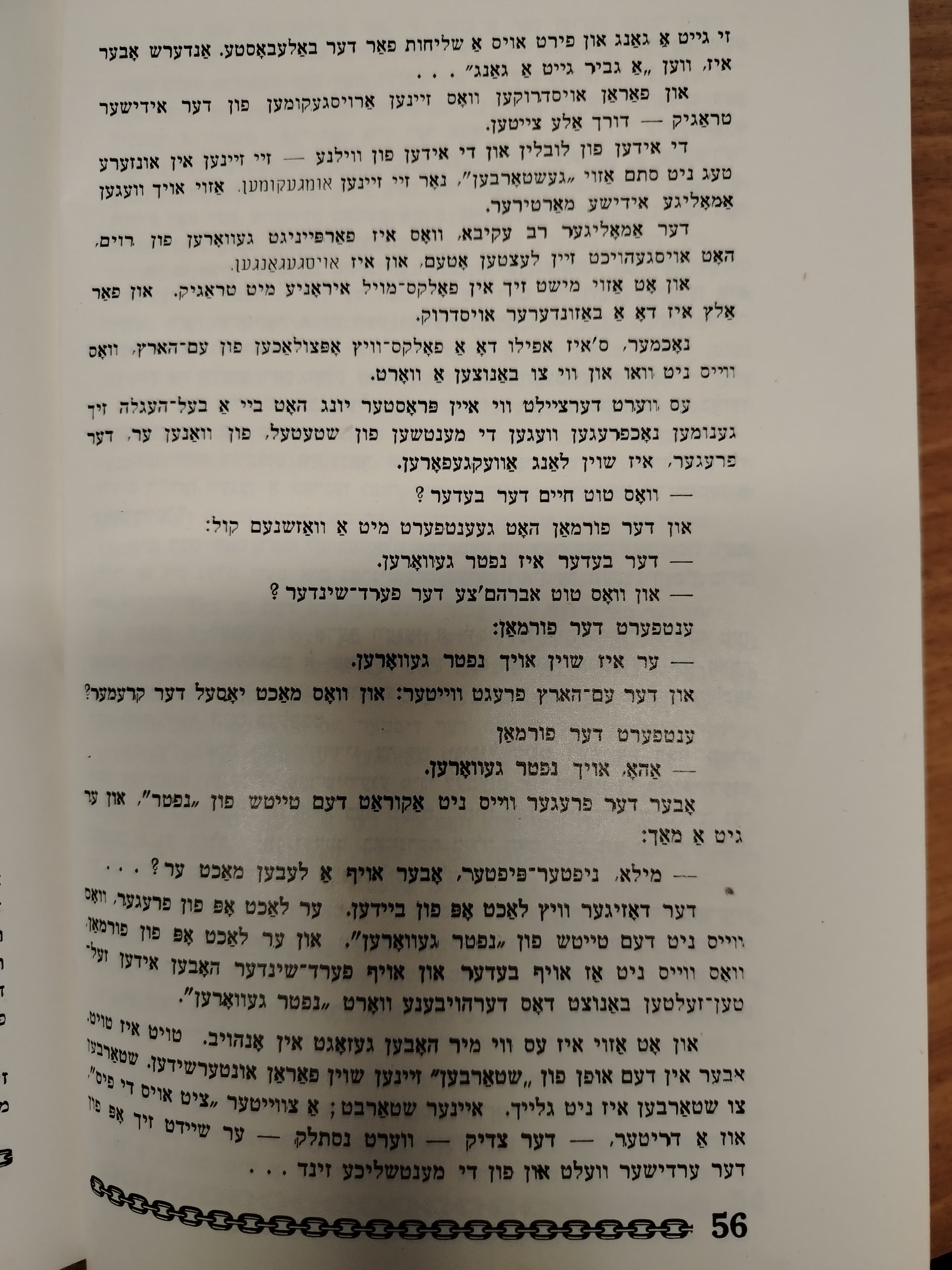
Under the pen name B.Y. Byalostotski, he made a linguistic contribution with an article “Yidishe Verter in Yidish vegen Shtarben” (Jewish Words in Yiddish for Dying) in Yor Bukh fun dem Semeteri Department, Arbeter Ring, 1947. (Year Book of the Cemetery Department, Workers Circle, 1947)
Among his books:
Ber Borokhov (1881-1917), tsu zayn Fertsiktn Yortsayt (Ber Borokhov, 1881-1917, on the Fortieth Anniversary of his Death) (New York, 1958), 27 pp.;
Geto Oyfshtand (Ghetto Uprising) (1958, 1962).
His pen names include: Y. Byalostotski, Dovid Grodner, Y. Polin, Observator, Y. Heshelzon, and Y. Varshanski.
From 1972 he was living in Israel. He died in Tel Aviv.
Sources: P. Shteynvaks, in Idisher Kemfer (New York) (March 4, 1960); Shteynvaks, in Tog-Morgn-Zhurnal (New York) (May 20, 1960); Kh. Ehrenraykh, in Forverts (New York) (April 8, 1960); Y. L. Berg, in Keneder Adler (Montreal) (June 8, 1960); Sh. Izban, in Der Amerikaner (New York) (October 21, 1960); Y. Glants, in Der Veg (Mexico City) (August 8, 1961); S. Kahan, in Di Shtime (Mexico City) (August 19, 1961); A. Oyerbakh, in Tog-Morgn-Zhurnal (July 23, 1962); A. Golomb, in Der Veg (August 16, 1962); B. Kovalski, in Der Veg (September 11, 1962).