Leksikon fun der Nayer Yidisher Literatur
לעקסיקאָן פֿון דער נײַער ייִדישער ליטעראַטור

Browse All People
By Subjects
By Volume:

search tips
✕
≡

How to Build Your Search:

A. In the below “Advanced Search,” use the drop down parameters under "Scope" - ALL words, ANY words, or EXACT word/phrase. Build the parameters row by row.


OR


B. To define your search using the basic one-line search, in the above textbox:

  • Use a plus to REQUIRE the word:
    +music +theory << must contain the words music and the word theory
  • Use quotes for a phrase:
    song "music theory" << anything with song or phrase "music theory"
    or "levin" < exact match, not levine
  • Use + and quotes to require the phrase:
    +"music theory" << must include phrase
  • Use a minus to EXCLUDE:
    +music -theory << must include music, but not theory
NOTE: When searching in Yiddish letters, this Lexicon should find the word(s) with or without diacritics (e.g., אברהם vs. אַבֿרהם) -- but when searching in other systems, if you can't find it one way, try searching the other way.
⋮⋮
⋮⋮
Search:
Text
Dates
Subjects
Living People ONLY
Women ONLY
Records w/ Images ONLY
Search in:
Scope:
ALL words
ANY words
EXACT word/phrase
א אַ אָ ב בּ בֿ ג ד ה ו װ ױ ז ח ט י יִ ײ ײַ כ כּ ך ל מ ם נ ן ס ע פּ פֿ פ ף צ ץ ק ר ש שׂ תּ ת ־

click for image pop-out

Click, drag, enlarge the below information boxes. (Then click the arrow in upper right to return them to their place & size.)
Pen Names, Aliases, & Alternate Search Spellings

Szymel, Maurycy

Places
Birth Place
Lemberg
Death Place
Unknown (See footnote)
Images (click an image for slideshow)


Lexicon Books
Credits
  • Berl Kagan Author
  • Joshua Fogel Translation to English & Research
  • Mark H. David OCR - Optical Character Recognition
  • Also See
    •

    Shimel, Moyshe

    1903-1942[1]

    approx. 38 - 39 years

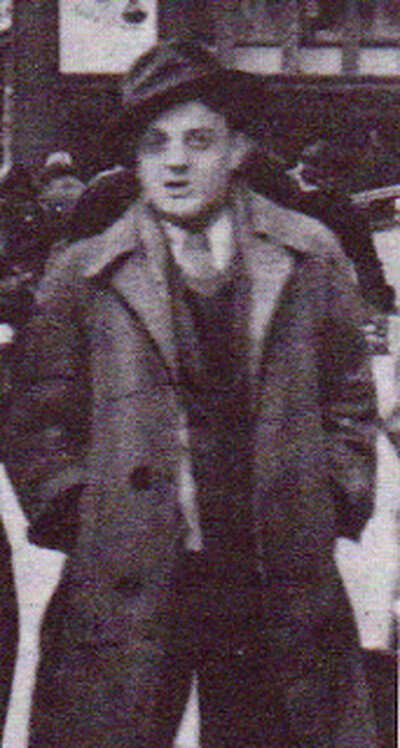
    He was a Yiddish and Polish poet, born in Lemberg. In 1930 he moved to Warsaw. He was confined in the Lemberg ghetto and possibly thereafter in Warsaw.

    For many years he published poetry solely in Polish and was embraced in Polish literature. In 1931, 1932, and 1935, he published three volume of poems in Polish. In 1930 he began writing in Yiddish as well and published poetry in Globus (Globe) and other Yiddish periodicals in Poland.

    Two of his poems were published in Sovetishe Literatur (Soviet Literature) (Kiev) 3 (1940). His work also appeared in Binem Heler, Dos Lid iz Geblibn, Lider fun Yidishe Dikhter in Poyln, Umgekumene Beys der Hitlerisher Okupatsye, Antologye (The Poem Remains, Poems by Jewish Poets in Poland, Murdered During the Hitler Occupation, Anthology) (Warsaw, 1951); Yitskhok Paner and Leyzer Frenkel, Naye Yidishe Dikhtung (Modern Yiddish Poetry) (Iași: Jewish Cultural Circle in Romania, 1947); Shimshon Meltser, Al naharot, tisha maḥazore shira misifrut yidish (By the Rivers, Nine Cycles of Poetry from Yiddish Literature) (Jerusalem, 1956); Moshe Basok, Mivḥar shirat yidish (Selection of Yiddish Poetry) (Tel Aviv, 1963); and Hubert Witt, Der Fiedler vom Getto: Jiddische Dichtung aus Polen (The Fiddler of the Ghetto, Yiddish Poetry from Poland) (Leipzig, 1966).

    His works include: Mir iz Umetik (I’m Sad) (Warsaw: A. B. Tserata, 1937), 93 pp.; Mir Kenen Zikh Nisht, oder Neplen Iber London (We’re Unacquainted, or Fog Over London), a comedy (in manuscript).

    “Many of his poems in Yiddish,” wrote Meylekh Ravitsh, “were on motifs of mother. A mother complex characterized him from childhood, and his return to Yiddish was a return to his mother.”


    [1] This date according to Shimshn Meltser in Al naharot. Meylekh Ravitsh (Mayn Leksikon, vol. 1) writes that Shimel fled to Byelorussia in 1941 and died there somewhere. In Ber Mark’s Umgekumene Shrayber fun di Getos un Lagern (Murdered Writers from the Ghettos and Camps) (Warsaw, 1954), p. 205, it is noted that Shimel was in the Lemberg ghetto, but no mention is made of the Warsaw Ghetto.

    Sources: Meylekh Ravitsh, Mayn Leksikon (My Lexicon), vol. 1 (Montreal, 1945); Ravitsh, in Keneder Adler (Montreal) (April 21, 1967); Shiye Tenenboym, in Idishe Zhurnal (Toronto) (June 30, 1957); Yoysef Papyernikov, Heymishe un Noente, Dermonungen (Familiar and Close at Hand, Remembrances) (Tel Aviv: Perets Publ., 1958), pp. 260-62; A. Slutski, in Letste Nayes (Tel Aviv) (October 3, 1969); Yeshurin archive, YIVO (New York); Perlmuter archive, YIVO (New York).

    •

    © 2026 Congress for Jewish Culture 
    Rights are reserved. If you wish to quote small portions of text or data from this Lexicon, you may do so with full attribution to the Congress for Jewish Culture and a link to the specific site, which credits the sources. The Lexicon is perpetually in process; so some elements cited might change as we correct and update information.

    If you notice any errors or omissions in this Lexicon (or if you have any concerns or need help) please email us -- Or feel free to post a Public Comment, form at the end of each person's biography.

    NOTE
    A lot of our English and Yiddish texts and metadata are being worked on: researched, checked, corrected, fixed, formatted, updated, and translated.
    There are many ways you can help.

    Your Comment *
    Reminder - Please state your Source of info in your comment
    You will get an email for verification before your comment is put on the site. We will not make your email address public.